
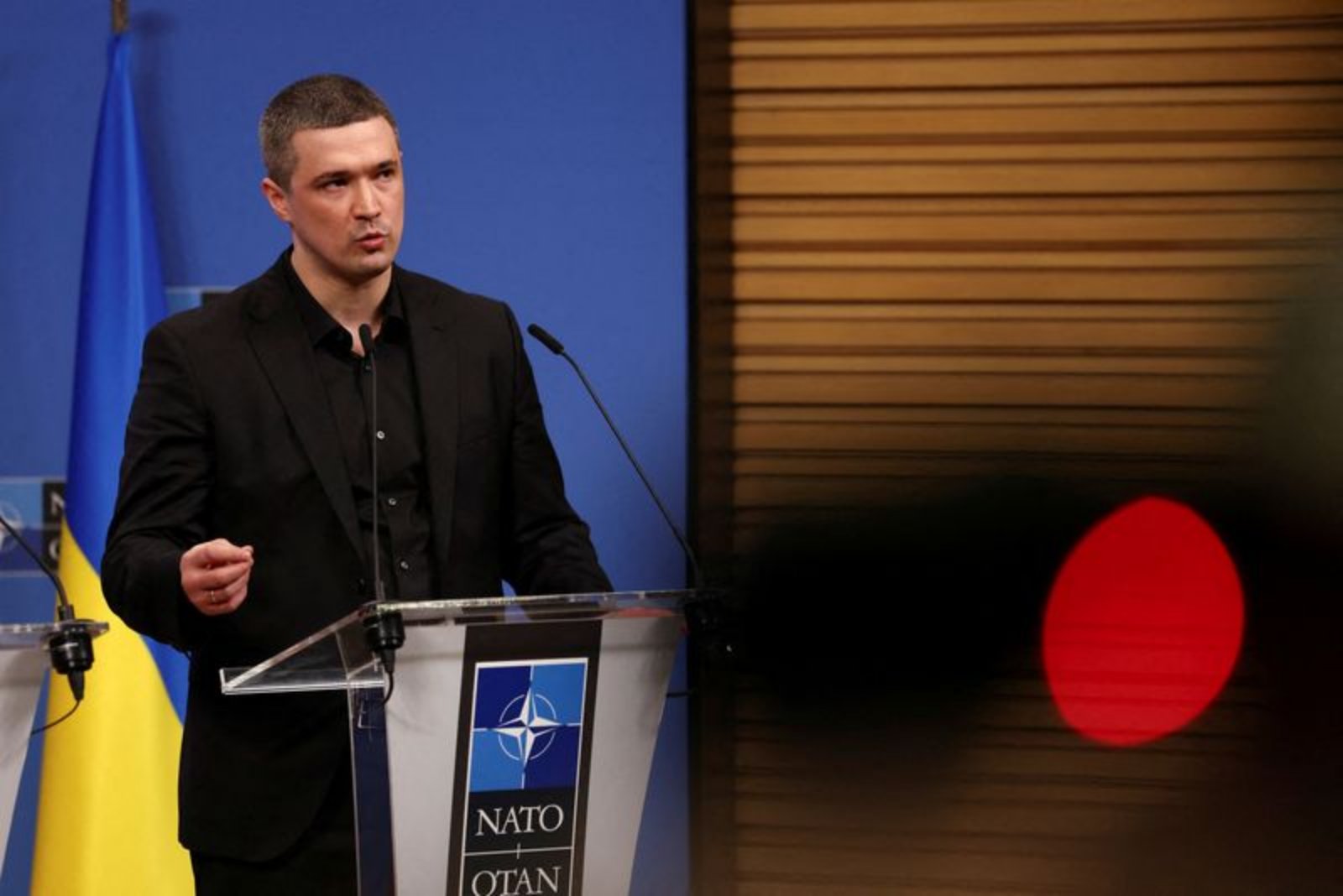
Ukraine has introduced interceptor drones that can be operated remotely over very long ranges and have been used to hit targets located hundreds or thousands of kilometres away, Defence Minister Mykhailo Fedorov said on Thursday.
Fedorov said Ukraine had little capacity to manufacture drones when Russia launched its full-scale invasion in 2022, but that the country now supports a vibrant drone industry. He wrote on the Telegram messaging app that Kyiv has prioritised interceptor drones as a more effective and more economical approach to defending against incoming drone attacks.
"We are launching a new level of 'small' air defence. Now, control of interceptors is possible at a distance of thousands of kilometres," Fedorov wrote. "Today we have a confirmed result -- downing a target at a distance of hundreds and thousands of kilometres. Ukraine is the first in the world to systematically scale remote control of interceptor drones."
The defence minister said the configuration "increases the efficiency of interception, minimises risks for operators and allows scaling capabilities without being tied to the front line."
Ukrainian officials estimated domestic drone production last year at roughly 4.5 million units and said production capacity has grown since then. Despite these developments, Ukraine continues to face sizeable Russian drone and missile barrages more than four years into the war with Russia.
In what Kyiv described as this year's largest raid last week, 17 people were killed. Ukraine reported that its air force units had shot down or neutralised 31 missiles and 636 drones during the attack, but said 12 missiles and 20 drones nonetheless struck targets.
Separately, Ukraine has established joint arms production arrangements with several European countries and has provided assistance to Middle Eastern states seeking to counter Iranian drones. Kyiv has concluded agreements with Saudi Arabia, Qatar and the United Arab Emirates to share expertise or capabilities related to such threats.
The announcement highlights a rapid scaling of remote-control interceptor capabilities alongside domestic production growth and expanded international industrial cooperation. Officials emphasised improvements in operator safety and the ability to deploy air-defence functions without direct proximity to the front line.