
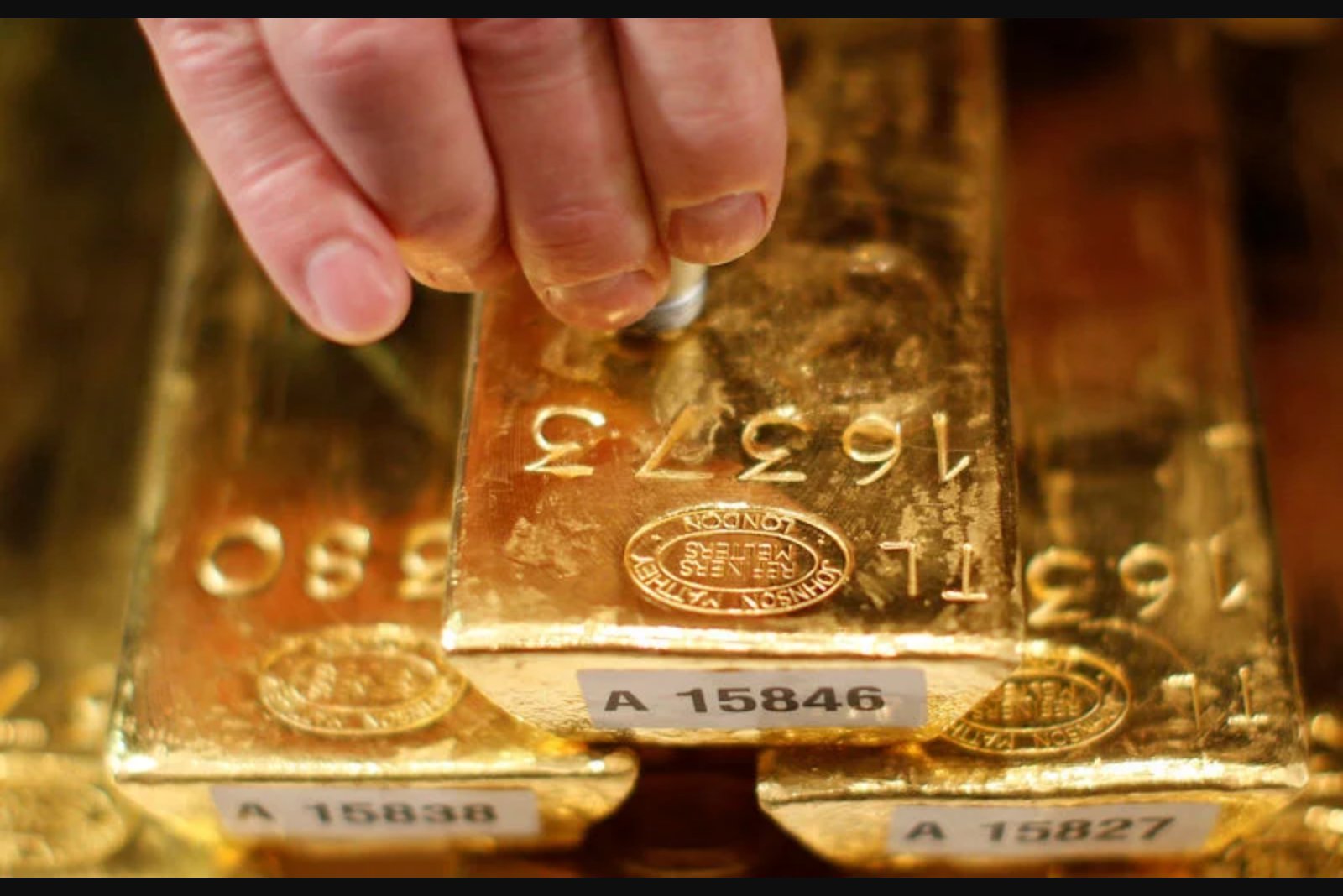
Gold showed modest gains on Friday as investors absorbed a softer U.S. labor market print that has strengthened views the Federal Reserve will refrain from hiking rates at its next policy meeting. The market tone remained cautious, with bullion still tracking a weekly decline.
Spot gold was up 0.2% to $4,187.17 an ounce by 10:01 ET (14:01 GMT), while gold futures climbed 0.3% to $4,215.82 an ounce. Despite the intraday uptick, the yellow metal was lined up for a second straight weekly drop, having fallen more than 2% so far this week.
"Gold is steadying after a difficult week, finding modest support as Treasury yields ease and the Fed signals patience on rates," said Neil Welsh, Head of Metals at Britannia Global Markets.
The U.S. dollar index edged down 0.2% on Friday but remained close to a 17-month high it reached in the previous session. The currency was on pace for roughly a 1% gain for the week, a development that tends to make dollar-priced gold more costly for overseas buyers and can blunt demand.
Treasury yields have been an additional headwind. The U.S. 10-year Treasury yield briefly rose to 5.344% on Thursday - its highest level since 2002 - before easing later in the session. On Friday the 10-year benchmark stood at 5.234%.
Market attention has shifted to the U.S. jobs data released for September. The nonfarm payrolls report showed employment increased by 29,000, well below economists' expectations of 89,000 and far lower than the 162,000 reported for August. The unemployment rate edged up to 4.2%, versus forecasts that it would remain at August's 4.1% level.
Those employment figures have been central to traders and strategists as they set expectations ahead of the Federal Reserve's two-day meeting on October 27-28. In recent days, momentum toward another rate increase at that meeting has faded amid cooler inflation reads and a sequence of Fed officials' comments suggesting less urgency for further hikes.
Following the employment release, markets placed about an 84% probability on the Fed holding rates steady this month, up from roughly 76% a day earlier and 36% a week ago. Conversely, the chance of a rate increase by the Fed has dropped to roughly 16%, down from about 64% a week ago.
Expectations that the central bank will limit further rate increases can be supportive for gold, since the metal does not pay interest and becomes relatively more attractive when rate-driven opportunity costs fall.
In September, the Fed raised interest rates by a quarter of a percentage point as part of efforts to restrain elevated inflation. The article notes that inflationary pressures have been influenced by developments including the war in the Middle East and substantial spending on artificial intelligence infrastructure.
Market participants will be watching whether signs of instability in the labor market—illustrated by the weak payroll gain and a higher unemployment rate—prompt Fed officials to be more cautious when considering additional tightening. Policymakers weigh the trade-off that while rate rises can damp inflation, they also carry the risk of slowing economic growth and weakening employment.
For now, gold's path depends on the interplay between the dollar, Treasury yields, and evolving Fed expectations as reflected in job and inflation data. The metal has moved higher in the short term on signs of Fed patience, but persistent strength in the dollar and historically high real yields have limited bullion's recovery this week.