
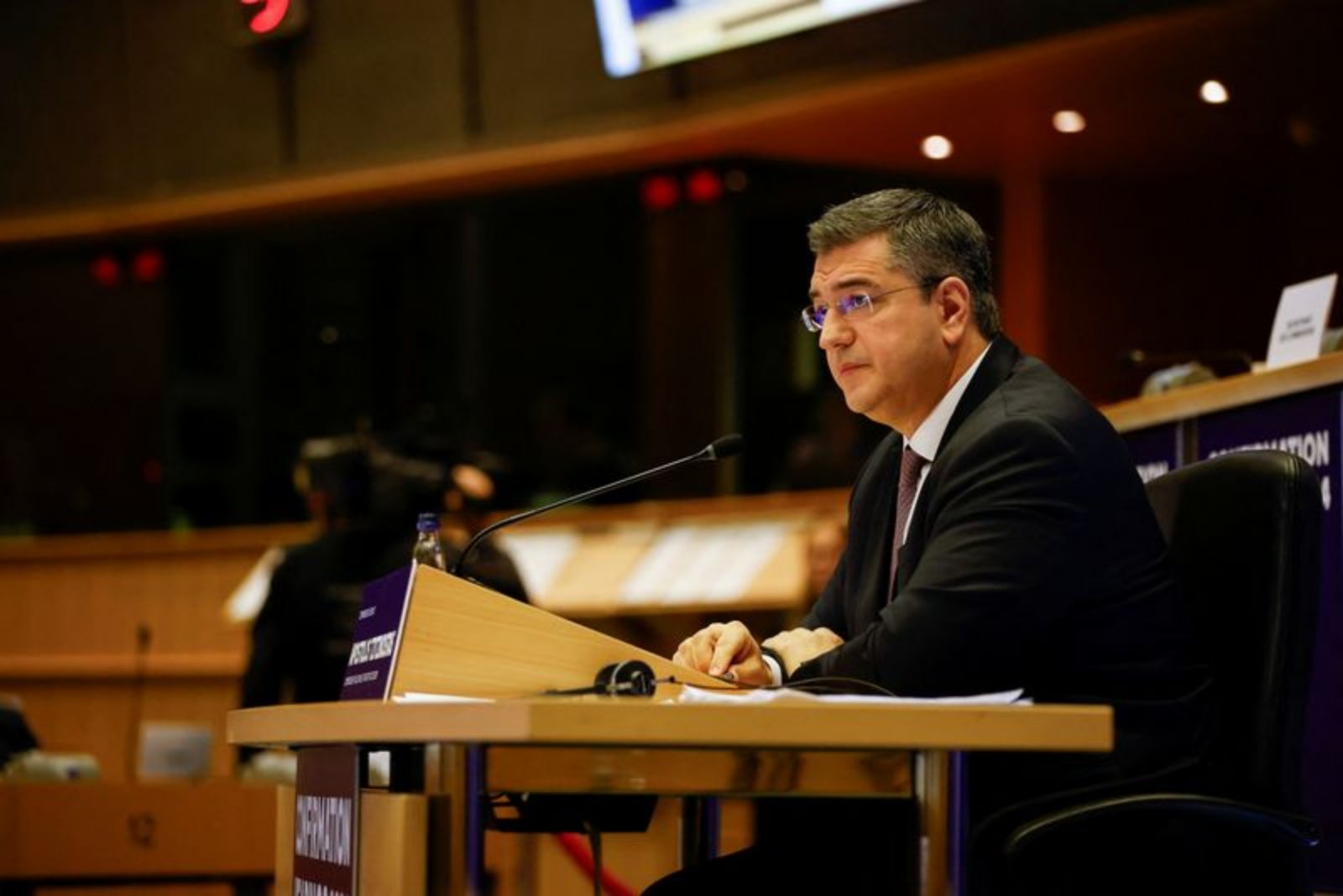
European officials are preparing a set of measures aimed at safeguarding air travel if jet fuel supplies come under pressure because of the war involving Iran. The Commission will give airlines instructions on how to manage airport slots, anti-tankering practices, passenger rights and public service obligations should shortages appear, a senior EU commissioner said.
Commissioner Apostolos Tzitzikostas stressed there were no fuel shortages "as of today" but warned that a continued blockade of the narrow Strait of Hormuz would be "catastrophic" for Europe and the world. He pointed to the strategic importance of the waterway, noting that one-fifth of the world’s oil and liquefied natural gas transited the strait before the U.S.-Israel bombing campaign began on Feb. 28.
The commissioner underscored the EU’s exposure in aviation fuel markets: the bloc imports roughly 30-40% of its jet fuel needs, and about half of those imports come from the Middle East. Those import figures frame the Commission’s push to tighten coordination and to consider alternative supply options.
Planned measures and monitoring
The Commission is due to present a broader package of energy and transport measures on Wednesday. As part of the response, officials will establish a new fuel observatory to monitor supply conditions, starting with jet fuel. The observatory is intended to provide ongoing visibility into flows and inventories so policymakers can respond promptly if disruptions materialize.
"If real supply issues arise, our emergency stocks must be put to best use," the commissioner said, adding that any national release of fuel should be conducted with full transparency to avoid market distortions. He also said there were currently no indications that "widespread cancellations" of flights would occur in the coming weeks or months.
Rules, alternative imports and fuel standards
The Commission will clarify the bloc’s anti-tankering measure, which is designed to prevent aircraft from loading extra fuel in lower-cost locations to save money. The existing legislation already includes exemptions for shortages; the forthcoming guidance will make those exemptions and the application of the rule clearer.
Officials are also studying the option of importing alternative jet fuels such as U.S. jet fuel grade Jet A. That grade has a higher freezing point than the European standard, a technical difference flagged by the Commission as a matter to consider if imports were to increase.
Longer-term shift to cleaner aviation fuels
The Commission will press the bloc to speed up production of sustainable aviation fuel (SAF) and synthetic fuels so the EU can cut its reliance on Middle East imports. The commissioner confirmed details that had been reported earlier this week, saying the step-up in SAF and synthetic fuel production is a central element of the Commission’s strategy.
On immediate social and consumer impacts, the commissioner said there was "no need at this point to intervene in how people live, work or travel," and that Europe was prepared to welcome tourists and guests during the summer period. He added that high prices would not exempt airlines from obligations to compensate passengers for delays or cancellations under existing rules.
The Commission’s package blends short-term supply monitoring and clarification of operational rules with a policy push toward cleaner aviation fuels. The measures aim to limit disruptions to passengers and reduce the bloc’s vulnerability to supply shocks stemming from risks in the Strait of Hormuz and regional military developments.