
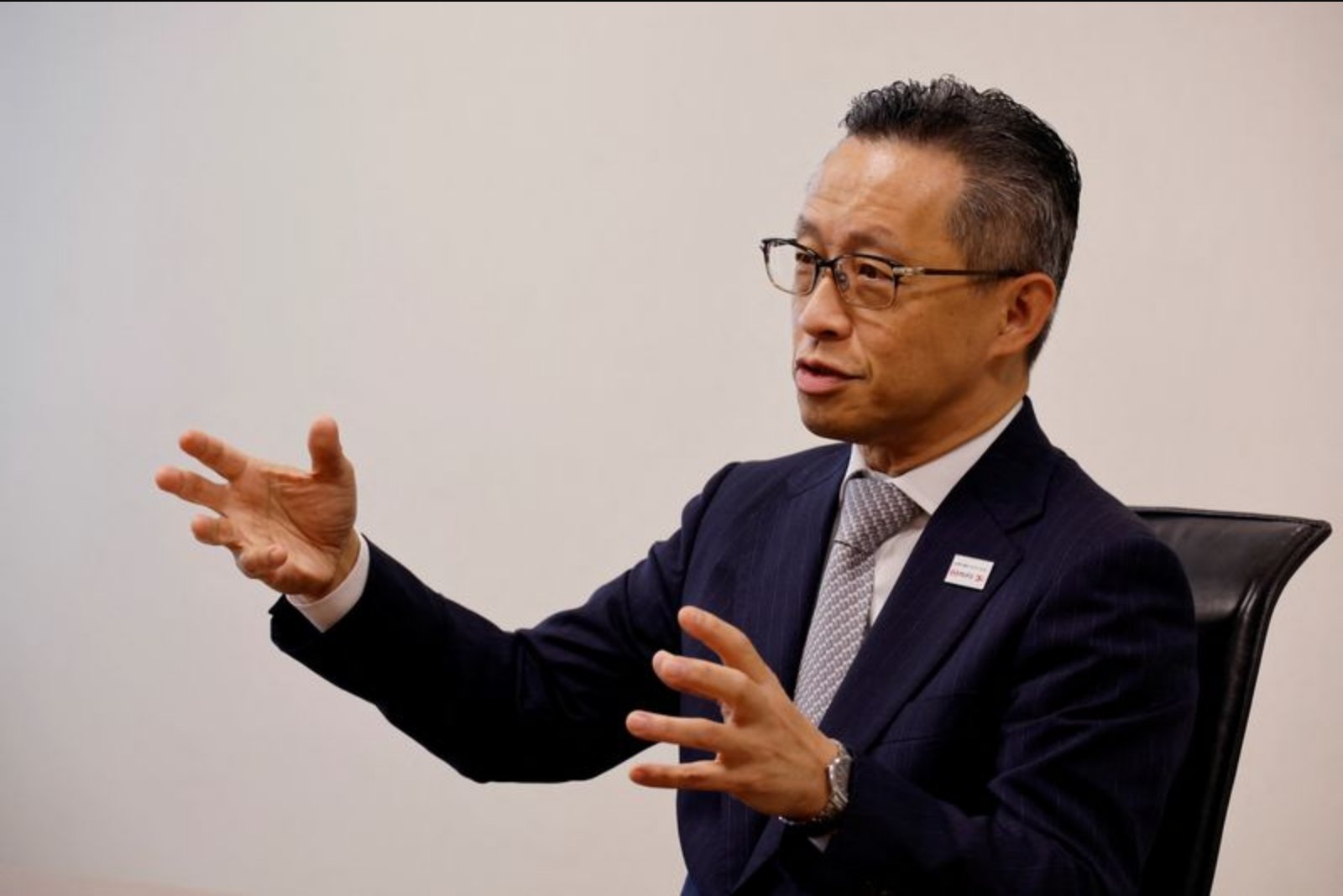
MUFG Bank is actively searching for financing partners to share the credit risk of large corporate transactions such as leveraged buyouts, its chief executive said, as the lender looks to move beyond relying solely on its own balance sheet to fund an upswing in big-ticket deals.
In an interview, MUFG Bank CEO Masakazu Osawa said the lender is engaging potential partners - including life and non-life insurers, government bodies and private credit funds - that can contribute long-term capital or take on portions of the financing. The aim is to avoid carrying the full funding burden for transactions that are increasingly being priced in the trillions of yen.
"The more diversified the sources of funding the better," Osawa said, stressing the bank’s preference to structure entire transactions - from debt to equity - in ways that allow risk to be shared. He warned that without that kind of joint risk-taking, the bank could lose out when corporate clients select financing providers.
Leveraged buyouts typically rely on significant borrowed funds secured against a target company’s assets and future cash flows. As such deals proliferate across Japan, MUFG Bank’s move signals a deliberate shift to reduce concentration of risk on its balance sheet while still supporting M&A activity.
Osawa noted insurers as natural candidates for participation because they tend to hold long-term capital. He also included government entities and private credit funds among possible collaborators.
The CEO’s comments come against a backdrop of robust M&A momentum in Japan. LSEG data shows that M&A involving Japanese companies more than doubled year-on-year to a record 53 trillion yen last year, underlining strong corporate appetite for transformative deals. At the same time, broader geopolitical developments have introduced new uncertainties: Osawa acknowledged that conflict in the Middle East has disrupted global trade and energy markets, and said the central question is how large any subsequent setback will be.
"At the moment, nothing too negative has surfaced but things may gradually emerge from here," he said, characterizing MUFG Bank’s base case as one in which the global economy remains relatively strong.
Regulatory and market dynamics are also shaping the environment for alternative financing. Redemption requests at global private credit funds have raised concerns about downside exposure, yet Japan’s financial regulator sees private credit as an important component of its strategy to satisfy growing corporate funding demand. Michinori Haba, the Financial Services Agency’s deputy director-general in charge of financial markets, told Reuters that Japan’s market "remains underdeveloped and needs cultivation," indicating official support for expanding non-bank financing channels.
Japanese government policy priorities may intersect with these financing trends. Prime Minister Sanae Takaichi has identified 17 sectors deemed critical to economic security, including semiconductors and shipbuilding, as targets for public-private investment initiatives. Such a focus could influence where public or quasi-public capital might be directed alongside private financiers.
Osawa’s remarks make clear that MUFG Bank intends to play a structuring role in large transactions - combining debt and equity elements and recruiting outside capital - rather than simply underwriting loans alone. The bank’s strategy reflects a desire to be competitive for clients pursuing large-scale M&A while managing its own exposure to concentrated credit risk.
($1 = 159.1800 yen)