
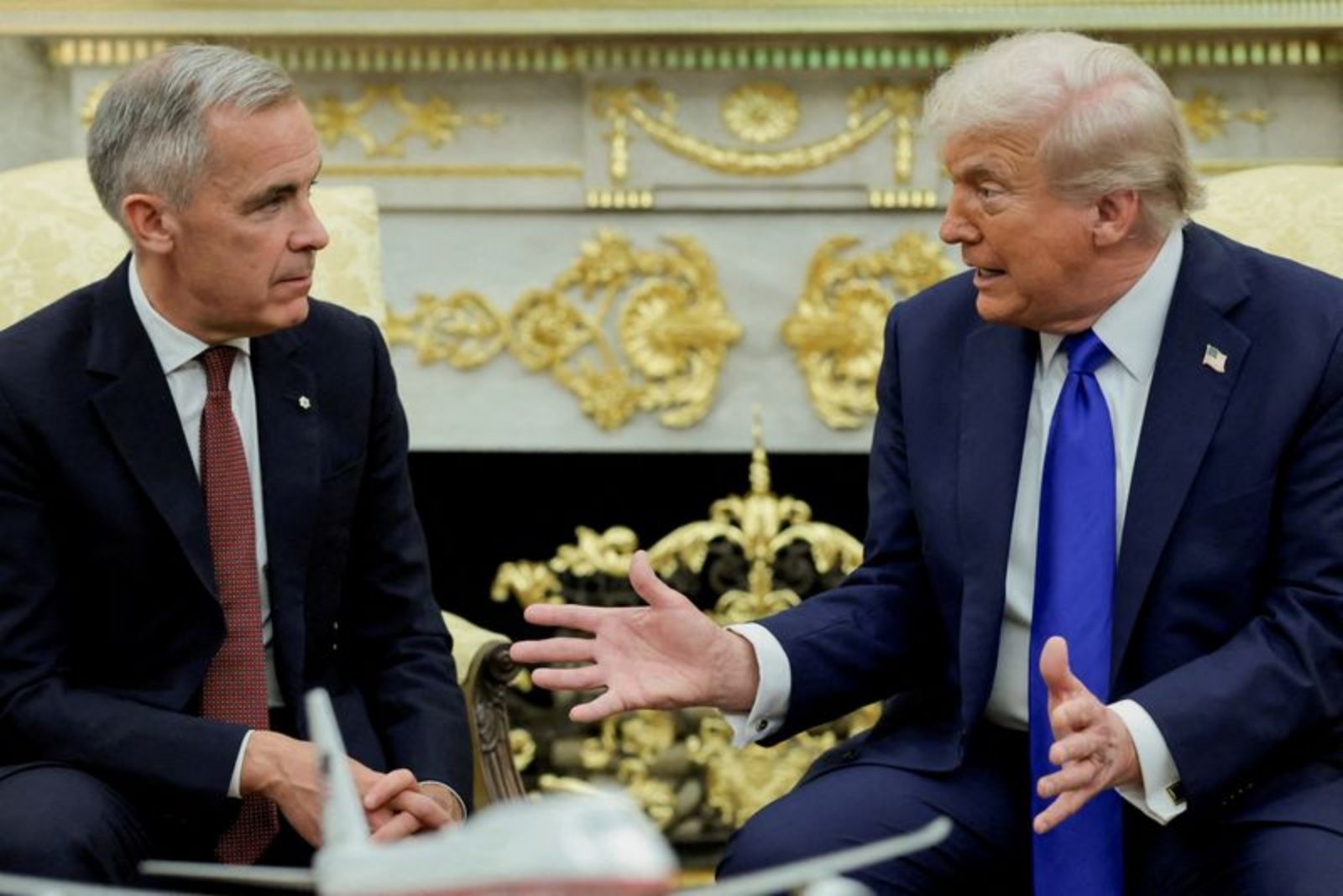
OTTAWA, April 23 - U.S. President Donald Trump has not raised the idea that Canada must pay an "entry fee" before a scheduled review of the United States-Mexico-Canada trade deal can begin, Prime Minister Mark Carney said on Thursday.
The three countries are expected to complete the review by July 1, but the timeline has been complicated by tensions between Washington and Ottawa over tariffs that the president imposed on key imports from Canada last year. The United States has already set out a number of concessions it wants Canada to make now - an approach some domestic commentators and media have equated with demanding an entry fee to the review.
Carney pushed back on that framing in comments to reporters. "I don’t know where the talk of an entry fee is from. It’s certainly not coming from me, it’s not language I’ve ever used, and it’s not language I’ve ever heard from the president of the United States," he said.
He emphasised that Canada would not be passively accepting instructions. "We’re not sitting here taking notes and taking instruction from the United States... we’re ready to go into detailed negotiations. We’re also ready to wait, if that’s what has to happen," Carney added, while saying he remained confident that progress could be achieved.
Officials in Ottawa say they see little likelihood of the review being completed by the July 1 deadline and stress a preference for addressing all outstanding points with the United States simultaneously rather than resolving matters in stages.
“We’re not going to make a series of concessions... just to get to a table and have a statement appear on a website in the United States (and) then receive a whole second list of things that they’re going to want," Dominic LeBlanc, the federal minister in charge of trade with the United States, told the Globe and Mail newspaper on Tuesday.
That stance underlines Ottawa’s concern about a sequential negotiating approach in which initial concessions could be followed by fresh demands. Canadian officials say they prefer a single, comprehensive negotiation to resolve outstanding differences with their U.S. counterpart.
The situation leaves the review timetable and the scope of discussions dependent on whether the parties agree to simultaneous resolution of issues or opt for phased concessions. For now, Canadian leaders publicly reject the notion that an "entry fee" has been proposed by the White House and signal readiness to negotiate in depth or to delay proceedings if necessary.