
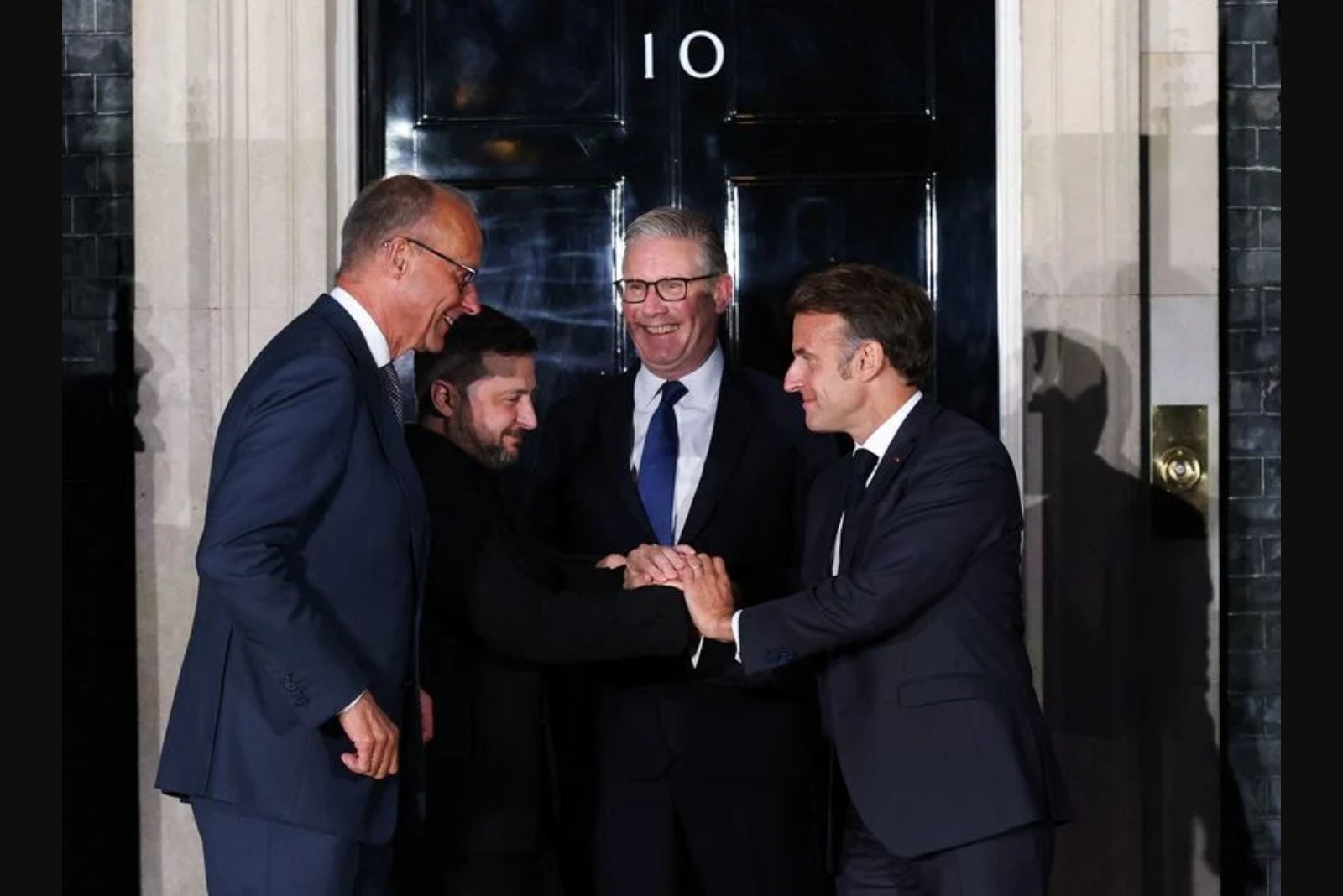
Ukrainian President Volodymyr Zelenskiy arrived in London on Sunday for focused talks with British Prime Minister Keir Starmer and the heads of government of Germany and France, aiming to deepen European support for Ukraine and intensify efforts to find a path out of the conflict.
Upon landing in Britain, Zelenskiy posted on X:
"The main focus is our defence in the war, greater cooperation for the security of all of Europe in the area of air defence, and our shared view of diplomatic prospects,"and added,
"Europe must be part of the negotiations and must be strong."
Earlier at Number 10, Starmer greeted French President Emmanuel Macron and German Chancellor Friedrich Merz at the door ahead of Zelenskiy’s arrival. The three Western European powers - Britain, France and Germany - maintain an informal security grouping known as the E3, which the article notes has become one of Ukraine’s principal international backers.
Macron has publicly suggested that European actors could assist in constructing both a ceasefire and a plan for peace between Ukraine and Russia. The article reports, however, that both sides in the conflict have accused the other of unwillingness to make concessions.
Separately, Zelenskiy made a direct appeal to Russian President Vladimir Putin in an open letter published on Thursday, proposing face-to-face negotiations to end the war, which is now described as entering its fifth year. In that letter, Zelenskiy stated that Russians were fatigued by Ukrainian missile and drone strikes, rising inflation and shortages of fuel, and signaled that Russians were ready for peace.
Moscow rejected the overture. The article records Putin saying the offer did not come across as sincere and that he currently saw no point in meeting, stressing that any agreement would need to be one "for the long term." In a meeting with international media on Thursday, the Russian leader reiterated a hardline position on the conflict but also said that proposals from U.S. President Donald Trump could end the fighting if Kyiv were prepared to compromise.
The London discussions therefore brought together Western leaders supportive of Ukraine’s defence needs and interested in exploring diplomatic initiatives, set against ongoing public disagreements over the sincerity and feasibility of direct negotiations with Moscow.
Key takeaways:
- Leaders met in London to prioritize air defence cooperation and diplomatic prospects for resolving the conflict.
- The E3 - Britain, France and Germany - continues as a central grouping in international backing for Ukraine.
- Public exchanges between Kyiv and Moscow remain fraught, with Zelenskiy’s offer for direct talks rebuffed by Putin.