
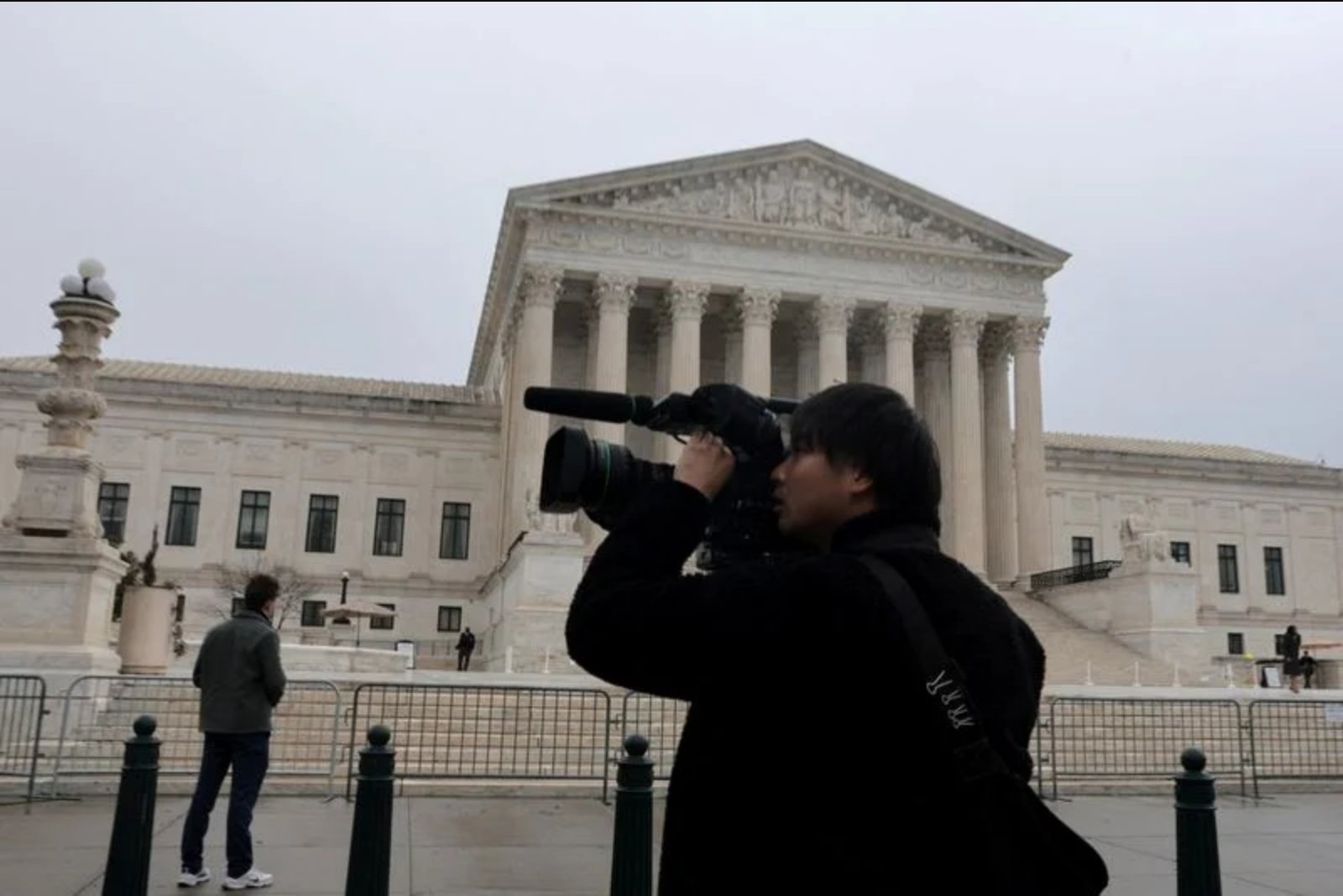
The U.S. Supreme Court on Thursday ruled in favor of a group of gun-rights plaintiffs challenging a Hawaii statute that required gun owners to obtain a property owner’s "express authorization" before taking a handgun onto private property that is open to the public, such as most businesses. In a 6-3 decision, the court overturned a lower court determination that had concluded Hawaii’s Democratic-backed law likely met the protections of the Second Amendment.
The dispute centers on a 2023 law signed by Hawaii’s Democratic governor, which sought to give property owners the authority to bar handguns from private premises that are nevertheless accessible to the public. Several other U.S. states have enacted similar measures.
Challengers included three Hawaii residents who hold concealed-carry permits and a Honolulu-based gun-rights advocacy organization. They filed suit weeks after the governor signed the legislation. The legal challenge drew the backing of the federal government under President Donald Trump’s administration at the Supreme Court.
Hawaii officials argued the statute represented a lawful accommodation between the constitutional right to keep and bear arms and the property rights of private owners who wish to exclude firearms from their premises. The state maintained that the law balanced individual gun rights and the authority of property owners to control access.
Procedural history
A federal judge initially issued a preliminary injunction blocking enforcement of Hawaii’s restrictions. The case then proceeded to the San Francisco-based 9th U.S. Circuit Court of Appeals, which largely ruled against the challengers. That appellate ruling prompted the appeal to the Supreme Court, which revived the challenge in its 6-3 decision.
The Supreme Court declined to address one element of the lawsuit that targeted the law’s separate provisions banning the carrying of handguns at specific locations identified in the statute - places such as beaches, bars and other so-called sensitive sites. That aspect of the challenge was therefore left unresolved by the court’s action in the case now decided.
Legal framework referenced
The challengers relied in part on the court’s 2022 decision in New York State Rifle & Pistol Association v. Bruen. In Bruen, the Supreme Court held that the Second Amendment protects an individual’s right to carry a handgun outside the home for self-defense and established a framework for reviewing firearms laws: statutes must be "consistent with this nation’s historical tradition of firearm regulation" rather than justified solely by advancing an important government interest. The Hawaii case invoked that standard as part of the challenge to the state statute.
Related Second Amendment rulings this term
The Hawaii decision is one among several significant Second Amendment rulings during the court’s current term. On June 18 the justices limited the reach of a long-standing federal prohibition that forbids firearms possession by certain drug users, rejecting a position advanced by the Trump administration that would have put at risk the gun rights of millions of Americans who use marijuana and also own firearms. Separately, the court last year upheld a federal regulation aimed at largely untraceable "ghost guns," concluding that the measure was consistent with a 1968 federal law; that particular ruling was not decided on Second Amendment grounds.
Context and implications
The ruling is the latest development in a deeply polarized national debate over how to respond to ongoing firearms violence, including frequent mass shootings. The Supreme Court’s recent decisions have tended to interpret the Second Amendment expansively, and the Hawaii ruling continues that trajectory by limiting the ability of states to enforce certain restrictions on carrying handguns in private spaces open to the public.
Because several other states maintain statutes similar to Hawaii’s, the court’s decision may affect comparable laws elsewhere. The court’s refusal to decide aspects of the case related to venue-specific bans means legal questions tied to beaches, bars and similar locations remain outstanding and could prompt further litigation.