
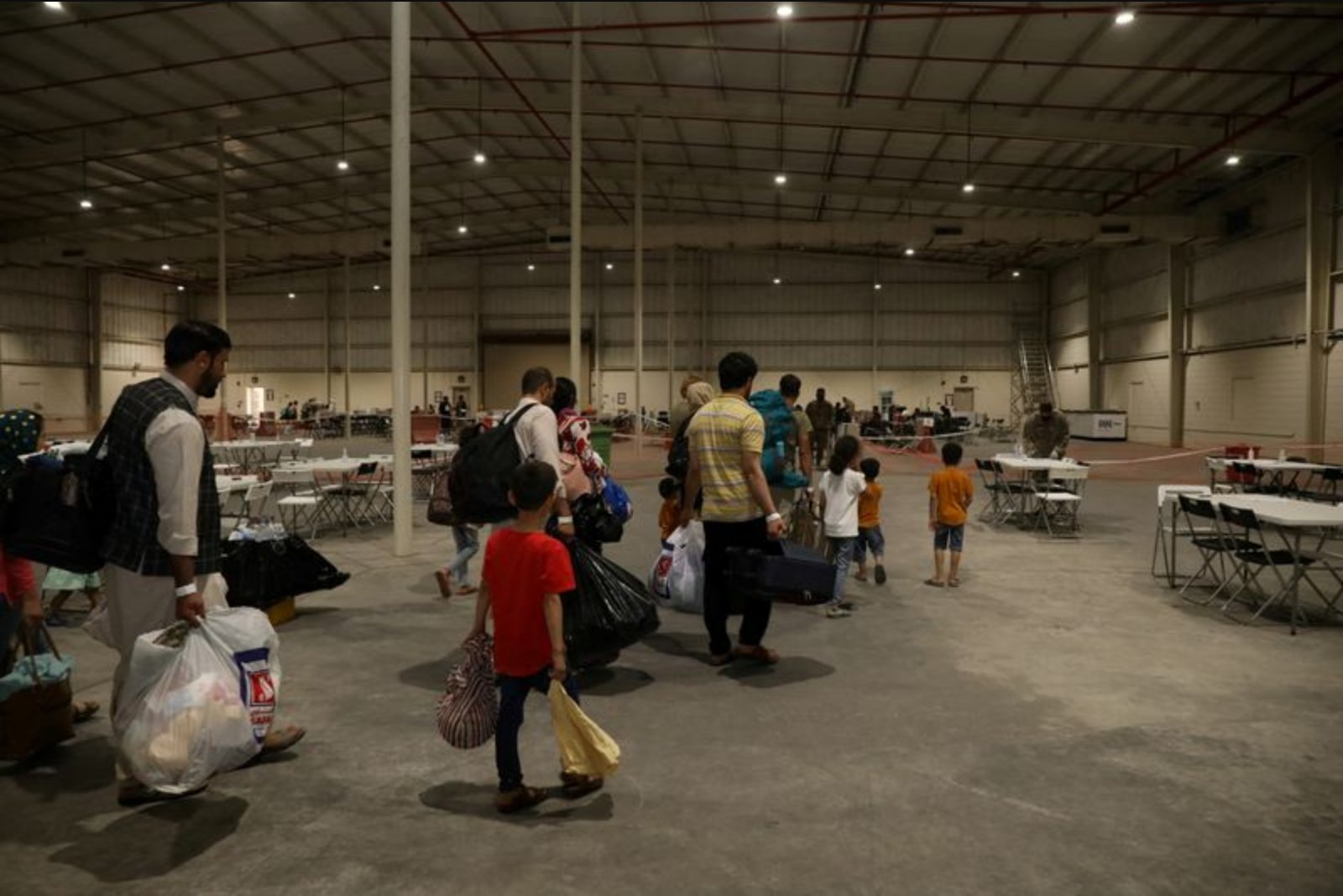
U.S. authorities have been in discussions about relocating approximately 1,100 Afghans who remain at a former U.S. military facility in Qatar to the Democratic Republic of Congo, an advocacy coalition said. The proposal, disclosed by the group working on behalf of the Afghans, highlights the persistent administrative and security questions that surround Afghan nationals who fled the Taliban and have been waiting for U.S. visas.
The Afghans in question are being housed at Camp As Sayliyah, a former U.S. Army base in Qatar, where they were transferred for the completion of immigrant visa processing intended to allow entry to the United States. Many of those at the camp are relatives of U.S. citizens or individuals who worked for U.S.-funded organizations during the two-decade U.S. presence in Afghanistan. According to the advocacy organization, the group of 1,100 has been vetted for resettlement.
Shawn VanDiver, who founded and leads #AfghanEvac, a coalition consisting of veterans and advocacy groups, said he had been briefed by U.S. officials about plans being developed to move the Afghans to Congo. VanDiver described the prospect as unacceptable, in part because of the chronic insecurity and active conflict environment within the central African country. He cautioned that many of the people involved are women, children, and family members of U.S. military personnel.
Advocates fear that if the Congolese option is presented to those stranded in Qatar and they refuse to relocate there, U.S. officials could use such refusals to justify alternative courses of action, including potential repatriation to Afghanistan. VanDiver warned that such outcomes could leave people effectively stateless or placed at mortal risk if returned to Afghanistan.
U.S. immigrant visa processing for Afghans was sharply curtailed after the Trump administration took office in January 2025. In June of that year the administration added Afghanistan to a list of 12 countries subject to a travel ban, while providing a narrow exemption for Special Immigrant Visas for Afghans who had served alongside U.S. troops and diplomats. Several months later, in November, Washington halted immigrant visa processing for all Afghan nationals following a fatal shooting incident in which two U.S. National Guard members were killed by an Afghan who had previously been a member of a CIA-backed paramilitary unit.
In February, a federal judge held that the ban on Afghan Special Immigrant Visa processing was unlawful. Despite that legal ruling, VanDiver and his organization say that visa processing remains effectively stalled, leaving those at Camp As Sayliyah without a clear path forward to enter the United States.
A State Department spokesperson, responding by email, framed resettlement to a third country as a potentially positive outcome that could allow the Afghans to begin a new life outside Afghanistan. The spokesperson did not explicitly confirm whether the Democratic Republic of Congo was one of the countries under consideration. A Congolese government spokesperson did not immediately reply to requests for comment.
The advocacy group said that the Trump administration had previously explored resettlement in Botswana. VanDiver indicated that Botswana had been a more viable candidate but that those plans collapsed when Botswana objected to a new U.S. visa bond requirement that would obligate its citizens to post a $15,000 bond to seek entry to the United States. The State Department did not comment on whether it had formally pursued Botswana as a relocation partner.
For the Afghans now at Camp As Sayliyah, the combination of halted U.S. processing, travel restrictions and shifting resettlement proposals has left them in an extended period of uncertainty. Advocates working on their behalf characterize the current situation as a legal and humanitarian impasse, with potential consequences for vulnerable individuals who had supported or were connected to U.S. efforts in Afghanistan.
Legal and logistical context
The sequence of policy decisions and a high-profile security incident are central to understanding why these Afghans remain in limbo. Authorities moved the group to Qatar to complete standard immigrant visa procedures, but those procedures were disrupted by broader U.S. policy changes earlier in the administration and by the later suspension of processing for Afghan nationals following the November shooting.
Outlook
Advocates say an outcome that places vetted Afghans in a conflict-affected country such as the Democratic Republic of Congo would be inconsistent with their needs and could create additional legal and humanitarian problems. At the same time, government statements suggest relocation to a third country is being considered as an administratively feasible way to provide a fresh start outside Afghanistan. Which path will be followed remains unclear.