
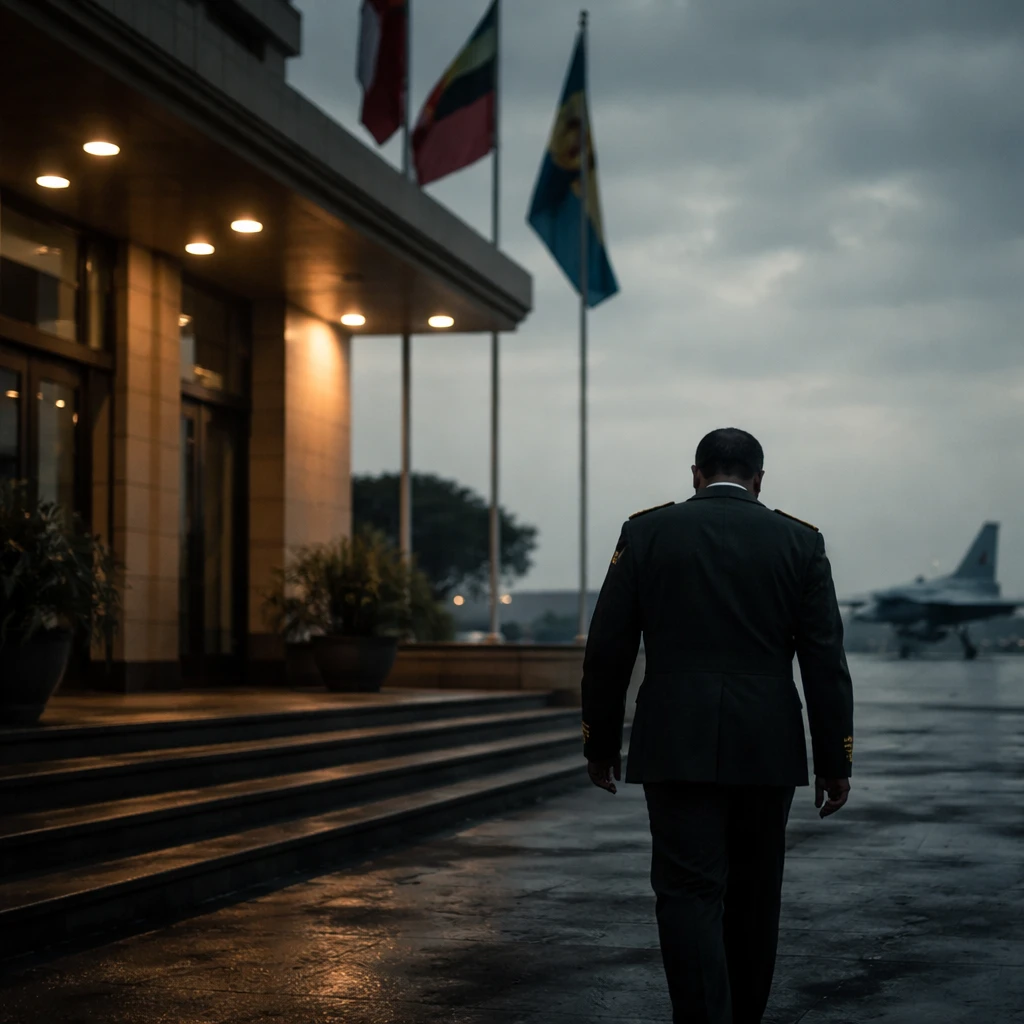
Lima, April 22 - Peruvian Defense Minister Carlos Diaz resigned from his position on Wednesday, following interim President Jose Balcazar's decision to delay a planned purchase of F-16 aircraft from the United States until the next government takes office.
Balcazar, who is scheduled to leave the presidency in July, announced the postponement of the procurement, saying the matter should be left for the incoming administration. Peru has been negotiating for years with various firms to modernize an aging fighter jet fleet composed of Mirage 2000 and MiG-29 aircraft acquired in the 1980s and 1990s.
Officials have indicated Peru aims to eventually acquire 24 jets in total, with an initial contract expected to cover 12 aircraft. Among companies competing for that first contract is Lockheed Martin.
In September of last year, the U.S. State Department approved the possible sale of F-16 aircraft and associated support to Peru, with Lockheed Martin identified as the principal contractor and General Electric Aerospace and RTX Corp named as participating contractors. At the time, the Pentagon cited an estimated value for the potential deal of $3.42 billion.
Local media reported that President Balcazar canceled a signing ceremony for the acquisition of Lockheed Martin F-16 jets last week, calling the move off just hours before it was due to take place on April 17. Balcazar reportedly cited concerns about binding the next government to a substantial defense commitment. The government has not publicly confirmed whether such a signing ceremony had been scheduled.
The U.S. embassy in Lima did not immediately respond to requests for comment on the postponement.
Carlos Diaz, who had held the defense portfolio since March 17, was due to appear before the Defense Committee of Congress to respond to questions about the suspension of the planned signing.
Context and immediate implications
The resignation comes amid a pause in a high-profile defense procurement that had advanced to the point of receiving U.S. government approval and identifying major contractors. The delay leaves uncertainty around the timing and finalization of the first tranche of jets, and raises questions about continuity of defense acquisition policy as the interim administration prepares to hand over power.