
A United Nations group of independent experts has concluded that Belarusian state institutions have operated in concert to suppress critics of President Alexander Lukashenko's government since 2020, employing a full suite of coercive measures that extend from arrest through post-release supervision.
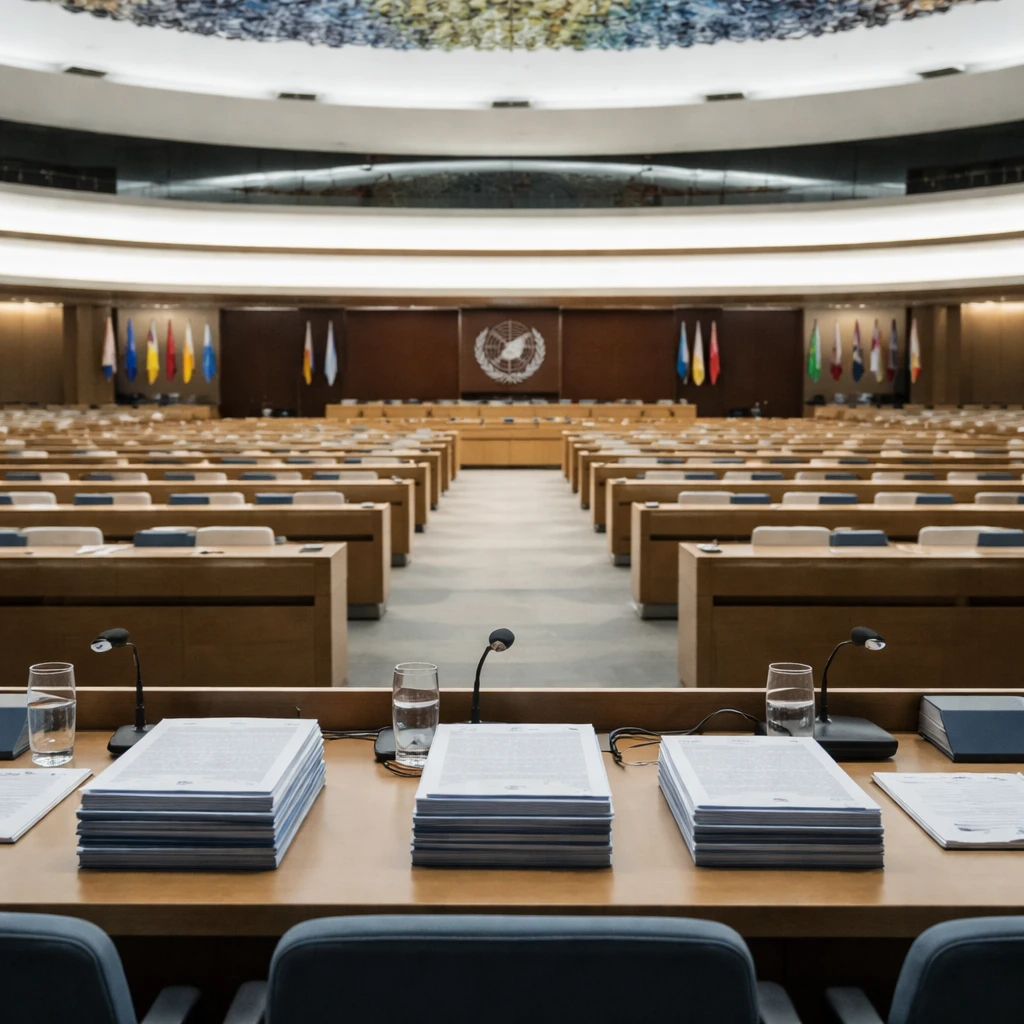
In a report scheduled for presentation to the U.N. Human Rights Council in Geneva this week, the three-member panel said courts, police, security services, prosecutors and prison authorities had all acted in a coordinated fashion to silence individuals deemed real or perceived opponents of the government. The experts characterised the overall pattern of conduct as "systematic" and lasting.
The Belarus mission to the Geneva-based Council did not reply to a request for comment early on Tuesday. The panel noted in its report that Belarus has historically rejected U.N. criticisms of its human rights record and that authorities had not cooperated with the experts. Formal requests by the group to visit Belarus and engage directly with officials went unanswered, according to the text.
Scope of violations identified
The independent experts documented violations at multiple phases of state action. From the moment of arrest and throughout detention, conviction and subsequent supervision after release, the report cites arbitrary arrests, the use of torture, denial of legal safeguards, trials held behind closed doors and ongoing harassment of former detainees.
The report states that the patterns described persist to the present day, and it highlights the role of the judiciary in sustaining that system by effectively legitimising abuses and denying victims access to effective remedies. The experts emphasise that Belarus is responsible for violations of various international treaties referenced in their findings.
Reiterating earlier conclusions, the panel said some abuses committed since May 2020 could meet the threshold for the crimes against humanity of persecution and imprisonment. The experts prepared the report in their capacities as independent members of the U.N.'s Group of Independent Experts on the Human Rights Situation in Belarus; they are not acting as representatives of governments or of the U.N. Secretariat.
Context and ongoing developments
The report's findings come roughly six years after mass protests that followed the August 2020 presidential election, an event the opposition and a number of Western governments described as fraudulent. That post-election period saw a wide crackdown in which thousands of people were detained. Rights groups continue to count and document individuals they describe as political prisoners.
President Alexander Lukashenko has denied that political prisoners are being held by Belarusian authorities, referring to those detained as "bandits." He has also rejected claims of electoral fraud and insisted that state action at the time was lawful and necessary to restore order.
Earlier this month, the report cites a statement by former political prisoner and Nobel Peace Prize laureate Ales Bialiatski, who told Reuters that while some recent prisoner releases have taken place following U.S. engagement with Minsk, "the machinery of repression keeps running" and new political prisoners continue to be taken into custody.
Procedural and legal implications
The experts underline that the coordinated role of multiple state institutions - including judicial actors - has produced a system in which legal safeguards are routinely denied and victims face significant obstacles to redress. They make clear that the lack of cooperation from Belarusian authorities limited their ability to engage on the ground, a point the report records without extrapolating beyond the facts presented.
Key takeaways
- U.N. independent experts report coordinated repression by Belarusian state institutions since 2020, spanning arrests, detention, surveillance and judicial processes.
- The report documents systematic violations across the justice system, including arbitrary arrests, torture, closed trials and persistent harassment of former detainees - concerns that the experts say continue to the present day.
- Belarus did not cooperate with experts' requests to visit or engage, and the judiciary is identified as having legitimised these abuses and denied victims effective remedies.
Impacted sectors
- Public institutions and the judiciary - central to the report's findings about institutional coordination and denial of legal safeguards.
- Civil society and human rights monitoring - organisations and previously detained individuals are directly implicated by the documented harassment and detention practices.
- International oversight mechanisms - non-cooperation with U.N. requests affects avenues for investigation and accountability.
Risks and uncertainties
- Continued denial of legal remedies - victims may remain without effective judicial recourse due to the judiciary's role in legitimising state actions, which affects the rule of law and institutional credibility.
- Limited access for international investigators - Belarus's refusal to engage with the experts restricts independent verification and complicates efforts to hold perpetrators to account.
- Ongoing arrests and harassment - the panel reports that the patterns of violations persist, which creates sustained uncertainty for civil society actors and former detainees.
Report authorship and status
The report was compiled by the U.N.'s Group of Independent Experts on the Human Rights Situation in Belarus, a three-member panel whose members serve in a personal capacity. The findings are being presented to the U.N. Human Rights Council in Geneva this week as part of ongoing monitoring and reporting on the country's situation.