
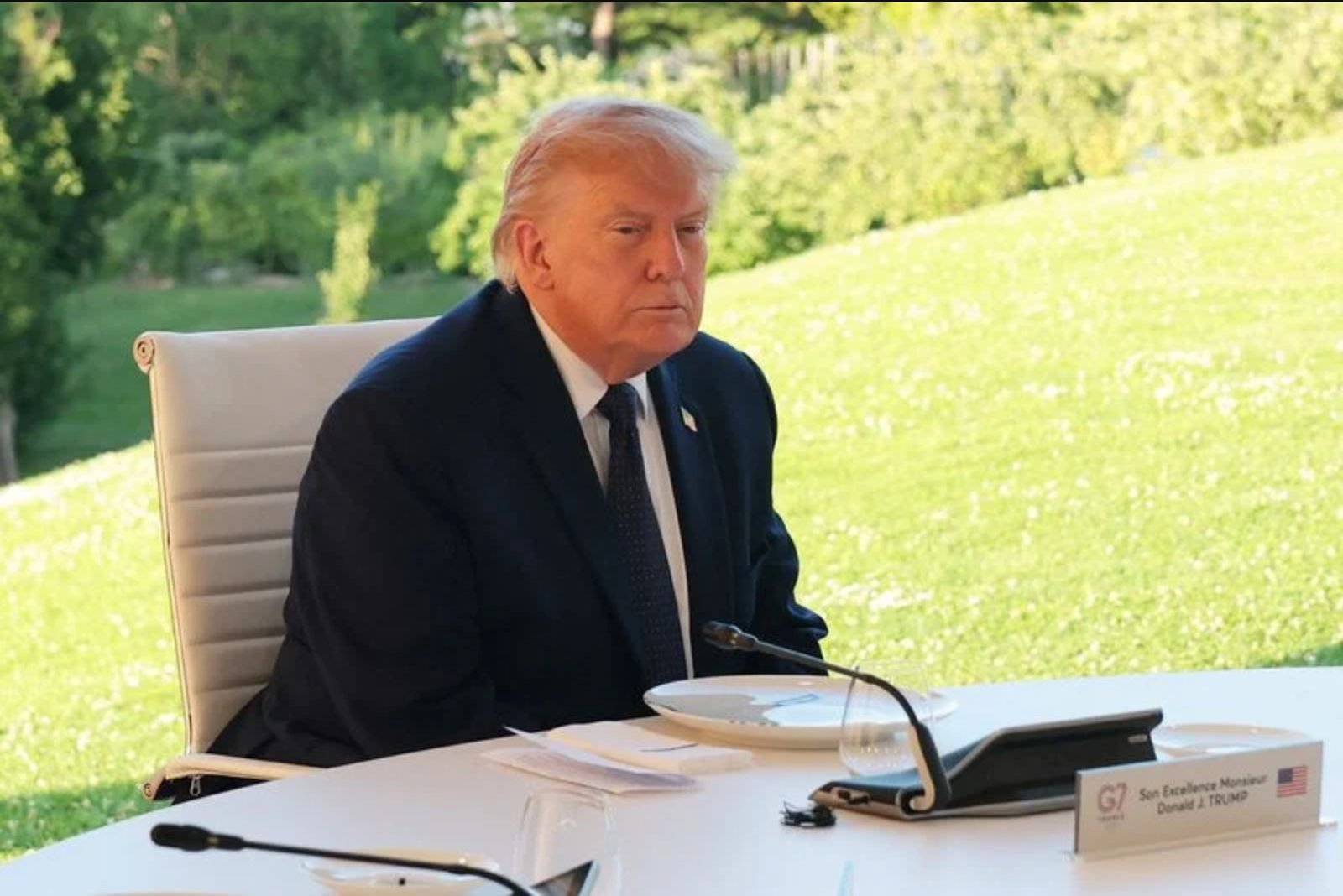
Evian-les-Bains, France, June 16 - U.S. President Donald Trump insisted on Tuesday that an interim agreement with Iran unequivocally bars Tehran from acquiring a nuclear weapon, and he signaled that Syria might be better positioned than Israel to counter the Iran-backed group Hezbollah. Speaking to reporters ahead of bilateral talks with Qatar's Emir Sheikh Tamim bin Hamad Al Thani on the sidelines of the G7 summit, Mr. Trump defended a 14-point memorandum of understanding that has not been released publicly.
"The only thing that really matters to me is Iran will never have a nuclear weapon, and it says it loud and clear," he told reporters, and he warned that "all hell will rain down" on Iran should it seek to obtain such a weapon. Mr. Trump framed the interim document as a firm barrier to nuclear development, contrasting it with the 2015 agreement negotiated during a prior U.S. administration.
U.S. and Iranian officials are due in Switzerland on Friday to begin detailed discussions, opening a 60-day window for technical talks. Sources within the negotiations expect the agenda to include the future management of Iran's highly enriched uranium stocks and the sequence or conditions for lifting sanctions.
European allies have expressed concern that an inexperienced U.S. negotiating team could face difficulty securing a durable and robust agreement, potentially resulting in a protracted standoff. Diplomats and analysts also noted that Iranian negotiators are adept at nuclear diplomacy, often leveraging weaknesses in their counterparts and using time to advance their objectives, making a comprehensive settlement within the 60-day timeframe difficult.
"This deal is a wall to a nuclear weapon. His (Obama) deal was a road to a nuclear weapon. My deal, they can't have a nuclear, they get blown up," Mr. Trump said, defending the interim arrangement and criticizing the earlier agreement negotiated by a previous administration.
Observers say one of the central questions for whether the interim accord will endure is the security situation in Lebanon. Israeli Prime Minister Benjamin Netanyahu has stated that Israeli troops will remain in southern Lebanon as long as needed to address Hezbollah. Tehran, however, has demanded an Israeli withdrawal from that area.
Mr. Trump appeared to critique Israel's current approach in Lebanon and suggested an alternative: that neighbouring Syria might be better placed to deal with Hezbollah. He described Syria, under President Ahmed al-Sharaa, as struggling to stabilise after years of civil war but nevertheless raised it as a potential actor to confront the group.
"I suggested to Israel to let Syria take care of Hezbollah because to be honest, I think they do a better job of doing it," he said.
With diplomatic teams set to meet in Switzerland, the next 60 days are likely to shape whether the interim memorandum leads to technical breakthroughs on Iran's nuclear program and sanctions relief, or whether negotiations stall amid geopolitical frictions and competing regional demands.