
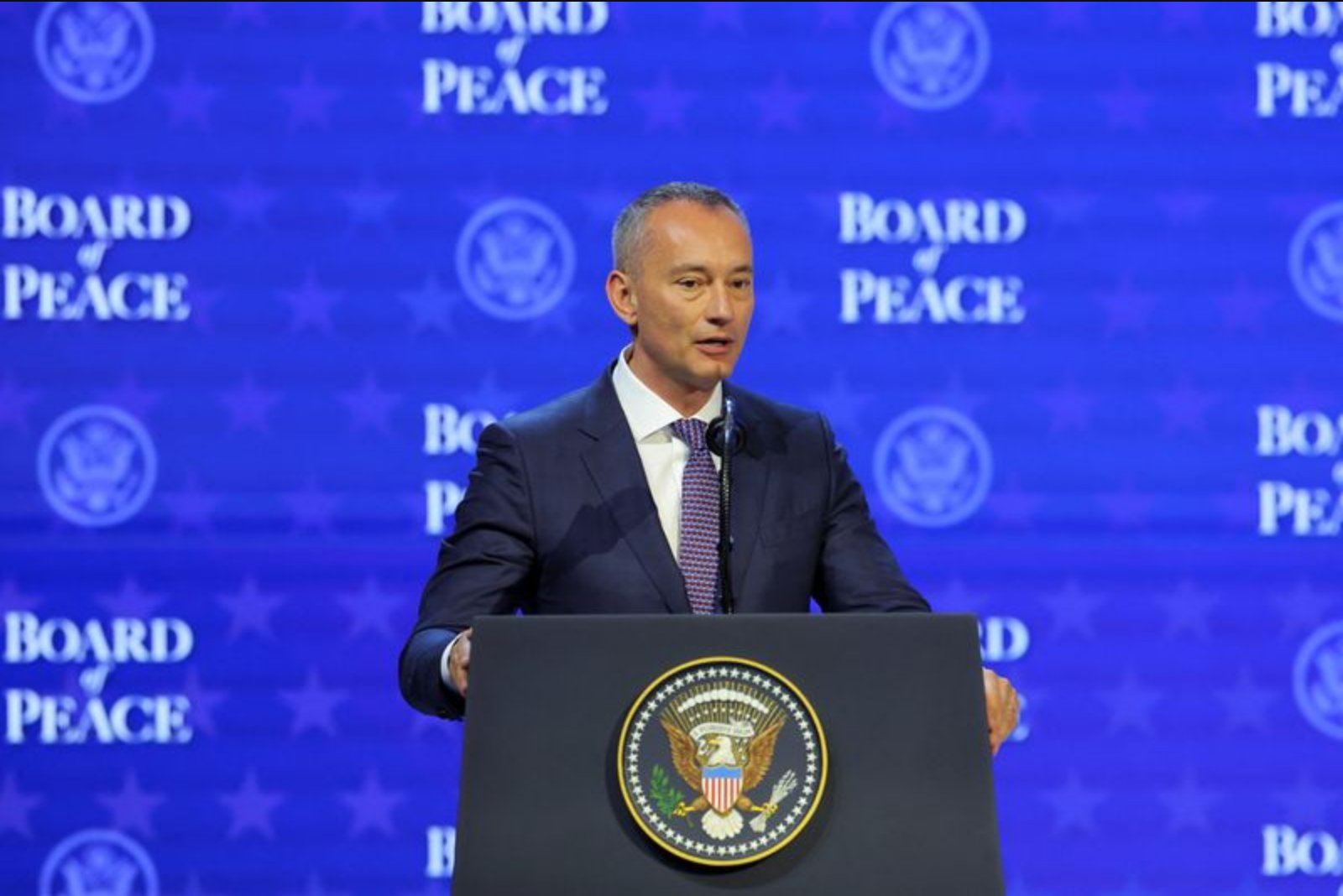
BRUSSELS, April 20 - The lead envoy for the Board of Peace overseeing the Gaza plan told Reuters that he is "fairly optimistic" an agreement can be found for the disarmament of Hamas and other militant groups, but he cautioned that reaching a comprehensive implementation package will take time.
During a visit to Brussels, the envoy said negotiations with Hamas over recent weeks had been intense and challenging. "We’ve had some very serious discussions with Hamas over the last few weeks, they’re not easy," he said, adding that his objective is an outcome that "works for all sides and, most importantly, works for the people in Gaza."
The Board of Peace was proposed by U.S. President Donald Trump in September as the body to oversee his plan to end Israel’s war in Gaza and later expand to other conflicts. The U.N. Security Council has recognised the board, which is chaired by Trump, though several major powers have not become members.
The Trump plan agreed by Israel and Hamas in October foresees Israeli troops withdrawing from Gaza and reconstruction beginning as Hamas lays down its weapons. Implementation of that disarmament remains a central obstacle in efforts to cement the October ceasefire that paused two years of full-scale war. Despite the ceasefire, violence has continued in parts of the Palestinian territory, much of which remains in ruins.
Work on implementation and urgency to keep momentum
The envoy said a draft implementation plan is being prepared and that it will include several interlocking elements - disarmament, new governance arrangements in Gaza, and steps for an Israeli withdrawal. He emphasised the importance of speed in agreeing the arrangements. "It obviously will take time, but we’re trying to make sure that the arrangements for the implementation of the plan are agreed to as quickly as possible," he said.
Asked for a timeline, the envoy set a tight window. "We have a matter of days, maximum a couple of weeks, that is my assessment, because otherwise we will lose the momentum of what we have, and then every decision will become even more difficult," he said.
While he declined to provide specifics of ongoing negotiations, the envoy said there is "a good way forward that is being discussed with both sides." He identified a number of practical issues that still need resolution on the ground.
Issues on the ground: the yellow line, aid access and Rafah
One focus of talks is the so-called "yellow line" that demarcates territory Israel has occupied since the October ceasefire. The envoy noted that "there’s a whole set of issues that need to be handled on the ground, including the yellow line," and that other operational matters such as access for aid and medicine are also the subject of discussions with Israel.
The envoy described modest recent changes at the Rafah crossing with Egypt. "We’ve been able to, over the last few days, gradually and very carefully increase the number of people that are allowed to cross through the Rafah crossing. We’re looking at increasing the number of trucks of goods that are going into Gaza," he said. The Rafah crossing connects Gaza to Egypt.
He stressed the need to build trust between parties, calling the process "very complicated" and noting that it "is a process that is taking a lot of small steps to get us ultimately to an agreement on the full implementation of the plan."
Funding and Board of Peace membership
The envoy addressed financing for relief and the Board of Peace. He referenced U.S. statements that allies had contributed over $7 billion to relief efforts in Gaza and that the U.S. will provide $10 billion to the Board of Peace. He also responded to reporting that the Board had received only a portion of pledged funds by saying, "All the monies that were committed in Washington are there for the Board of Peace. We don’t have any financial issues related to the work of the Board of Peace."
The envoy noted that member states can obtain permanent membership on the board by contributing $1 billion.
Outlook
The envoy expressed cautious confidence that a workable implementation arrangement can be found, while repeatedly underlining the fragility of the current moment and the need for swift agreement to capitalise on recent diplomatic movement. He acknowledged that negotiations with Hamas are difficult and that a number of operational questions remain to be settled before an implementation package can be finalised.
In the interim, small operational gains such as increased crossings at Rafah and discussions on aid access have been made, but the envoy warned that the window to secure broader agreements is limited and that delay risks eroding the progress achieved so far.