
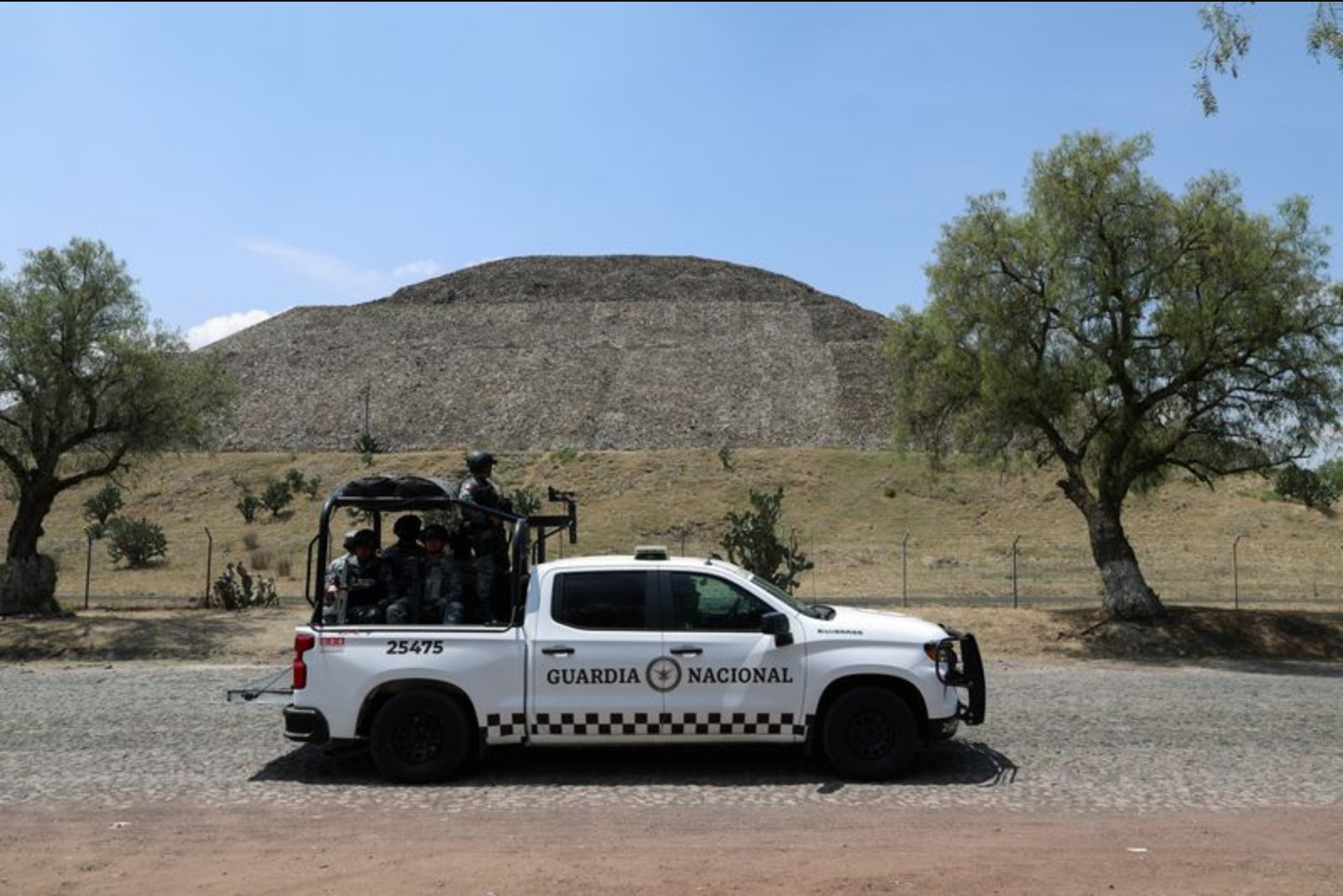
Mexican officials announced tightened security measures after a shooting at the Teotihuacan archaeological complex left a Canadian tourist dead and several others injured. Authorities described the attacker as a 27-year-old man who opened fire from the top of one of the site's pyramids, then took his own life.
Officials said the man carried a firearm and a knife in his backpack and fired 14 times at people in the complex and at members of the National Guard military police who responded. Documents recovered from his belongings referenced the Columbine school massacre in Colorado and included what authorities characterized as materials pointing to psychopathic behavior, Luis Cervantes, attorney general of the State of Mexico, said at the president's daily press briefing.
"Among his belongings, authorities also found ... literature, images and documents allegedly related to acts of violence that ... may have occurred in the United States in April 1999," Cervantes said. He added that the evidence indicated the shooting appeared to have been planned rather than spontaneous and that the attacker had visited Teotihuacan many times before. Alongside the firearm, authorities recovered a plastic bag containing 52 live .38 Special–caliber rounds.
Eyewitness accounts described panic and a sustained burst of gunfire. A tourist who witnessed the incident said the attacker mentioned Columbine while firing. "He was firing and firing and firing and the bullets were making different sounds," Barak Hardley, a visitor from Los Angeles, told reporters. "I don’t know why he stopped with one person. Thank God he did." Other witnesses feared a higher casualty count given the duration of the shooting.
Authorities have reported 13 people injured in the incident, including children aged 13 and 6. The wounded included visitors from Canada, the United States, Colombia, Russia, Brazil and the Netherlands. State officials clarified that seven of the victims suffered gunshot wounds.
Security response and assurances for the World Cup
Security Minister Omar Garcia Harfuch said the state's response was "immediate and forceful," and announced plans to increase protection at archaeological and other major tourist sites. The government expects to strengthen security protocols in the run-up to the FIFA World Cup, which opens on June 11 in Mexico City before matches in other Mexican cities.
President Claudia Sheinbaum said the Teotihuacan site would reopen on Wednesday with reinforced security measures in place. She reiterated the government's commitment to ensuring public safety during the forthcoming World Cup and said she had met with FIFA staff to discuss logistics. "We all know we had never seen anything like this in Mexico," she said, adding that prosecutors had identified signs of psychological problems in the attacker and that he appeared to have been influenced by violent events that occurred abroad.
Sheinbaum had already faced questions about national security linked to recent violent episodes following the capture and death of a major drug figure known as El Mencho in March, which had sparked unrest in several regions.
Context on Teotihuacan and public impact
Teotihuacan, located approximately 50 kilometers (31 miles) from Mexico City, is one of the country’s most visited archaeological sites. The complex of towering pyramids and temples was first occupied from 100 B.C. to 500 A.D. and was later taken over by the Aztecs. Mexico’s tourism ministry reported that Teotihuacan drew 1.8 million visitors last year.
In responding to the attack, officials emphasized both immediate law enforcement action and preventive measures designed to protect visitors to cultural landmarks. President Sheinbaum and security officials framed the incident as isolated and connected to influences from violent incidents abroad rather than domestic organized activity.
Investigators continue to examine the contents found in the attacker’s possession and to assess his motives and planning. Authorities have reported that the individual acted alone, firing multiple rounds before turning the weapon on himself, and that the recovered materials may shed light on his behavior and intent.
As investigators pursue a fuller account of the events, authorities have signaled a heightened operational posture at major tourist destinations and reiterated public assurances ahead of the international sporting event that will bring large crowds to cities across Mexico in June.