
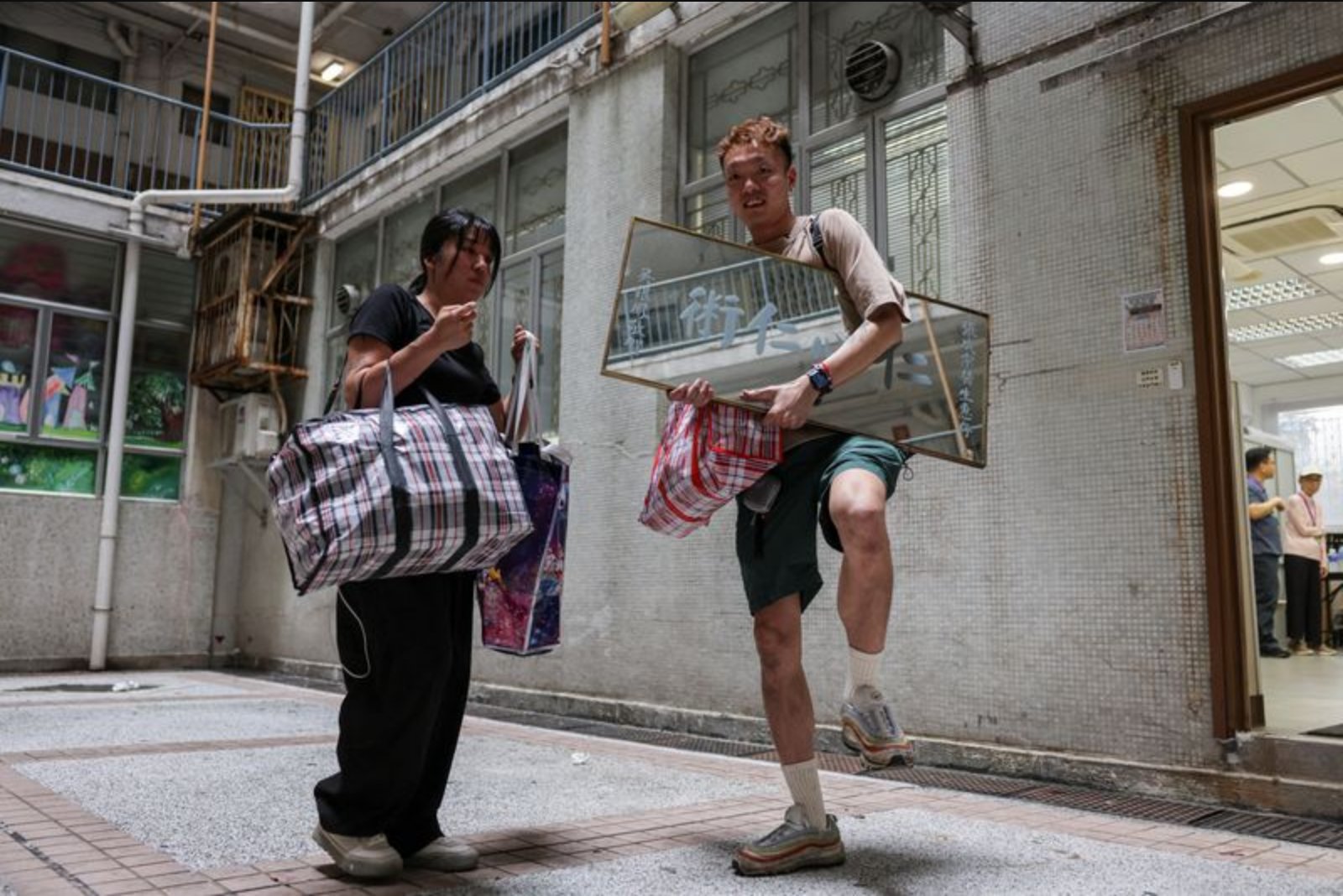
Authorities this week began allowing residents affected by the November blaze that swept through seven residential towers in Hong Kong - killing 168 people - to return to their apartments under supervision to retrieve any items that survived the fire. For many survivors, those visits have been wrenching and revelatory, a confrontation with the scale of the damage and the fragility of everyday life.
One of those returning was 34-year-old Dorz Cheung, who was at work when the fire broke out. Back in his flat for the first time since the incident, Cheung said the dominant feeling was that he felt "suffocated." As he left the apartment, he carried some of the few belongings he considered most precious: his running medals, family photographs and his grandmother's journals, 50 years of handwritten reflections on the Bible.
"Why did this tragedy happen?" Cheung said as he emerged from the building. He described an emotional swing between anger and sadness. "When I first saw the kitchen, I was very shocked, I felt suffocated," he said.
Inside his room, the scene was both familiar and altered. A large plush teddy rested atop ruffled sheets. In the living room, ash and dust had settled across a small piano. The humid air pushing through burned and broken windows left dark streaks on the walls. Among the items Cheung managed to recover were a smartwatch, an old passport and boarding passes he had kept as mementos of his travels.
He also uncovered belongings that had belonged to his late grandfather: documents, rings and two plaques engraved with the words "good heart and great skills." Cheung said he was able to carry only one of the plaques out of the apartment.
"After I finished packing these things up, I just stood there and looked at the apartment for a while," Cheung said. "At that moment, I couldn't help but cry. All the mental preparation I had done beforehand seemed to have been useless."
Cheung had moved into the flat following his grandfather's death during the pandemic so that he could care for his grandmother. The pair are now living in separate 100-square-foot temporary housing units in the same building elsewhere in Hong Kong. His grandmother, who is 88 years old, was unable to climb 14 flights of stairs and had asked him to bring back some of her clothes. Although her room was reportedly the only one in the apartment that escaped direct damage from the fire, Cheung said he did not take any of her clothing during the supervised visit.
"Those clothes, when you smell them, it's still there - the smell of burning," he said.
The morning the fire began, Cheung said his grandmother had been on her way home and alerted him by text message. He told her to wait at a nearby church, but she returned to the flat to cook instead. Roughly half an hour later, a neighbour warned her that the fire was spreading and she fled; the two were reunited late that evening.
Cheung said the shared ordeal has brought him and his grandmother closer. She has adapted to the temporary unit quickly and takes the bus twice a week to attend her church; she also sometimes cooks for him at his place.
Alongside those small consolations, Cheung described ongoing emotional and physical strain. In December he experienced exhaustion and emotional depletion, with symptoms including loss of appetite, nausea, tension and sweating. He said that learning he could return to his home triggered a resurgence of nightmares.
Despite the strain, Cheung said he hopes the experience will ultimately make him stronger. He has resumed running marathons as a way to relieve tension and process what happened. "After losing my home, nothing else can really defeat me, because this was already the hardest thing to deal with," he said. "Life must go on. When something major happens, after you've cried and broken down, you really have to find a way to stand back up. If you don't look after yourself, if you don't care for yourself, how can you take care of others, or go on to do other things?"
The supervised returns mark the beginning of a period in which survivors will assess what can be salvaged from their residences and confront the longer process of recovery, both material and psychological. The scale of the tragedy - covering seven residential towers and resulting in 168 fatalities - has left many residents displaced and relying on temporary housing while officials and authorities manage access to damaged buildings and belongings.
For survivors like Cheung, the items retrieved are at once practical and symbolic: a smartwatch and passport that recall daily routines and journeys, medals that speak to a personal hobby and an identity, and family heirlooms that affirm connections across generations. The physical remnants recovered from the wreckage are tangible links to lives disrupted by the fire.
As affected residents navigate temporary housing and the emotional aftershocks of the event, the immediate days and weeks will involve careful decisions about what to salvage and how to move forward while living with the consequences of the blaze.