
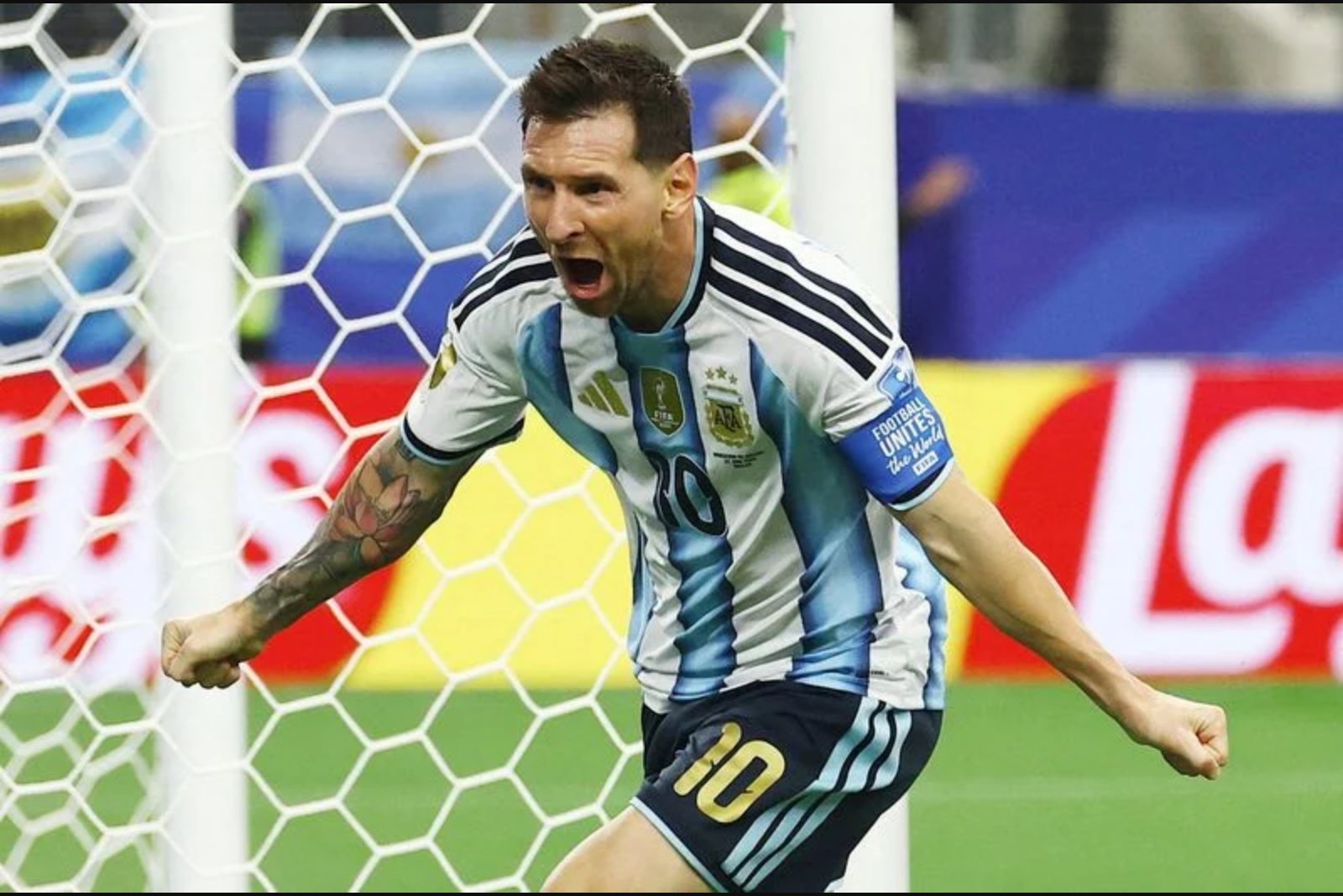
Two days short of his 39th birthday, Lionel Messi added another landmark to a career already heavy with records and accolades. The Argentina captain scored both goals in a 2-0 win over Austria, becoming the World Cup’s all-time top scorer with 18 goals. The pair of strikes moved him beyond Brazil’s Marta, who has 17 World Cup goals, and Germany’s Miroslav Klose, who finished his finals career with 16.
A new entry in the record books
The goals against Austria are the latest chapter in a career that blends moments of extraordinary skill with long-term statistical dominance. Messi’s place among the game’s most decorated players is reflected in a long list of accomplishments: eight Ballon d’Or awards; recognition as La Liga’s all-time leading scorer after a Barcelona tenure that lasted nearly two decades; and 34 trophies with Barcelona, including 10 Spanish league titles and four Champions League crowns. Across club competition he holds a reported tally of 40 titles.
For Argentina, Messi stands alone as the most-capped player with 201 appearances and the nation’s highest scorer on record with 122 goals. His World Cup résumé is notable for its duration as much as for its output - six tournaments played and a record 28 matches - and for the unusual span in which he has scored: the only player to find the net at the tournament as a teenager, in his 20s and in his 30s. On the edge of his 40s, he has produced a statistical achievement few expected to be reshaped.
From early promise to delayed international silverware
Messi first appeared on the global stage in 2006 as a teenage prodigy, but sustained international triumph took time. He endured setbacks in 2010 and 2018, and the pain of the 2014 World Cup final loss to Germany in Brazil. Copa America campaigns also brought disappointment, most notably in 2016 when he missed a penalty in the shootout that decided the final against Chile.
The narrative shifted with consecutive milestones: Copa America titles in 2021 and 2024 bookended the 2022 World Cup win, a sequence that former striker Jorge Valdano described as liberating Messi to happiness. Club detours occurred too. A muted spell at Paris St Germain between 2021 and 2023 prompted questions about decline before a move to Inter Miami that many expected to be a final chapter. Instead, Messi has continued to deliver on the biggest stages.
Resilience in the moment
The Austria match underlined that durability and response. Messi became the first player to miss penalties at three separate World Cups, but he answered those setbacks with two match-defining goals. Reflecting on the experience he said, "There were moments when I felt a lot of anger after missing the penalty, but I was able to make up for it." The comment captures a recurring theme in his career: moments of frustration followed by decisive contributions.
Reactions inside Argentina’s camp mixed admiration and deference. Defender Lisandro Martinez said: "There’s no need to compare him, because he stands alone at the top." Outside the dressing room, responses ranged from a wry endorsement by Klose - "I’ve always said that Messi is not bad," he joked to the Suddeutsche Zeitung, while describing Messi as the greatest player of all time - to a show of public support from Marta, who posted applause emojis on Instagram.
What remains uncertain
Several questions remain open rather than settled. The article highlights a string of possible future milestones that are presented as speculative, not inevitable: the march toward 1,000 career goals - with a parenthetical note that he has already exceeded 900 - the chance of adding another World Cup title, or even a seventh World Cup appearance in 2030, when Argentina are slated to host one of the opening matches. The original reporting does not predict outcomes; it records the possibilities while acknowledging uncertainty.
When Messi arrived in the United States for this World Cup, he still trailed Ronaldo’s 15 finals goals for Brazil. A former Brazil striker framed Messi’s new record as an appropriate recognition: "For the gods of soccer, it’s a fitting statistic that he surpasses everyone. If there’s anyone who deserves this title, I think Messi is the perfect man to be there," the former Brazil striker said.
Messi himself has left the door open on his future at the international level. After scoring a hat-trick in Argentina’s 3-0 World Cup opener against Algeria, he said: "As long as I can and I feel good enough to do it, I’ll be there." The line stands as a personal articulation of capacity rather than a firm commitment to specific future events.
Conclusion
Monday’s performance against Austria reaffirmed Messi’s capacity to both set new benchmarks and to rewrite expectations about career longevity at the sport’s highest level. The record for World Cup goals, coupled with an already-extensive ledger of club and international records, gives a concrete statistical dimension to debates about greatness and durability in modern soccer. What follows from here remains in the realm of possibility rather than certainty, and the captain has signaled that continuation will depend on his own assessment of readiness.