
World May 3, 2026 01:25 PM

Merz Stresses U.S. Role in NATO Despite Washington's Planned Troop Cuts in Germany

German chancellor reiterates transatlantic partnership as U.S. outlines adjustments to military presence

By Leila Farooq
Share
Twitter Reddit Facebook LinkedIn

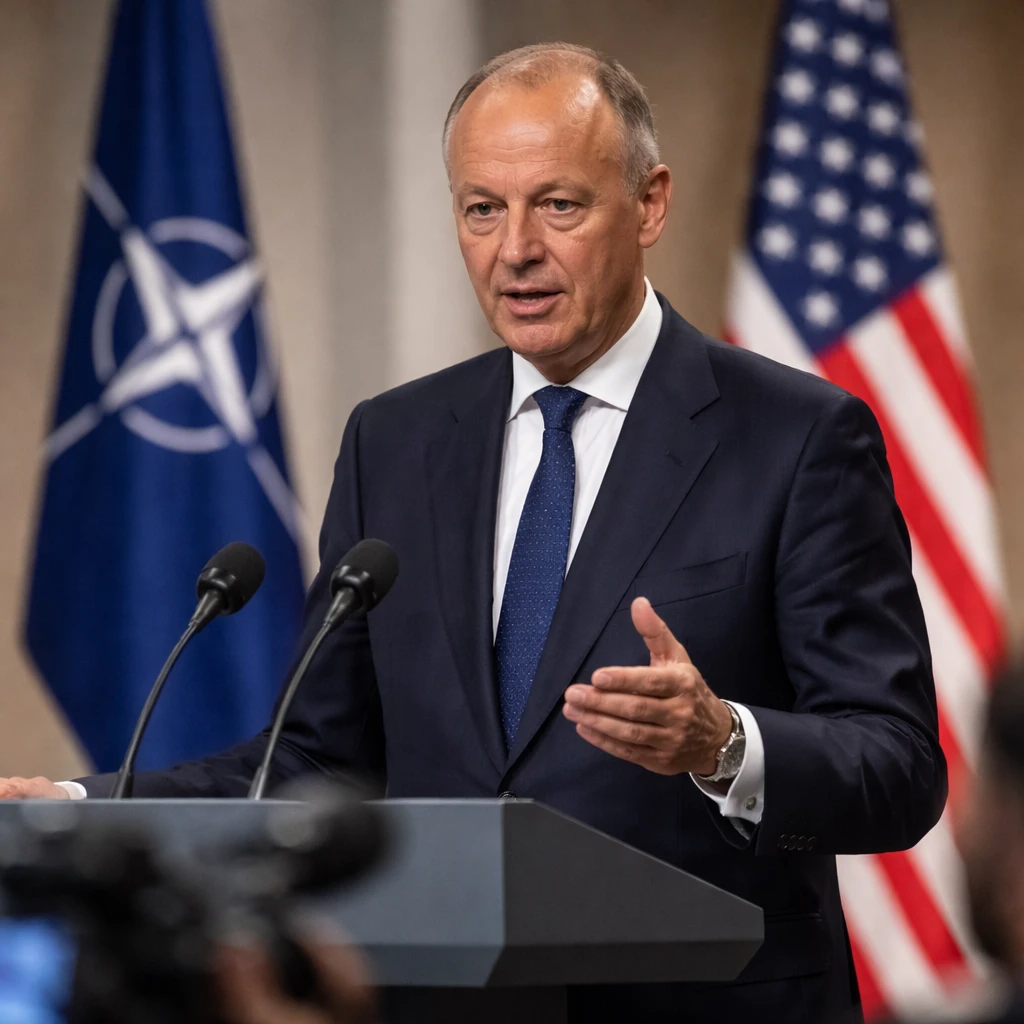
German Chancellor Friedrich Merz reaffirmed that the United States remains Germany's most important ally within the North Atlantic Alliance, while downplaying any link between planned U.S. troop reductions in Germany and disagreements with the U.S. president over Iran policy. Speaking in an interview with public broadcaster ARD set to air Sunday, Merz acknowledged differences with Washington but emphasized the centrality of the transatlantic partnership.

Merz Stresses U.S. Role in NATO Despite Washington's Planned Troop Cuts in Germany
Summarize with
ChatGPT Perplexity Claude Grok Gemini

Key Points

  • Germany's chancellor affirmed the United States as the most important partner within NATO, underscoring the transatlantic alliance - sectors impacted: defense, diplomacy.
  • The remarks followed an announcement by the United States to reduce its military presence in Germany - sectors impacted: defense, local economies tied to bases.
  • Merz rejected a suggested link between the troop reduction and policy disagreements with the U.S. president over Iran, seeking to limit political fallout - sectors impacted: government relations, defense policy.

German Chancellor Friedrich Merz said the United States continues to be the most important partner for Germany within the North Atlantic Alliance, seeking to ease concerns about relations after the U.S. announced plans to scale back its military footprint in the country.

In remarks made during an interview with public broadcaster ARD that is scheduled to air Sunday, Merz said: "I remain convinced that the Americans are the most important partner for us in the North Atlantic Alliance." The statement was offered as officials and observers considered what the announced U.S. troop reductions in Germany might mean for the broader alliance.

The chancellor was asked whether the decision by Washington to reduce its force presence in Germany was connected to policy differences between him and U.S. President Donald Trump, specifically over strategy toward Iran. Merz explicitly rejected that linkage, saying there was no connection between the troop reduction plans and disagreements on Iran policy.

While acknowledging that differences of opinion exist between Berlin and Washington, Merz sought to play down any suggestion of significant friction with the Trump administration. He underlined the continuing importance of the transatlantic partnership within NATO and framed the relationship as central despite isolated policy disagreements.

The comments come in the immediate aftermath of the U.S. announcement about adjusting its military presence in Germany. Merz emphasized that differing views on particular issues do not negate the foundational security relationship between the two countries within the North Atlantic Alliance.

The chancellor's remarks aimed to reassure domestic and international audiences that Berlin still regards the United States as a pivotal NATO partner, even as both sides navigate occasional policy divergences.


Summary of key elements

  • Merz reaffirmed the United States as Germany's most important NATO partner.
  • The comments followed a U.S. announcement to reduce its military presence in Germany.
  • Merz denied any connection between the troop reductions and disagreements with the U.S. president over Iran strategy.

Risks

  • The announced U.S. troop reductions introduce uncertainty about the operational footprint and future security arrangements in Germany - this affects defense planning and related markets.
  • Differences of opinion between German and U.S. leadership on specific policies, even if downplayed, could complicate coordination within NATO - this has implications for diplomatic relations and defense procurement timelines.
  • Limited public detail about the link between policy disagreements and military decisions leaves room for misinterpretation or political friction - this uncertainty may influence government and defense sector stakeholders.

More from World

Adjacent Caribbean Towns Deliver Starkly Different Votes as Colombia's Run-off Nears Jun 19, 2026 Meloni Rejects Trump’s Account of G7 Photo Request, Says Claim Is 'Completely Made Up' Jun 19, 2026 Vietnamese Deportee Flies Home from South Sudan After Year in Country Jun 19, 2026 African Parliamentarians Move to Advance Stricter Anti-LGBT Measures Following Accra Conference Jun 19, 2026 Lee says Trump open to phased approach on North Korea while keeping denuclearisation as long-term aim Jun 19, 2026