
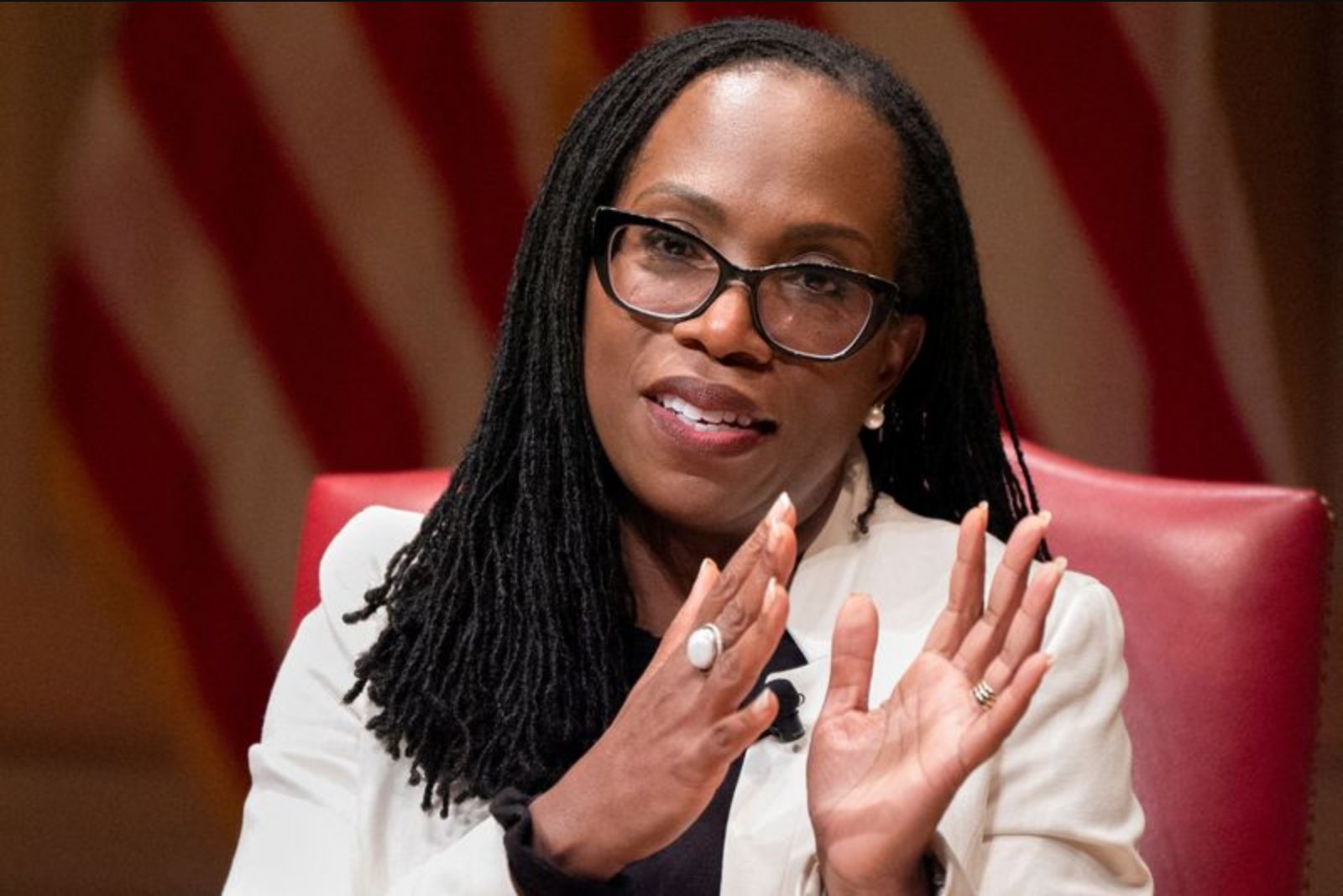
Justice Ketanji Brown Jackson intensified her public criticism of the U.S. Supreme Court’s growing preference for resolving contentious matters through its emergency docket, warning that the practice short-circuits the normal appellate process and undermines the role of lower courts. Jackson, one of three liberal justices on the nine-member court, raised these concerns in remarks delivered at Yale Law School on Monday in an event that was closed to the general public; Yale later released a video of the address on Wednesday.
The emergency docket - often referred to as the "shadow docket" - allows the court to rule without the extended briefing, full written submissions and public oral argument that mark the standard docket. Decisions in such cases are frequently brisk, unsigned orders issued on an expedited basis and do not follow the conventional appeals timeline.
Jackson argued that conservative members of the court are increasingly using this pathway to step in earlier and more often than necessary in disputes that could be resolved in lower courts. That intervention, she said, produces a "corrosive effect" on the judiciary.
"There is value in avoiding having the court continually touching the third rail of every divisive policy issue in American life," Jackson said, using a metaphor that referred to the subway rail that carries lethal voltage. "Today, the court routinely opts to enter the fray, and it fails to acknowledge the harms that follow when the Supreme Court of the United States consistently and casually divests the lower courts of their equitable authority."
Jackson described one consequence of such intervention as the creation of "zombie proceedings" in lower courts - cases that are effectively disrupted or rendered directionless when the high court intervenes while litigation remains pending below.
Historically, the court’s emergency docket was a narrow tool. Jackson recounted that when she served as a Supreme Court clerk in 1999, the emergency docket was used almost entirely by death-row inmates seeking stays to avoid execution. "But, in recent years, the Supreme Court has taken a decidedly different approach to addressing emergency stay applications," she said. "It has been noticeably less restrained, especially with respect to pending cases that involve controversial matters."
That shift, Jackson told her Yale audience, contrasts with the prior inclination of justices to leave high-profile disputes out of the Supreme Court for as long as possible. At the time she clerked, she said, justices hoped such cases "would stay away from the Supreme Court as long as possible," appreciating that little good comes from taking "an institution that is supposed to be operating outside of the political realm and routinely steering it into the fray."
The frequency of emergency docket orders has climbed markedly in recent years and surged after President Donald Trump returned to office in January 2025. In a number of cases decided through the emergency process, the court has allowed the administration to proceed with policies that lower courts had temporarily blocked pending further review. Jackson cited examples of subject matter that have moved through the emergency docket, including immigration measures, a ban on transgender people serving in the military, the removal of certain federal agency officials, mass federal layoffs and cuts to foreign aid.
By contrast, roughly 70 matters heard on the court’s standard docket each year receive fuller public scrutiny: oral argument is open to view and the court issues detailed opinions explaining the legal reasoning behind its holdings. That transparency stands in tension with the more opaque emergency orders, which critics inside and outside the judiciary say have been used to effect substantive policy changes without the deliberative processes typical of the court’s ordinary work.
Jackson made clear she does not accept the premise that emergency orders should have the same legal weight as full opinions. Her remarks came after Justice Neil Gorsuch, one of three justices appointed by Trump, wrote in a court opinion last year that emergency docket orders should be treated as precedent, adding: "Lower court judges may sometimes disagree with this Court’s decisions, but they are never free to defy them."
Addressing that view, Jackson said: "It simply does not make sense for the Supreme Court to create lock-in effects with respect to legal issues while deciding emergency stay applications. The point of an emergency application is just to avoid the real-world harms that can come from litigation delay."
Jackson’s remarks highlight a debate inside the court and across the legal community over how the judiciary should balance the need to prevent imminent harms against the institutional interests of allowing lower courts to develop the record and reasoning in complex, often divisive disputes. She warned that the current practice risks substituting rapid high-court intervention for the slower, deliberative processes that have historically governed the resolution of major legal controversies.
Key points
- Justice Jackson criticized the growing use of the Supreme Court’s emergency docket, saying it is being deployed too often and too quickly and produces a "corrosive effect" on the judicial system.
- The emergency docket bypasses the usual public oral arguments and comprehensive briefing that characterize the court’s standard docket, producing brief and often unsigned orders issued on an expedited basis.
- Recent emergency orders have allowed the Trump administration to advance policies previously blocked by lower courts in areas such as immigration, military service by transgender people, federal agency personnel matters, mass federal layoffs and foreign aid.
Risks and uncertainties
- Potential erosion of lower-court authority and the creation of "zombie proceedings" could increase legal uncertainty for parties involved in pending litigation - impacting governmental agencies, defense and immigration-related sectors, and entities facing federal workforce decisions.
- When emergency orders are treated as de facto precedent, lower courts may face pressure to conform quickly to high-court directives, reducing the time available to develop comprehensive records and reasoned opinions - a dynamic that affects sectors reliant on predictable regulatory or legal outcomes.
- The accelerated use of the emergency docket may produce abrupt policy shifts that could have real-world effects on federal operations and programs, including military personnel policy, immigration enforcement, federal employment actions and foreign aid allocations.