
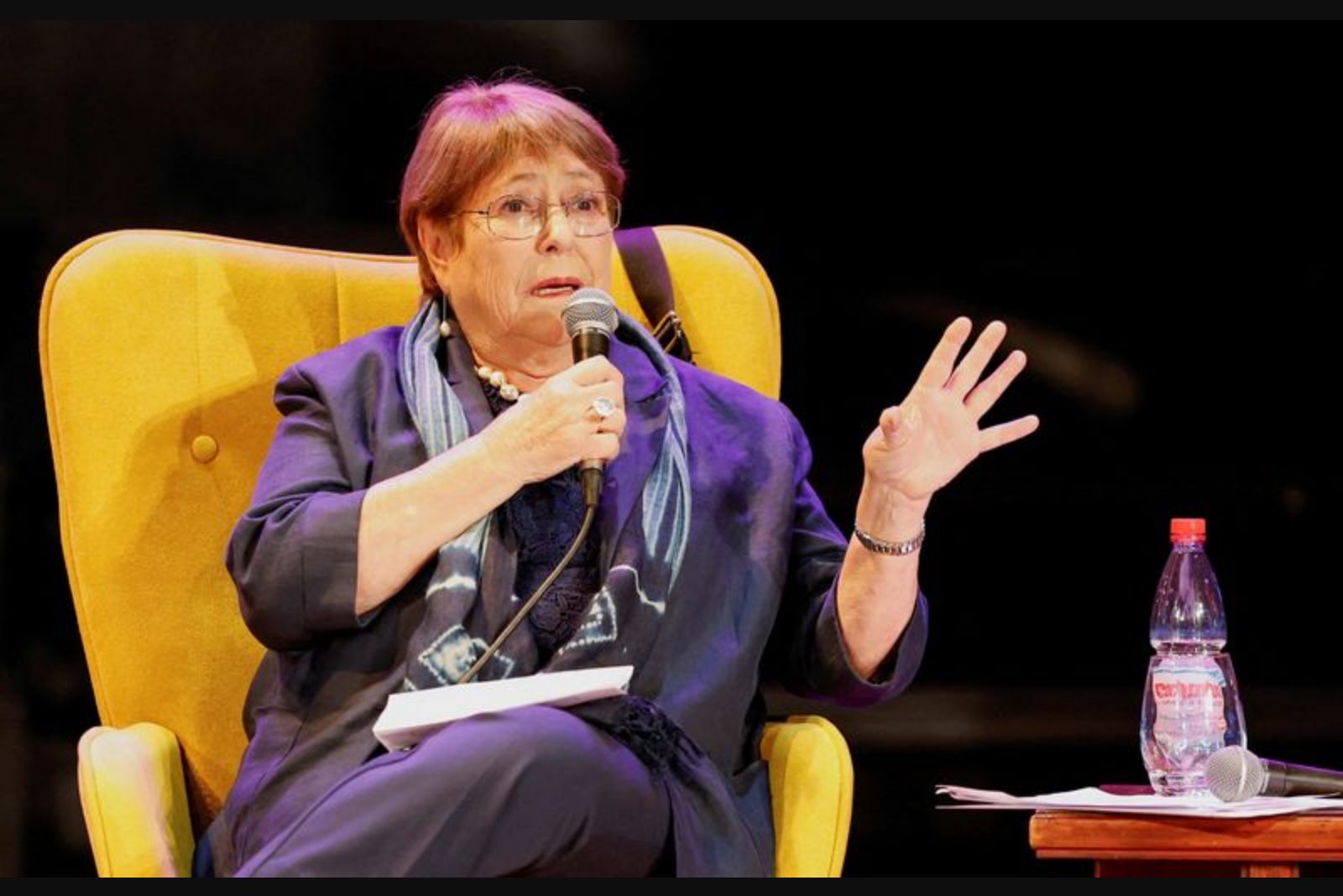
WASHINGTON - The United States' representative to the United Nations, Mike Waltz, appeared to cast doubt on the candidacy of former Chilean president Michelle Bachelet for the role of U.N. secretary-general during testimony before a U.S. Senate committee on Wednesday. Responding to pointed criticism from Republican Senator Pete Ricketts, Waltz said he shared the senator's concerns about Bachelet's fitness for the top U.N. post.
At the hearing, Senator Ricketts accused Bachelet of failing to label China's actions against Uyghur Muslims as genocide in a 2022 U.N. human rights report and of promoting abortion as a fundamental human right. In response, Waltz stopped short of naming who the United States will support or oppose in the race to succeed U.N. Secretary-General Antonio Guterres. But when pressed about Ricketts' critique, he replied, "I share your concerns." He further stated that he believed "U.S. Secretary of State Marco Rubio also shared the concerns."
A new U.N. secretary-general is to be chosen this year, to serve a five-year term beginning on January 1, 2027. Success in that selection process typically requires the backing of the five permanent members of the U.N. Security Council - the United States, Russia, China, Britain and France. That dynamic places considerable weight on any objections voiced by those states.
Bachelet's record as U.N. high commissioner for human rights from 2018 to 2022 has already drawn criticism from multiple directions. The 2022 report at the center of Ricketts' remarks said the detention of Uyghurs and other Muslims in China's Xinjiang region may amount to crimes against humanity, a finding that also drew Beijing's ire. The senator's broader critique included Bachelet's stance on abortion, which he said amounted to advancing it as a fundamental human right.
Waltz framed his comments within a broader view of what the United States seeks from the institution's next leader. He said conventional wisdom in New York - where the U.N. is headquartered - has suggested that, because there has never been a female secretary-general or one from Latin America, the next secretary-general should be a Latin American woman. Waltz rejected that quota-based logic, saying, "We have taken the position of we just need the best," and added, "And this institution desperately needs strong, effective leadership."
On priorities, Waltz said reform would be central to U.S. criteria for candidates, stressing, "reform, reform, reform ... and getting back to basics on peace and security will be at the top of our criteria."
To date, four candidates have been formally nominated for the post. They include Michelle Bachelet - Chile's first female president, who served two presidential terms - Rafael Grossi, the Argentine diplomat who currently leads the International Atomic Energy Agency, Rebeca Grynspan, a former vice president of Costa Rica, and Macky Sall, the former president of Senegal.
Chile withdrew official government backing for Bachelet's candidacy in March after a change in leadership and a political shift in the country. Despite that withdrawal of Chilean government support, Bachelet has said she would continue her campaign with backing from Brazil and Mexico. A representative for Bachelet's campaign did not immediately respond to a request for comment.
The candidates are scheduled to participate in interactive dialogues at the United Nations next week, which will be broadcast live. Michelle Bachelet is set to take part in the first of those sessions on Tuesday. The live dialogues are part of the process by which the Security Council and member states assess contenders for the secretary-general post.
Background and next steps
The coming weeks will feature direct interactions between member-state representatives and the nominees through the scheduled dialogues. Given the requirement for support from the five permanent Security Council members, declarations of concern from key diplomatic partners and influential lawmakers can have a decisive effect on a candidate's viability.
This hearing highlighted how domestic political dynamics and prior international roles can intersect in the campaign for the U.N.'s top office. It also underscored the procedural reality that national endorsements and oppositions - whether formal or signaled in high-profile forums - can influence the selection outcome.