
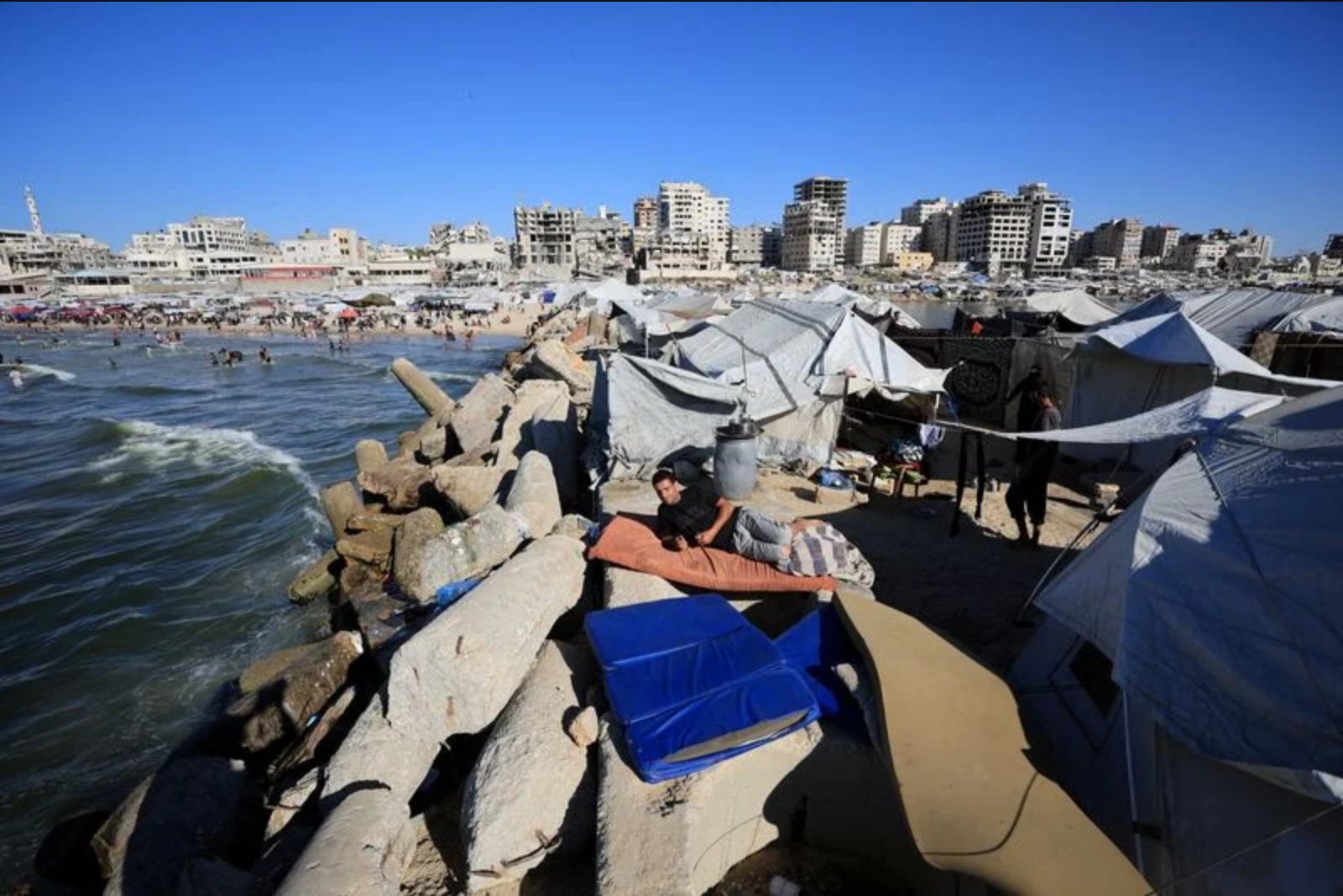
Residents across the Gaza Strip are increasingly abandoning cramped, stifling tents and heading to the Mediterranean coastline to bathe and wash clothing as summer heat intensifies and access to fresh water remains severely constrained. Nearly the entire population was displaced during two years of war between Israel and Hamas, and many now occupy a narrow coastal band, living in makeshift tents and in damaged buildings.
Standing on Gaza City’s shoreline, displaced resident Wadie al-Ras, 36, described the sea as the only available relief. "The only outlet in the Gaza Strip, from north to south, is the sea," he said. "The tents we have been staying in since the war are a torment."
Before the conflict that began in October 2023, Gaza City’s sandy beach served as a leisure spot for locals. That has changed; the coastline is now a refuge from packed tent camps that are prone to infestation and disease, and which offer little respite from high temperatures. Morning temperatures across Gaza register between 28 and 31 degrees Celsius, and conditions inside tents feel substantially hotter.
Even so, the sea provides limited comfort. Local residents and municipal officials say the water is thick with sewage and waste, reflecting the collapse of infrastructure that had supported a population of more than two million. "The seawater is not clean. There’s sewage in it, filled with dirt," said Shehab al-Suwaireki, 36, a displaced father of six. Without reliable freshwater sources, however, families feel they have no alternative. "We go in and wash (clothes) and bathe then we get out," Suwaireki said. "In any case, germs are getting to our bodies."
Husni Muhanna, a spokesperson for the Gaza municipality, pointed to the damage inflicted on critical water and sanitation systems. Many water pumps have stopped working due to Israeli bombardment, while sewage stations, pumping facilities and water treatment plants have all been severely damaged, he said. "Residents resort to the beach despite all the dangers," Muhanna added.
The war began when Hamas-led militants attacked Israel from Gaza on October 7, killing 1,200 people and seizing 251 hostages. Israel responded with an extensive military campaign in Gaza that health officials in the Hamas-controlled territory say killed at least 73,000 Palestinians. Despite an October 2025 truce, Israel has continued to conduct deadly attacks in Gaza; Israel says those strikes aim to prevent imminent attacks by Hamas and other militants. Hamas has so far rejected calls to lay down its arms in exchange for Israeli troop withdrawal. Aid and basic essentials remain scarce across the territory.
Displaced residents describe life in the tents as unbearable. Nahed Hamouda, 56, a father of four uprooted from Jabalia north of Gaza City, said the tents were "like an oven." "There’s no electricity, no fan, no water, even the food is inedible," he said, while fanning himself with a piece of cardboard.
The aggregate picture presented by residents and municipal officials is one of a humanitarian system pushed to collapse: damaged water infrastructure, a high density of displaced people concentrated along a narrow coastal area, and environmental contamination that increases health risks. With potable water in short supply and sanitation systems failing, residents are forced to choose between the immediate relief of the sea and the significant health hazards posed by polluted water.
The combination of persistent displacement, damaged utilities and scarce aid underscores an acute public health challenge in Gaza. Municipal spokespeople note that, in the absence of functioning pumps and treatment facilities, coastal waters have become the default - and hazardous - resource for basic personal and household needs. Residents, meanwhile, continue to use that resource despite concerns about contamination and the spread of disease.
Notes on sourcing and scope
This report reflects on firsthand comments from displaced Gazans and statements from municipal officials regarding living conditions, infrastructure damage and the use of coastal waters when freshwater supplies are not available. It does not introduce new casualty figures, dates, or developments beyond the details provided by residents and officials quoted here.