
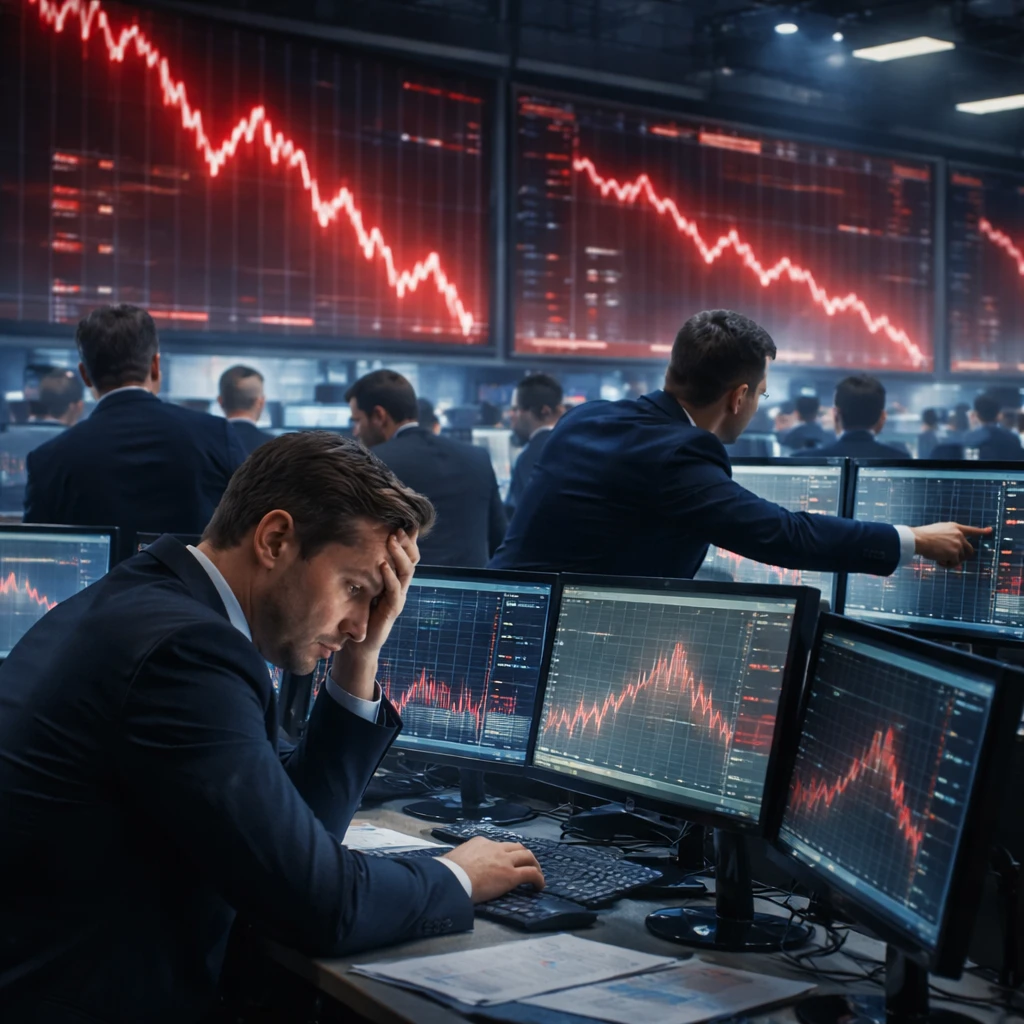
Alphabet Inc. shares fell steeply on Monday, sliding 6.8% to $343 as the stock recorded one of its largest single-session declines in recent memory. The drop came as the company confronted two high-profile personnel departures in its AI research ranks and a substantial decline in the market price of its investment in SpaceX.
The immediate catalyst for investor concern was the Friday announcement by John Jumper, a Vice President Engineering Fellow at Google DeepMind and a 2024 Nobel Prize in Chemistry co-recipient for his work on the AlphaFold protein-structure model. Jumper said he would leave Google DeepMind after nearly nine years to join Anthropic.
Jumper's decision followed closely on the heels of news that Noam Shazeer, Google's VP of Engineering and co-lead on the Gemini AI models, was departing to join OpenAI. Shazeer returned to Google in 2024 when the company spent $2.7 billion as part of its acquisition of CharacterAI, and his move to OpenAI has been characterized in media coverage as "a major win for OpenAI in the AI talent wars." Shazeer is also credited as a co-author of the 2017 paper "Attention Is All You Need," a work widely cited as foundational to the development of modern transformer-based AI models.
Market participants interpreted the closely timed exits as more than isolated personnel changes. For a company that has placed significant strategic emphasis on the output of Gemini and DeepMind, the departure of one architect of AlphaFold and a co-architect of Gemini in rapid succession was viewed as a credibility setback and a risk to investor confidence.
Analysts framed the talent shifts within a broader structural context. D.A. Davidson analyst Gil Luria noted the intense competition for frontier AI researchers and argued that smaller, more focused AI labs can leverage less bureaucracy to attract top talent - an advantage that, he said, can put them ahead of larger incumbents like Google when recruiting research leaders.
Compounding the talent-driven pressure on Alphabet was a sharp pullback in SpaceX's market price on Monday. SpaceX traded down 9.4% to $167.57. The company had listed at $135 per share on June 12 and briefly lifted SpaceX's implied market capitalization above $2 trillion before that initial enthusiasm waned. SpaceX fell more than 6% last Thursday and was on pace for a third consecutive day of declines on Monday.
Alphabet owns a sizable position in SpaceX, holding nearly 5% of the company. The combination of a large exposure to a declining equity holding and the contemporaneous AI talent exits intensified selling pressure on Alphabet's stock.
Observers pointed to several converging headwinds that had already complicated Alphabet's outlook prior to the latest developments. A TradingKey analysis cited three principal pressures: heavy AI capital expenditure - with full-year projections approaching $190 billion - the recent string of talent departures, and mounting regulatory scrutiny across multiple jurisdictions, including the United States, the European Union, and the United Kingdom. In the UK, the Competition and Markets Authority has issued a transparency order affecting Google Search, and the U.S. faces pending antitrust ad-tech remedy hearings.
Investor sentiment had also been affected by Alphabet's sizable equity offering in early June. The company executed an offering in excess of $80 billion to finance AI infrastructure investment, a move that raised questions about shareholder dilution and weighed on sentiment in the weeks that followed.
With these factors converging, market participants are focusing on an upcoming milestone in Alphabet's calendar. The company is scheduled to report second-quarter 2026 earnings on July 28. Until that report, the principal uncertainty for investors is whether the recent departures mark a short-term shuffle of personnel or presage a deeper erosion of talent at DeepMind and across Alphabet's AI efforts.
For now, the market has priced the immediate credibility concerns and the financial exposure to SpaceX into Alphabet's share price, leaving analysts and investors watching closely for further developments around recruiting, capital allocation, and regulatory outcomes.