
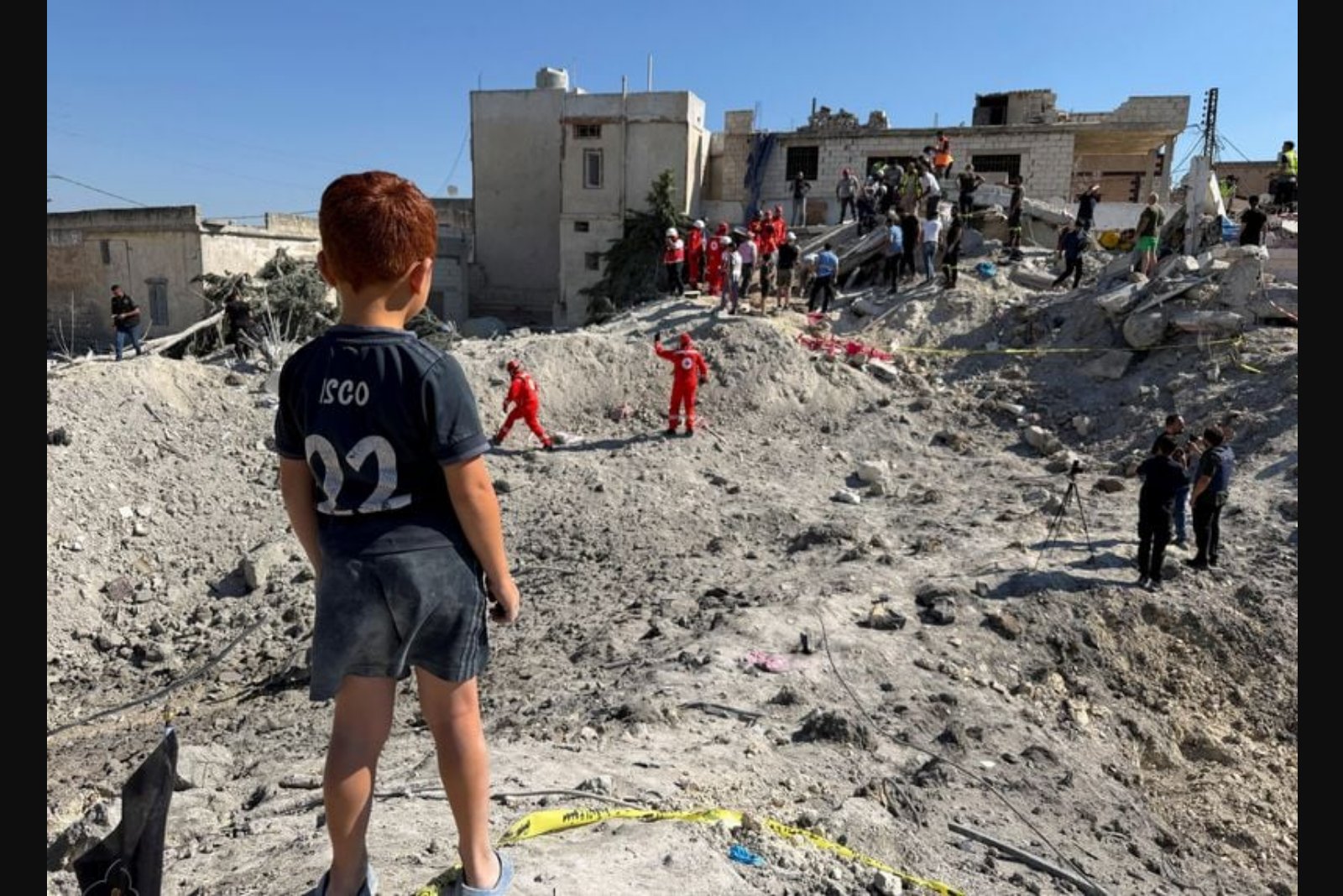
June 22 - A ceasefire that took effect Saturday evening has, by multiple accounts, largely held in Lebanon, marking the most sustained pause in the three-month conflict between Hezbollah and Israel. Lebanese security officials described adherence to the truce as "almost total," even as isolated incidents and persistent military presences have left many civilians reluctant to resume normal life.
Officials reported a series of limited incidents on Monday: an Israeli tank fired shells toward a village near Tyre, Israeli forces deployed sound grenades in two distinct locations, and an Israeli drone was reported buzzing over Beirut. These actions stood in contrast to the wider quiet that has settled over much of the country since the weekend.
Diplomatic efforts aimed at preventing a return to full-scale hostilities are underway. An interim U.S.-Iran arrangement to end the broader regional fighting has come under strain and been tested by the course of events in Lebanon. Tehran announced over the weekend that it had once more closed the Strait of Hormuz, saying Washington had failed to uphold its obligation to halt military operations in Lebanon. Washington’s delegation, led by U.S. Vice President JD Vance at initial talks with Iran, said progress had been made toward ending the hostilities in Lebanon and stated that the Strait is open. Vance described Lebanon as "a work in progress."
Local conditions and civilian response
In Nabatieh, a southern city that has absorbed heavy bombardment during the conflict, hospital director Hassan Wazni said calm had prevailed since Saturday evening. "I’m monitoring the situation day by day, and most of the time I’m sleeping in the hospital. This is the longest a ceasefire has held," he said by phone.
Despite the pause, return to homes has been limited. Wazni and municipal statements highlighted the continued unease among residents. A ceasefire declared on Friday previously collapsed, and Lebanon’s civil defence reported that Israeli attacks on Saturday killed 20 people. The municipal council of Zawtar El Charqiyeh circulated a warning on social media advising residents not to return until it is safe to do so.
Israeli forces remain deployed deep inside southern Lebanon, operating within a self-declared security zone. Those forces have razed villages in that area, asserting that Hezbollah has embedded itself within civilian communities. In a signal of decreased immediate danger along parts of the border, the Israeli military lifted safety restrictions in eight communities near the Lebanese frontier beginning at 6 a.m. (0300 GMT) on Monday.
Residents along the Israeli border voiced lingering mistrust despite the pause. Miry Menashe, a 41-year-old resident of Metula located directly at the Lebanese frontier, said: "The ceasefire is fragile because, first of all, we are dealing with a terror organization. We’re not dealing with the Lebanon country itself. So, to tell you the truth, I have no faith in them. So, ceasefire or not, we’re still very alert and ready for anything."
Diplomatic framework and military posture
At the end of a first round of U.S.-Iran talks mediated by Pakistan and Qatar in Switzerland, parties issued a joint statement agreeing to create "a de-confliction cell" to help ensure adherence to a termination of hostilities in Lebanon. Israel has not issued a public comment on that element of the agreement.
The interim deal, pushed by Iran and signed with the United States last week, calls for Washington, Tehran and their allies to declare an immediate and permanent cessation of military operations on all fronts, including Lebanon. Israel and Hezbollah had agreed to a ceasefire on Friday afternoon, but fighting re-erupted on Saturday, prompting Iran to again announce a closure of the Strait of Hormuz. U.S. officials disputed that the Strait was closed, while available commercial shipping data registered an immediate effect.
On Saturday evening, an Israeli military official said the armed forces had received updated directives from the political echelon to cease fire. The official characterized the military’s posture as operating in "a defensive manner within the security zone."
Lebanese President Joseph Aoun engaged with international interlocutors by phone, discussing efforts to preserve the ceasefire and to prevent Israeli military escalation. The calls included U.S. Vice President JD Vance, Qatari Prime Minister Sheikh Mohammed bin Abdulrahman al-Thani, and White House envoy Jared Kushner, according to a statement from the Lebanese presidency.
Human toll and displacement
Since Hezbollah opened fire on March 2 in support of Iran, Lebanese health ministry figures report that Israeli attacks in Lebanon have killed 4,106 people. That total includes 773 women, children and health care workers; the ministry’s toll does not specify how many of the dead were combatants. The violence has uprooted a significant portion of the population: Lebanese authorities estimate that about 1.2 million people have been forced from their homes.
In Israel, the conflict has also produced fatalities. At least 32 soldiers and four Israeli civilians have been reported killed in this round of hostilities with Hezbollah.
Outlook
The current lull marks the most sustained pause since the conflict intensified, but the combination of continuing military deployments, isolated incidents, official warnings against returning to damaged towns, and competing claims over regional maritime access leave the situation fragile. Diplomatic mechanisms created in recent talks aim to monitor and reduce the risk of renewed fighting, yet both local civilians and border communities caution that the truce may not yet be durable.