
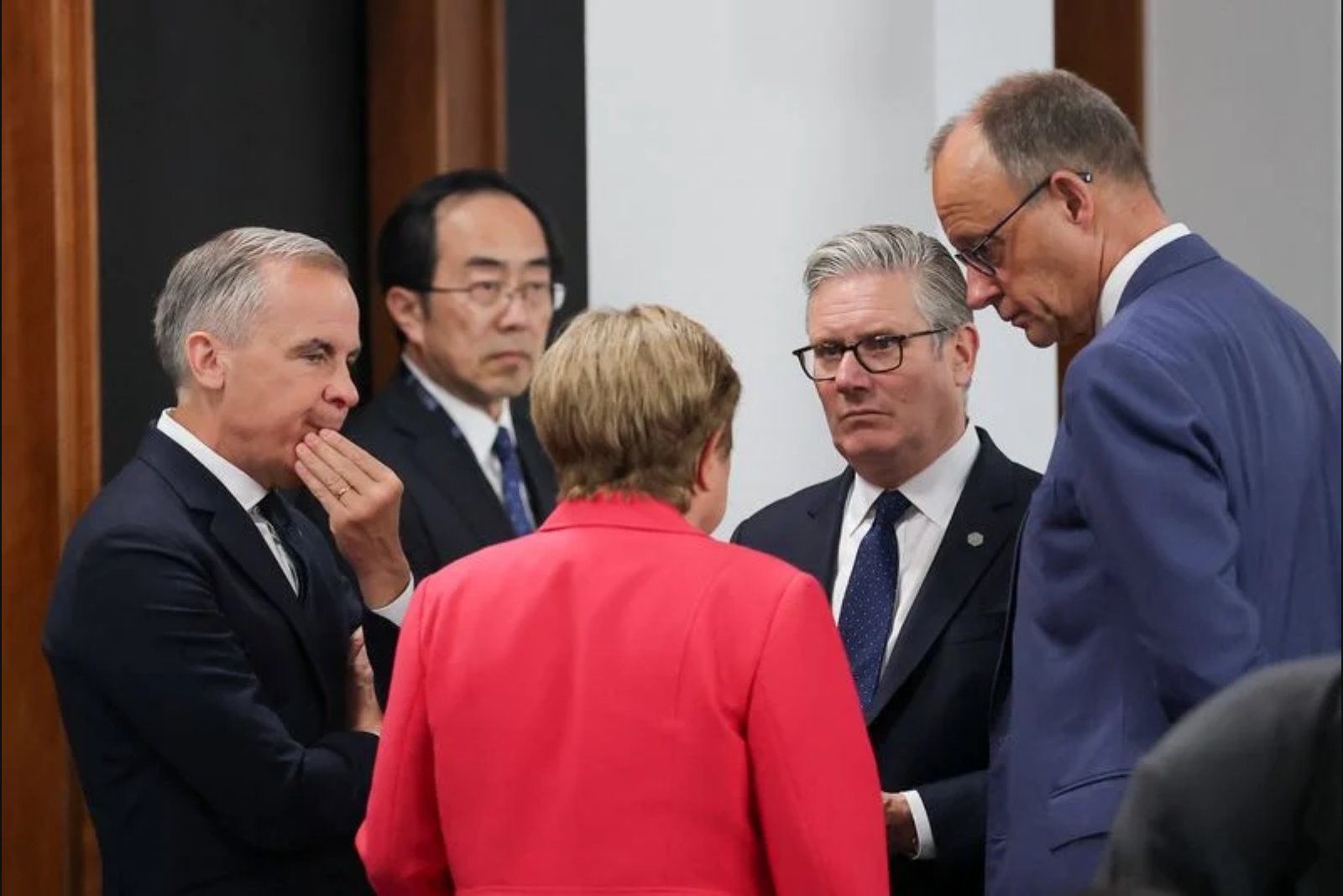
G7 leaders convening in the French town of Evian-les-Bains on the shores of Lake Geneva on Wednesday pressed for an immediate halt to fighting in Lebanon and committed to steps aimed at lowering global vulnerability to disruptions in the Strait of Hormuz. Their statement also welcomed an interim U.S.-Iran memorandum of understanding that, officials say, will extend a truce and create a window for negotiating a lasting end to the conflict.
Details of the U.S.-Iran agreement were emerging slowly from Washington and Tehran ahead of a formal unveiling expected on Friday across the nearby Swiss border. The accord is intended to launch talks toward a final settlement to a war that has so far killed more than 7,000 people, mostly in Iran and Lebanon.
In the joint statement, the G7 leaders said: "We underline the need for the negotiation ... to address the threats posed by Iran in the region and beyond and ensure that they never obtain a nuclear weapon." The declaration framed the memorandum as a path to further diplomacy while reiterating longstanding concerns about Iran’s capabilities.
For U.S. President Donald Trump, the summit provided an opportunity to present the terms of the deal to G7 allies - Britain, Canada, France, Germany, Italy and Japan. While these partners largely share Washington’s anxieties about Iran’s nuclear programme and other regional activities, they did not endorse the U.S. decision to go to war and have expressed unease that Tehran may have gained bargaining power by enduring the confrontation and asserting influence over the Hormuz shipping lane.
The G7 statement said allies were willing to assist with implementing the agreement. A coalition led by Britain and France is slated to help secure shipping once the Strait of Hormuz reopens, which U.S. and other officials expect could happen on Friday if the memorandum leads to an operational cessation of hostilities there.
The memorandum of understanding signed by Washington and Tehran this week, although not yet made public, reportedly extends the April-announced ceasefire by another 60 days to give negotiators time to seek a permanent truce. The accord, as described by U.S. officials, is intended to be the start of a process that could address key issues in subsequent talks.
Yet, observers note that the agreement leaves several contested items intact. Iran’s theocratic government remains in place; its stockpile of highly enriched uranium has not been surrendered; its ballistic missile forces have not been destroyed; and its support for anti-Israel militias such as Hezbollah in Lebanon has not been ended. Those outcomes mirror the facts underscored by senior U.S. officials and reflected in the public statements of the participants.
President Trump has stated that the arrangement confirms Iran will not possess a nuclear weapon - a position Iran has officially maintained since the 1970s - and U.S. officials say further negotiations will address the removal or destruction of Iran’s enriched uranium stockpile. Still, a termination of hostilities on these terms is likely to produce domestic criticism for the U.S. president, including from hawkish members of his own Republican party ahead of the midterm elections in November.
Unresolved question: Lebanon
One of the core uncertainties surrounding the truce concerns the situation in Lebanon. Israel launched its March invasion to root out Hezbollah after the group fired across the border in solidarity with Tehran following U.S.-Israeli strikes on Iran. Israeli forces continue to occupy large areas of southern Lebanon, and the fighting has displaced more than a million people from their homes. Hezbollah, meanwhile, remains undefeated on the battlefield.
Iran has conditioned a permanent settlement on an end to hostilities in Lebanon that would require an Israeli withdrawal. Israel, excluded from the U.S.-Iran negotiations, has said it will not pull back and reserves the right to use military force. That stance has created visible tensions between Washington and its wartime ally, with President Trump publicly criticising Israeli Prime Minister Benjamin Netanyahu at the summit. On Tuesday, Trump said he was "not happy" with how Israel had conducted itself and declared: "Without us, without the United States, there would be no Israel. Without me, there would be no Israel, because no other president was willing to do what I did."
In their communique, G7 leaders urged an "immediate robust ceasefire" in Lebanon and called for the disarmament of Hezbollah. A Hezbollah spokesperson told Reuters that the group believed Iran would not accept a permanent truce if the Israeli occupation did not end.
Economic implications and reconstruction financing
After years of sanctions that strained Iran’s economy, the memorandum could bring economic relief if Tehran complies with the accord’s terms. The document reportedly includes a reconstruction fund worth $300 billion, to be financed by neighbouring Gulf states, contingent on Iran meeting other conditions laid out in the agreement.
Negotiators will return to thorny subjects over the 60-day window, including the future of Iran’s nuclear programme. Notably, Iran’s backing of regional militias and its missile arsenal do not appear to be on the agenda for immediate negotiations, an omission that U.S. critics might characterise as significant concessions.
Markets responded quickly to the prospect of the Strait of Hormuz reopening. Brent crude futures fell below $80 per barrel on Wednesday, the lowest level recorded since the initial strikes that sparked the U.S.-Iran conflict.
A senior U.S. official said the United States will waive sanctions on Iranian oil under the terms of the deal, raising the possibility of millions of additional barrels entering global markets. Industry participants caution, however, that restoring Middle East oil and gas output to pre-conflict levels will take months.
Responding to these energy market dynamics, the G7 pledged to "accelerate the diversification of energy supply routes in order to reduce global vulnerability to the Strait of Hormuz and to increase our energy stocks." That commitment frames a strategic push by major economies to lower dependence on a single chokepoint for global energy flows.
As negotiators move into the next phase, the practical outcomes for Lebanon, Iran’s strategic capabilities, and the timing of energy market normalization will be the principal uncertainties shaping policy and market responses.