
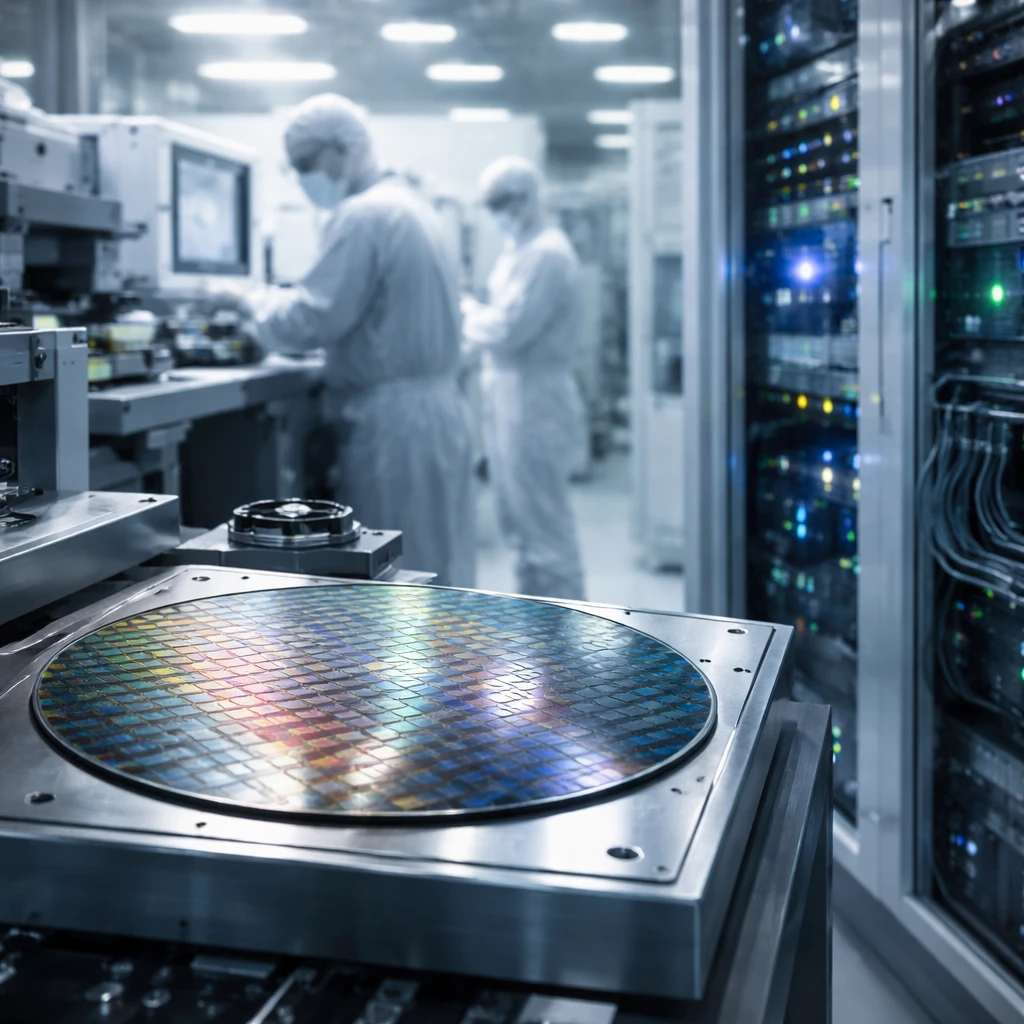
Overview
Intel said its next-generation 18A-P manufacturing process has reached the risk production stage, a preparatory step that precedes full-scale manufacturing. The announcement came as Intel shares rose in premarket trading, reflecting market reaction to the progress on the company’s process roadmap.
Market reaction
Shares of the chipmaker climbed about 4.5% in premarket trading by 05:12 ET (09:12 GMT). The move followed Intel’s confirmation that 18A-P has entered risk production, a stage that signals advancing readiness though it is not yet full commercial output.
Technical details and design continuity
Intel specified that 18A-P yields a 9% performance increase relative to the original 18A node when operating at the same power. Alternatively, the company said the process can reduce power consumption by 18% at equivalent processing speeds. The 18A-P node also brings enhancements to thermal management and design flexibility, according to Intel.
Crucially for chip designers and foundry customers, 18A-P shares the same design rules as 18A. That compatibility enables firms to carry over existing intellectual property and design workflows rather than rebuilding designs from the ground up.
Demand context
Intel’s announcement arrives amid elevated demand for its processors from companies building AI infrastructure. The company reported that demand was sufficiently robust in the first quarter that it sold chips it had previously written off, reflecting stronger-than-expected uptake in certain customer segments.
Partnership to tackle infrastructure constraints
Earlier in the month Intel entered a collaboration with Foxconn focused on addressing infrastructure bottlenecks emerging as AI workloads scale. The two companies said they will develop server racks that pair Intel CPUs with Intel’s AI accelerator architecture, and will work on faster interconnects, system monitoring tools and improved cooling designs.
The collaboration is not limited to traditional data-center deployments; the partners said they will also target applications in robotics, autonomous vehicles, smart cities and manufacturing.
Implications for customers and the supply chain
By moving 18A-P into risk production and preserving design-rule continuity with 18A, Intel positions itself to reduce development friction for customers evaluating its foundry services. At the same time, the company is addressing hardware-level constraints in data centers through its Foxconn partnership, focusing on rack design, interconnects and thermal systems as AI workloads introduce new demands.
Summary of facts
- Intel announced 18A-P has entered the risk production stage.
- Intel stated 18A-P delivers a 9% performance improvement over 18A at the same power, or an 18% power reduction at equal speeds.
- 18A-P shares the same design rules as 18A, allowing reuse of existing IP and workflows.
- Intel shares rose about 4.5% in premarket trading by 05:12 ET (09:12 GMT).
- Demand from companies building AI infrastructure was strong enough in Q1 that Intel sold chips it had previously written off.
- Intel and Foxconn announced a partnership to develop server racks combining Intel CPUs with Intel’s AI accelerator architecture and to work on faster interconnects, system monitoring tools and improved cooling designs; they said they will target data-center and non-data-center applications including robotics, autonomous vehicles, smart cities and manufacturing.