
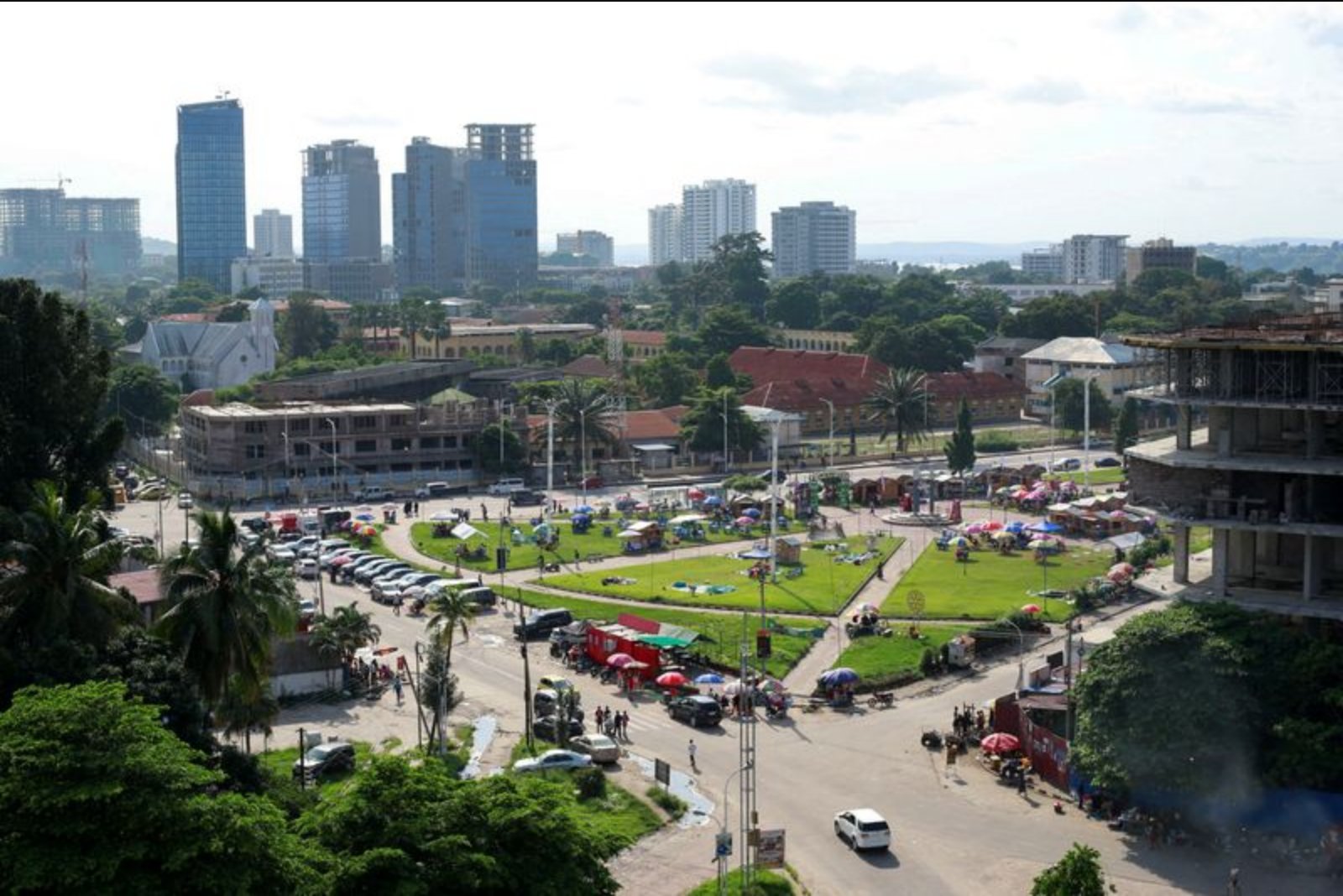
The first migrants deported from the United States under a recently announced bilateral arrangement arrived in the Democratic Republic of Congo in the early hours of Friday, according to statements from one of the migrants, a lawyer who is in contact with the group and sources at the airport.
Flight tracking records indicate the aircraft touched down in Kinshasa at about 1 a.m. local time (0000 GMT). Those on board were identified as nationals of Colombia, Peru and Ecuador.
A Colombian woman among the deportees, who spoke on condition of anonymity for safety reasons, said the group numbered 16 people - nine men and seven women. An airport source offered a slightly different count, saying 15 arrivals were recorded.
Officials at Congo's interior ministry and a representative of the presidency had not provided comment by the time of the reports.
Earlier reporting had indicated that more than 30 migrants were expected to be deported to Congo during the week. Alma David, a U.S.-based lawyer representing one of the migrants, said the smaller arrival figure could reflect last-minute judicial interventions in the United States. She said she knew of at least three instances in which federal judges ordered removals to be halted.
"It is unclear how many people could ultimately be deported under the agreement between Washington and Kinshasa, announced on April 5," a source familiar with the matter said.
Describing the journey, the Colombian migrant said the flight was lengthy but uneventful. "The flight was very calm. They treated us well and gave us enough food," she said. "It was very long, around 26 or 27 hours." Flight tracking data show the plane originated in Alexandria, Louisiana, and made stops in Dakar, Senegal, and Accra, Ghana before arriving in Kinshasa.
This transfer is the first reported movement of so-called third-country deportees to Congo. The country faces ongoing challenges, including widespread insecurity, large-scale displacement and an asylum system described by observers as fragile.
The deportation arrangement comes at a time when the U.S. administration is engaged in implementing a peace agreement aimed at ending hostilities involving Rwanda-backed M23 rebels in eastern Congo - a conflict that has produced thousands of deaths and displaced hundreds of thousands of people - and has also signed a strategic partnership that affords the United States preferential access to Congo's critical minerals.
Upon arrival in Kinshasa, the deportees were informed they had been issued seven-day visas that allow them to move freely within the country; those visas may be extended for up to three months, according to the Colombian migrant. They were also told they could submit asylum applications in Congo, but that officials discouraged this step, warning that Congo was dangerous.
Summary - The first cohort of migrants deported from the United States under a new bilateral understanding arrived in Kinshasa after a prolonged, multi-stop flight. Numbers on the ground differ slightly between accounts, and legal interventions in the U.S. appear to have reduced the scale of the transfers. The deportees received short-term visas and were informed about the option to request asylum, while being cautioned about security risks in the country.
Key points
- Aircraft carrying migrants from Colombia, Peru and Ecuador landed in Kinshasa at about 1 a.m. (0000 GMT) following stops in Dakar and Accra - flight tracking data confirm the routing.
- Discrepancies in reported arrival numbers exist - a migrant reported 16 people, an airport source said 15 - and legal stays in the U.S. appear to have interrupted planned removals, with at least three cases halted by federal judges.
- The transfers occur amid parallel U.S. efforts to operationalize a peace deal involving Congo and Rwanda and a strategic partnership providing U.S. access to Congo's critical minerals - developments with potential implications for political and economic engagement.
Risks and uncertainties
- Uncertainty over total deportations - it is not clear how many people will ultimately be returned under the bilateral agreement announced on April 5, which affects migration policy and diplomatic relations.
- Legal interventions in the United States have already halted at least three removals, creating unpredictability for planned transfers and affecting logistics for deportation operations.
- Reception conditions in Congo are uncertain - the country faces insecurity, displacement and a fragile asylum system, which may affect migrants' safety and legal protection.
Note - This report is based on statements from migrants, legal counsel and airport sources, together with flight tracking records. Official responses from Congo's interior ministry and the presidency were not available at the time of reporting.