
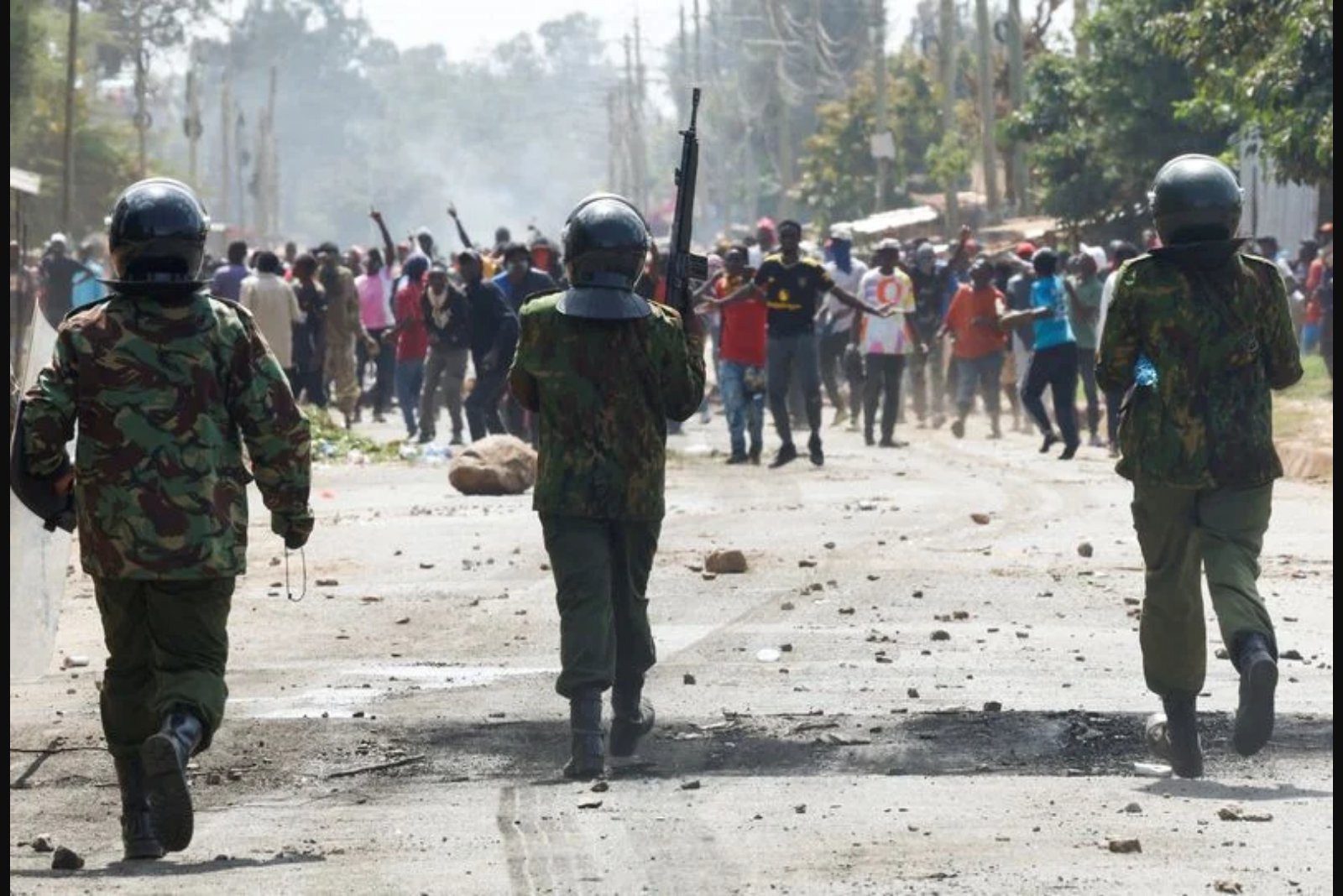
NAIROBI, June 12 - A 17-year-old boy who died during unrest in central Kenya this week was identified by his family as Sylvester Muigai, a student who had left home to collect a new school uniform, his grandmother said.
Muigai lived with his grandmother, Miriam Njoki, who said she was told by police that a tear-gas canister caused his death and not a bullet, a claim that conflicts with accounts from multiple eyewitnesses and a protest leader who said otherwise on the day he was killed.
Two reporters, who did not see Muigai’s death happen, saw a body lying motionless with a large wound to the head in a police van in Nanyuki, the town where the demonstration took place.
When asked for comment on Friday, local police commander Daniel Kitavi said the person who died "was a rioter, I don’t know if he’s a student".
Njoki described how her grandson had left their home to go to his aunt’s house in the nearby Likii neighbourhood to pick up a new school uniform when he became caught up in the protest. She said Muigai attended Thingithu Secondary School in Nanyuki.
"We went to the police station yesterday and after being taken round for hours, the police told us that it was a tear-gas canister that killed him and not a bullet," Njoki said by phone.
The demonstrations in and around Nanyuki were prompted by plans to establish a quarantine unit at the Laikipia Air Base, adjacent to the town. The proposed facility, designed to house up to 50 beds, is intended for Americans who have been exposed to Ebola but are not showing symptoms.
The plan has provoked widespread anger in parts of Kenya, prompting several days of protest. A court has ordered that work on the 50-bed unit stop, but U.S. and diplomatic sources along with flight tracking data indicate U.S. military aircraft have continued to transport staff and equipment to the site since the court rulings.
Opponents of the facility say the United States is shifting the burden of caring for people exposed to the Ebola outbreaks in eastern Democratic Republic of Congo and in Uganda. The U.S. administration has stated it will not permit any confirmed Ebola cases to enter the United States.
Kenyans have also directed anger toward President William Ruto, who earlier defended the government's decision by saying it was doing "the right thing" by allowing the U.S. to build the centre.
Kenyan officials have said the facility would also serve Kenyans and foreign nationals, though U.S. officials have not confirmed that broader use.
Security sources reported that at least two other people have been killed in the Nanyuki protests.
The conflicting accounts of Muigai’s death highlight ongoing disputes over crowd-control methods and the handling of demonstrations linked to the quarantine site. Family members and community members continue to press authorities for clarity about the circumstances that led to his death.
As the legal, diplomatic, and security issues surrounding the proposed quarantine facility remain unresolved, local tensions have persisted and demonstrations have continued to draw both local and national attention.