
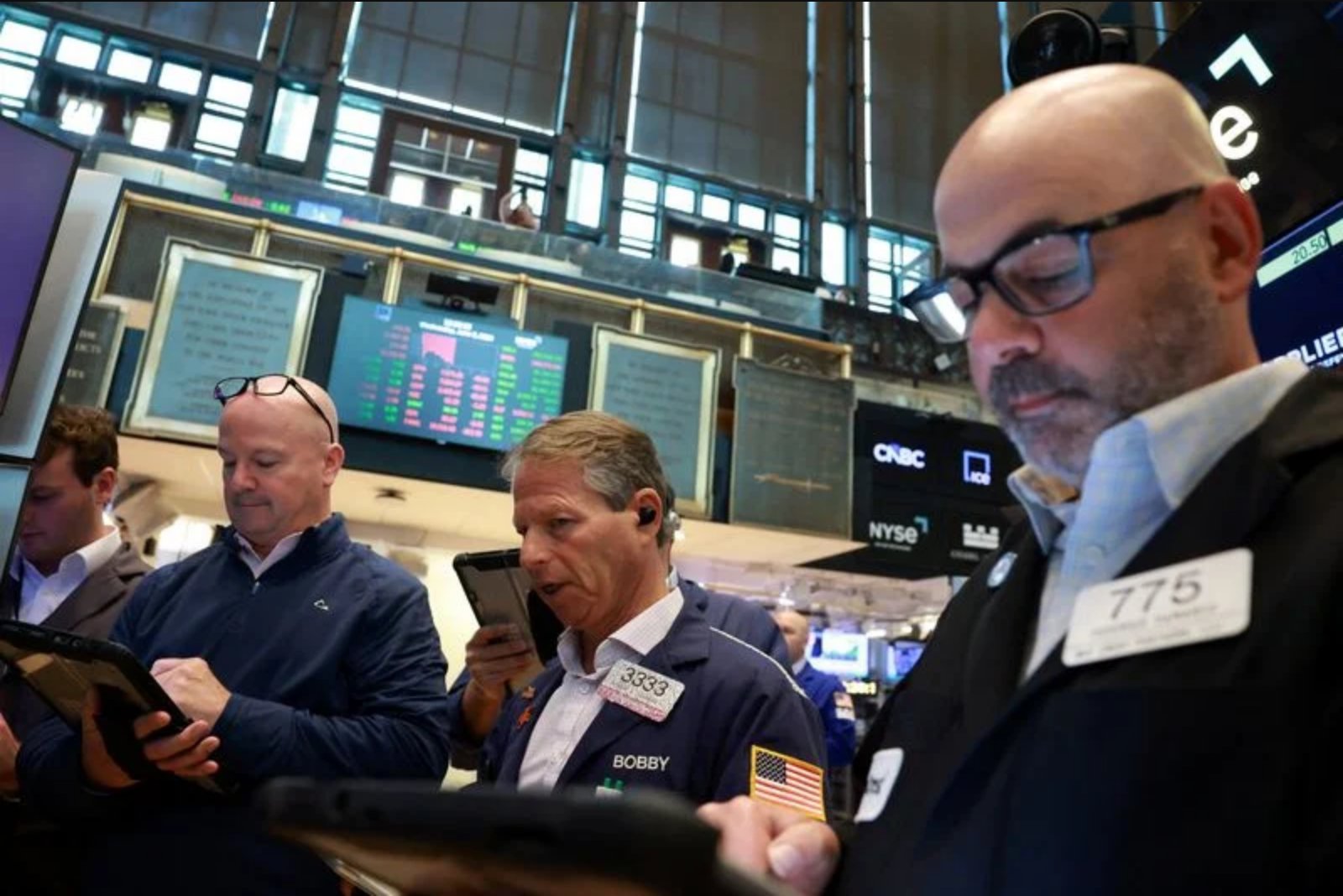
Markets experienced a stop-start week punctuated by record equity issuance and renewed conflict in the Middle East, producing pronounced uncertainty across equities, energy and trade flows.
At the center of market attention was an historic public offering that dominated headlines. SpaceX priced the largest initial public offering on record on Thursday, raising $75 billion and valuing the company at $1.77 trillion. The size of the allocation to retail investors and the broader pattern of large technology listings has raised questions about how individual investors will fare in the weeks following the debut - particularly because large tech IPOs have struggled in the period after listing.
The SpaceX sale is only the opening act of what appears to be a string of very large share sales. Earlier in the week, OpenAI said it had confidentially filed for an IPO, a week after rival Anthropic disclosed that it had done the same. OpenAI did not provide a timeline for its listing, although previous reporting has suggested it may consider coming to market as soon as the second half of 2026 and could be targeting a $1 trillion valuation.
Not all equity moves were primary listings. Super Micro Computer announced plans to raise $7 billion via equity offerings intended to support growing AI server demand, a move that coincided with a sharp drop in its share price on Wednesday. That fundraising adds to the list of large capital events this week and is part of the broader market narrative around AI-related companies and the capital they need to expand.
These developments arrive against a backdrop of an AI-driven rally that many market participants have flagged as frothy. The central question now is whether the market can absorb an influx of fresh equity from mega-IPOs and large follow-on offerings, particularly in an environment where interest rates may be poised to move higher - a historically difficult setting for sustaining equity rallies.
Macro data this week added to the monetary policy uncertainty. U.S. annual headline inflation rose in May to 4.2%, the largest year-on-year increase in three years, largely driven by higher energy prices. Core inflation - which excludes food and energy - edged up to 2.9%. While the core print was slightly below some forecasts and drew a positive reaction from President Donald Trump, the data nonetheless extend the period during which inflation has exceeded the Federal Reserve’s 2% target to five years and counting.
Producer prices in the U.S. also climbed sharply in May. The annual rate for producer inflation accelerated to 6.5%, the highest in over three years, again primarily reflecting higher energy costs. Taken together, the inflation data have increased the odds that markets are pricing of a 25-basis-point Federal Reserve rate hike by December, even as the Fed is expected to refrain from action at its June 17 meeting. These dynamics are likely to complicate the early tenure of the incoming Fed chair, Kevin Warsh, who has expressed a view in recent months that rates should be lower.
European monetary policy moved on Thursday when the European Central Bank voted to raise its policy rate by 25 basis points, marking its first hike in nearly three years in response to rising price pressures. The Bank of Japan is also expected to change policy in the near term - market attention is focused on an anticipated rate increase early next week after wholesale prices in Japan jumped 4.9% year-on-year in April, the fastest pace in three years and a source of concern that wholesale inflation could filter into broader consumer prices.
Geopolitical developments in the Gulf weighed on energy market sentiment for much of the week. After several days of tit-for-tat strikes between Iran, Israel and the U.S., the chances of a negotiated settlement appeared to rise late in the week. President Trump said on Thursday that a peace deal with Iran could be signed as early as this weekend, while Tehran said it had not made a final decision. The recent pattern of exchanges - including back-and-forth attacks followed by periods of de-escalation - resembles the sequence of events that preceded a ceasefire announcement in April.
Crude prices did not surge dramatically during the fresh fighting and actually fell as hopes for a diplomatic breakthrough increased, with Brent dipping below $90 a barrel on Friday morning. Still, market participants emphasize the abundance of unknowns affecting energy markets, and volatility could return even if a deal is reached.
For traders and shippers, the critical operational question is the status of the Strait of Hormuz. Oil flows through the narrow waterway sit at the center of attention for producers and transporters alike. U.S. Energy Secretary Chris Wright said on Tuesday that oil exports through the strait were rising. Separately, President Trump claimed on Wednesday that the U.S. military had secretly escorted ships carrying more than 100 million barrels of oil out of the strait - an assertion that underscores how shipping and security narratives have become intertwined in public remarks during the conflict.
One notable theme emerging from the weeks of conflict has been the resilience of global trade. Recent data from the U.S. and China indicate cross-border commerce is growing faster than economists had forecast. However, that strength masks a key caveat: many of the headline gains have been driven by higher prices rather than rising volumes. For logistics and shipping sectors, which are sensitive to real cargo volumes, the distinction between price-driven trade growth and volume-driven expansion is critical.
After the volatile stops and starts of the past five days, market participants are looking to next week for further clarity across several fronts: the path of central bank decisions, any concrete movement on a peace agreement in the Gulf, and the extent to which the wave of mega-IPOs will influence liquidity and investor appetite. Those developments will collectively influence cost structures and flows across energy, shipping and capital markets.
Summary
SpaceX completed the largest IPO in history, raising $75 billion with a $1.77 trillion valuation, while OpenAI and Anthropic have filed confidentially for IPOs and Super Micro Computer moved to raise $7 billion to meet AI server demand. U.S. inflation and producer price readings were higher, raising the odds of future rate hikes despite the Fed likely pausing at its June 17 meeting. The ECB raised rates by 25 basis points and the Bank of Japan is expected to move as wholesale prices in Japan rose rapidly. Fighting in the Middle East oscillated between escalation and potential diplomatic progress, with implications for crude prices and shipping through the Strait of Hormuz. Recent trade data show cross-border commerce up, but much of the increase reflects higher prices rather than volume growth.
Key points
- Equity markets were dominated by a wave of large listings: SpaceX’s $75 billion IPO at a $1.77 trillion valuation is the largest ever, and confidential IPO filings from OpenAI and Anthropic signal more major offerings to come - impacting capital markets and technology sectors.
- Inflation readings in the U.S. and producer price moves have increased the probability of future rate hikes, shaping expectations for monetary policy and affecting interest-rate sensitive sectors such as equities and corporate financing.
- Geopolitical developments in the Gulf affected energy prices and raised operational questions for shipping through the Strait of Hormuz; trade data showed resilience but were driven more by higher prices than by increased shipment volumes, relevant for shipping, logistics and energy sectors.
Risks and uncertainties
- Market absorption risk - The influx of mega-IPOs and large equity raises may test investor demand and liquidity, particularly for tech and AI-related stocks and for retail investors who received large allocations.
- Monetary policy uncertainty - Elevated headline and producer inflation increase the chance of rate hikes later in the year, introducing rate risk to equities and rising financing costs for corporations.
- Geopolitical and shipping risk - Continued hostilities or disruptions around the Strait of Hormuz could prompt renewed volatility in oil markets and complicate shipping routes and logistics, affecting energy and transport sectors.
Tags
- IPO
- Inflation
- Energy
- Shipping
- AI