
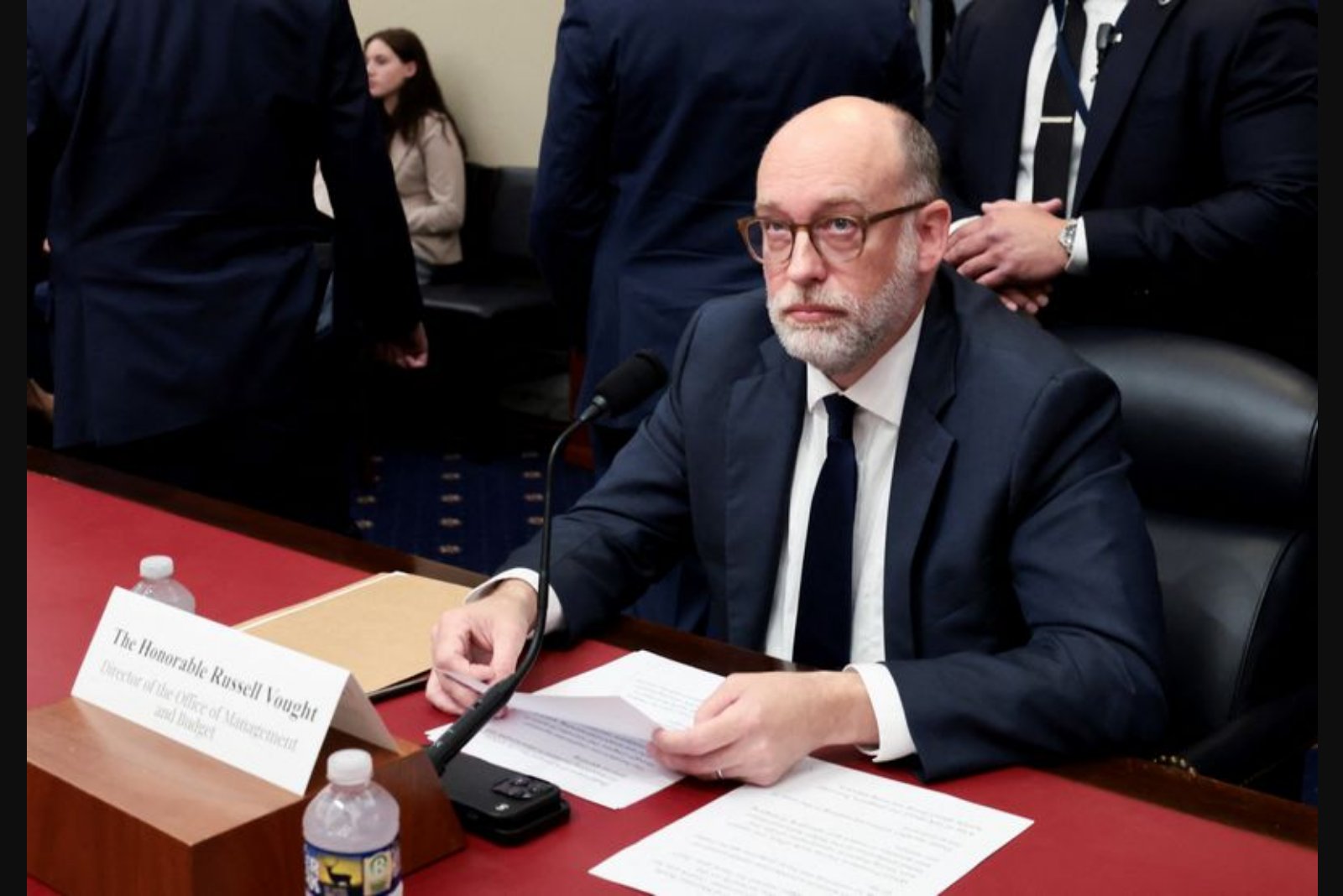
White House budget director Russell Vought said on Wednesday he had no estimate of how much the war with Iran will cost, even as he defended President Donald Trump’s controversial request for a $1.5 trillion annual military budget. Vought told members of the House of Representatives Budget Committee that the administration has not yet finalized the calculations and could not offer even a rough figure.
"We’re not ready to come to you with a request. We’re still working on it. We’re working through to figure out what’s needed," Vought said at the hearing. "I don’t have a ballpark." The lack of a cost estimate leaves an open question on Capitol Hill about the fiscal scope of the conflict the administration says it began alongside Israel on February 28.
An earlier request for an additional $200 billion to cover war-related needs faced strong resistance from Congress last month. Vought appeared before the committee to present aspects of the administration’s proposed fiscal year 2027 budget, which contains a $500 billion increase in military spending paired with a 10% reduction in non-defense programs.
The White House framed the request as reflecting Republican priorities ahead of the November midterm elections, where Trump’s Republicans aim to hold both the House of Representatives and the Senate. That political objective comes amid rising public concern about the cost of living, energy prices and the ongoing U.S.-Israeli conflict with Iran.
Democrats on the panel challenged multiple elements of Vought’s presentation, including his contention that fraud is widespread in programs such as healthcare, education and low-income energy assistance. Representative Pramila Jayapal of Washington questioned why the administration would pursue a dramatic boost in defense funding while the Department of Defense has never passed an audit.
"I’m so glad you asked about fraud, because you are coming back to ask for a $1.5 trillion budget for the Department of Defense," Jayapal said. "The Department of Defense is the only federal agency that has never passed an audit ... But you’re not going after any of that." Vought said the administration is pursuing inefficiencies at the Pentagon.
Republican Representative Glenn Grothman of Wisconsin pressed for a completed Pentagon audit before Congress votes on defense spending, criticizing what he characterized as an arrogant culture at the Defense Department. "There is so much arrogance in that agency," Grothman said. "They just say we don’t have to do it on audit. We’re so damn important. We don’t care what Congress thinks."
Vought also presented the budget package as part of an overall effort to reduce spending. He highlighted the administration’s 2025 tax-cut-and-spending package, dubbed the "One Big Beautiful Bill Act," asserting it achieved $2 trillion in mandatory savings through cuts to Medicaid and food assistance for low-income families.
The Congressional Budget Office, described by the White House as nonpartisan, projects that the legislation which extended 2017 tax cuts will add $4.7 trillion to U.S. deficits over the next decade. The CBO also attributes an additional $500 billion to reduced immigration, according to the administration's account of those estimates.
Representative Brendan Boyle of Pennsylvania, the panel’s top Democrat, cited forecasts indicating the bill’s healthcare reductions would lead to the loss of health coverage for more than 15 million people. Vought replied that those affected would be able-bodied adults, people in the country illegally, or otherwise ineligible for benefits. When Boyle asked whether Vought was asserting that those people were "all illegals" or defrauding the system, Vought replied, "Yes."
Questions about the administration’s handling of federal funds extended beyond the budget’s headline numbers. Representative Scott Peters of California referenced findings by the Government Accountability Office that the administration illegally withheld billions of dollars designated for National Institutes of Health grants, public schools and Head Start programs nationwide. Peters asked whether Vought disputed the GAO’s findings.
"Yes. GAO is typically wrong. They’re very partisan," Vought replied.
For the White House proposal to become law, Congress must approve it. That process is complicated by partisan dynamics: Republicans are seeking to advance funding for the administration’s immigration enforcement priorities even as Democrats oppose those measures. The standoff follows the longest government shutdown in U.S. history, and Democrats have already declared the proposed budget "dead on arrival," setting the stage for closed-door negotiations led by appropriators.
The hearing underscored several recurring fiscal themes: the administration’s push to reallocate federal resources toward defense, ongoing questions about Pentagon financial oversight, and disputes over the projected fiscal effects of recent tax and immigration policy changes. Uncertainties persist about the ultimate cost of the Iran conflict and about how congressional negotiations will shape final spending levels for defense and non-defense programs.