
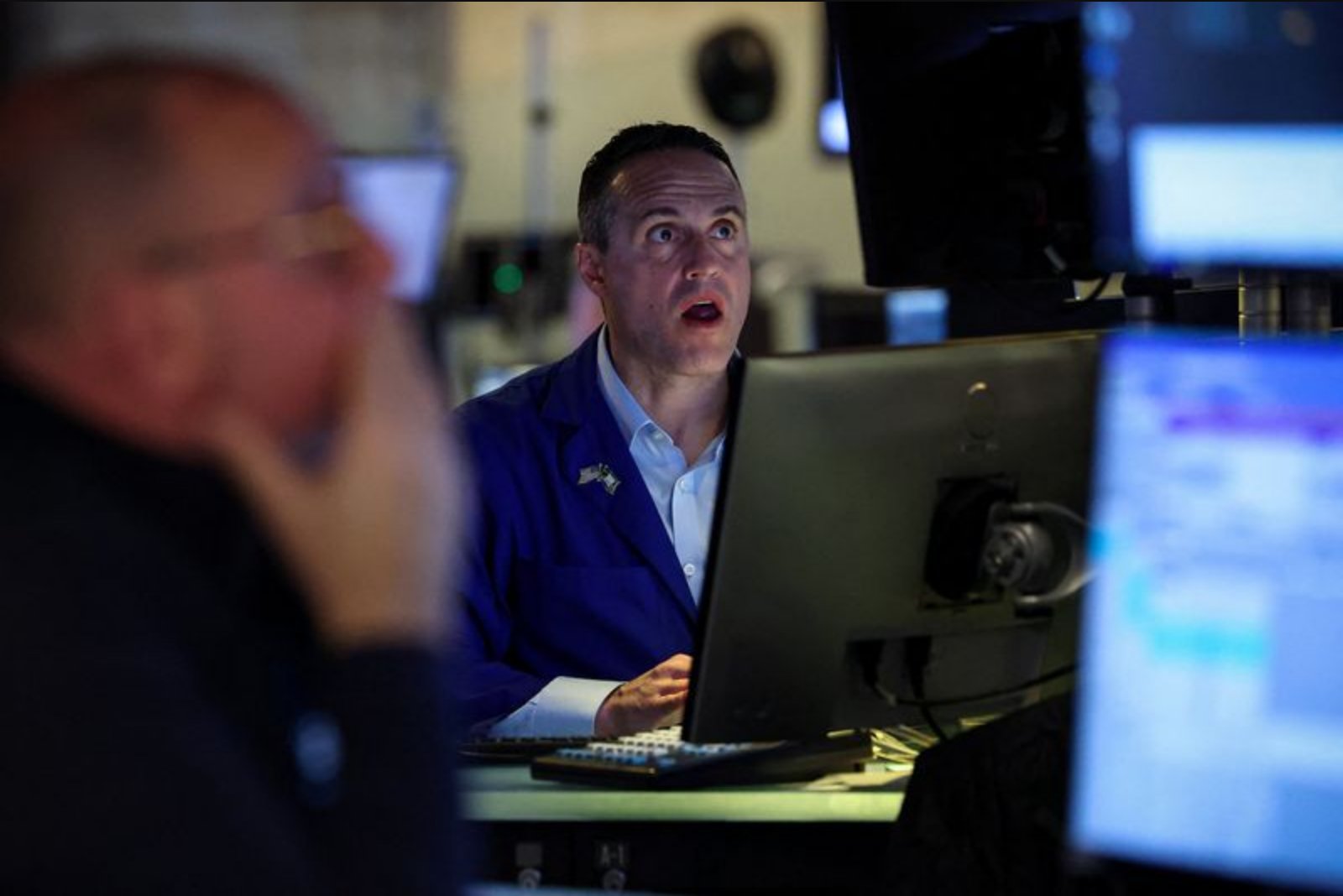
NEW YORK, April 15 - U.S. equity benchmarks climbed to fresh records on Wednesday, with investors appearing to set aside concerns about economic disruption from the conflict with Iran. The rebound pushed the S&P 500 to its first closing high since January 27 and lifted the Nasdaq Composite to its first close above its October 29 high.
The S&P 500 rose 0.8% to finish at 7,022.95, eclipsing its prior closing record of 6,978.6. The Nasdaq Composite gained 1.6% to close at 24,016.02, surpassing its Oct. 29 closing peak of 23,958.47. Both indexes also reached intraday record levels during Wednesday's trading session.
Market participants described the rally, in part, as a reflection of expectations that the U.S. and Iran will find a path to de-escalation - an outcome that would reduce the threat of sharply higher energy prices and the prospect of renewed inflationary pressure that could complicate central bank policy. At the same time, the start of the first-quarter corporate earnings season this week, which has so far produced generally positive results, has helped underpin gains across U.S. equity indexes.
What market strategists are saying
Several market professionals offered perspectives explaining the advance and what underlies investor sentiment.
"There are three key drivers to market performance: strong corporate earnings, better than forecast inflation data (and) a general belief that a deal between the U.S. and Iran is going to happen. Moreover, pessimism amongst investors is still high, which is considered a reliable contrarian sign by many." To us, the most critical things are overall economic data (i.e. inflation, employment, GDP growth), and corporate earnings - as long as these remain robust, markets will largely ignore distractions. Apparently, market participants agree.
One portfolio manager cautioned against reading too much into the technical milestone itself. "I do not place much significance on the technical level that it is surpassing. However, I do think that is emblematic of the fact that investors appear overly optimistic on the war outcomes and are not pricing in downside risk," he said.
Another market observer highlighted the forward-looking nature of equities. "The market is a forward-looking mechanism and appears to be discounting the war ending swiftly. There’s an old adage on Wall Street that says ‘buy the rumor and sell the news.’ There’s a very high likelihood that phenomenon is happening now. A lot of people were leaning bearish two weeks ago, and a lot of those shorts are being squeezed.
The market is exceptionally strong and looks like it wants to go higher from here, barring some unforeseen event. Even at the end of March, when the market was down, it was only a few percentage points below an all-time high. The inability to fall in a meaningful fashion speaks volumes and illustrates how strong the market is right now. Until we see any heavy selling show up, the market has earned the bullish benefit of the doubt."
Another strategist noted that the U.S. market had spent an extended period trading in a range between 6,600 and 7,000 since September, with a brief March dip below that band. He observed that breakouts from long bases can attract sidelined investors en masse, particularly when prior sentiment had been extremely pessimistic.
A chief executive of an investment services firm described the recent weakness as a correction within an ongoing bull market and argued that history shows it is rarely productive to abandon equities in the face of geopolitical shocks. "Most corrections within bull markets have some sort of catalyst for them, and obviously the war and the spike in oil prices tended to be a catalyst, but the market, after the shakeout, seems to be viewing things as temporary. And I think there has been more of a focus back on the resiliency of the economy and the expected strength in corporate profits. And I think that’s what is helping.
A lot of the stocks during a correction really get beaten up, especially in the tech sector. And so there was a restoration of values out there that I think has drawn investors back into certain stocks. And that has been largely focused in tech. That has been a pretty good area here on this rebound."
Reflecting on recent moves, a chief investment officer observed that the market's rise to a new high coincided with a notable retreat in oil prices, with WTI moving from $112 to $91. He suggested the drop in energy costs and the earlier near-10% pullback in the S&P 500 had reset valuation and sentiment, setting the stage for a rebound. He also pointed to stronger-than-expected big bank earnings and executives' comments about U.S. consumer strength as supportive signals for the market.
Market context and immediate drivers
Investors said the rally in recent weeks reflects multiple influences: the view that hostilities between the U.S. and Iran may find a way to end, the stabilizing impact of mostly positive corporate earnings reports, and some inflation readings coming in better than forecast. Together, these factors have encouraged renewed risk-taking and helped stocks move past the selloff that briefly brought the market close to a 10% correction from a prior high.
Still, several commentators warned that the market's positioning implies optimism about war outcomes that may understate downside risk should the conflict not abate as hoped. They also noted technical dynamics - such as the squeeze on bearish positions - that can accentuate moves higher in the near term.
Closing levels
- S&P 500 close: 7,022.95 (previous record: 6,978.6)
- Nasdaq Composite close: 24,016.02 (previous Oct. 29 close: 23,958.47)
As trading continues, participants will be watching subsequent earnings announcements and economic data for confirmation that the resilience in corporate profits and macro indicators can sustain the market's renewed advance.