
World May 29, 2026 10:57 AM

EU Releases €16.4 Billion to Hungary After Reform Commitments

Brussels approves phased unlocking of Next Generation EU and cohesion funds following talks with Hungary’s new government

By Jordan Park
Share
Twitter Reddit Facebook LinkedIn

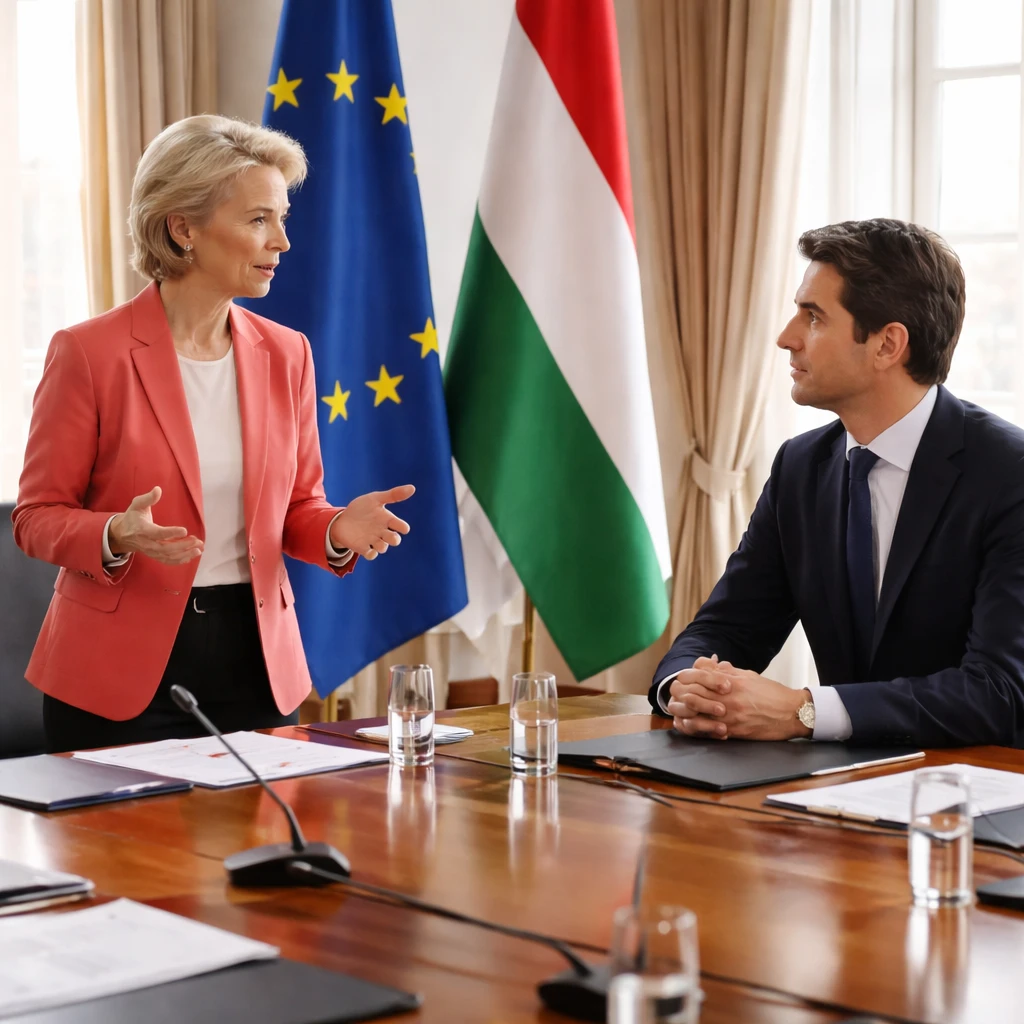
The European Commission has agreed to release €16.4 billion in previously withheld recovery and cohesion funding to Hungary after reforms by the country’s new government, European Commission President Ursula von der Leyen said following a meeting with Prime Minister Peter Magyar. The package includes €10 billion from the Next Generation EU recovery fund, €4.2 billion in cohesion monies and a further €2.2 billion tied to academic freedom reforms to be released as conditions are met.

EU Releases €16.4 Billion to Hungary After Reform Commitments
Summarize with
ChatGPT Perplexity Claude Grok Gemini

Key Points

  • The Commission will release €16.4 billion to Hungary, including €10 billion from Next Generation EU, €4.2 billion in cohesion funds and €2.2 billion tied to academic freedom reforms.
  • The funds are intended to help revive an economy that has stagnated for three years and provide fiscal support to the incoming government.
  • The Commission projects Hungary's budget deficit could reach 6.2% of GDP in 2026, reflecting substantial pre-election spending by the previous government; this fiscal position will influence how the released funds are deployed.

The European Commission announced on Friday that it will lift restrictions on €16.4 billion in EU support for Hungary after reforms put forward by the country’s new government, European Commission President Ursula von der Leyen said following talks with Hungarian Prime Minister Peter Magyar.

Von der Leyen provided a breakdown of the package after the meeting in Brussels: €10 billion from the Next Generation EU recovery fund will be unfrozen or scheduled to be unfrozen, €4.2 billion in cohesion conditionality funds will be released, and an additional €2.2 billion tied to academic freedom measures will be made available as those reforms are completed.

"I can confirm that it is €10 billion that have been unfrozen or will be unfrozen from Next Generation EU, then the €4.2 billion from the cohesion conditionality and 2.2 billion for the academic freedom, which makes it €16.4 billion," von der Leyen said.

Commission officials expect the funds to support a recovery in Hungary's economy, which has shown little growth over the past three years. The new government inherits a budget situation that the Commission projects could see a deficit of up to 6.2% of GDP in 2026, a shortfall driven in part by significant pre-election spending by former Prime Minister Viktor Orban, who was defeated in last month’s election.

Von der Leyen emphasized the scale of the disbursement while commending the work that led to its approval. "That is quite a sum, but ...the Hungarian people deserve it. Again, many, many thanks for the outstanding work that has been done," she said.

The released funds comprise a mix of recovery-specific financing and cohesion resources, with an element explicitly linked to measures on academic freedom. Officials indicated that a portion of the package will follow once remaining reform conditions are satisfied.

Bringing these resources into circulation aims to provide fiscal space for the new government to address economic stagnation and to begin implementation of approved programs. The Commission’s projection of a widened budget deficit highlights the fiscal constraints facing Budapest even as EU financial support is restored.


Summary

The European Commission will unfreeze €16.4 billion in EU recovery and cohesion funds for Hungary after reforms from the country’s new government, including €10 billion from the Next Generation EU fund, €4.2 billion in cohesion funding and €2.2 billion tied to academic freedom measures, European Commission President Ursula von der Leyen said after meeting Prime Minister Peter Magyar.

Risks

  • Budgetary strain - The projected 6.2% of GDP deficit in 2026 indicates ongoing fiscal pressure that could limit the government’s ability to translate EU funds into growth; this primarily affects public finances and macroeconomic stability.
  • Conditionality and implementation risk - The €2.2 billion linked to academic freedom and other reform conditions will only be released as those requirements are met, creating execution risk for higher education and cohesion programs.
  • Economic impact uncertainty - While funds are intended to support recovery, the article notes Hungary has stagnated for three years, leaving uncertainty about the immediate macroeconomic effect of the disbursement; this pertains to broader economic and market sectors.

More from World

Madrid Streets Filled as Pope Leo Leads Large Open-Air Mass Jun 7, 2026 Israeli Forces Say Two Projectiles from Lebanon Were Intercepted After Border Sirens Jun 7, 2026 Xi’s Trip to Pyongyang Comes as Kim Projects Confidence, Economic Agenda in Focus Jun 7, 2026 Multiple Injured in Exchange of Gunfire Near Toledo Festival, Police Say Jun 6, 2026 Mexico City Attempts World Record for Largest Mexican Wave Ahead of World Cup Jun 6, 2026