
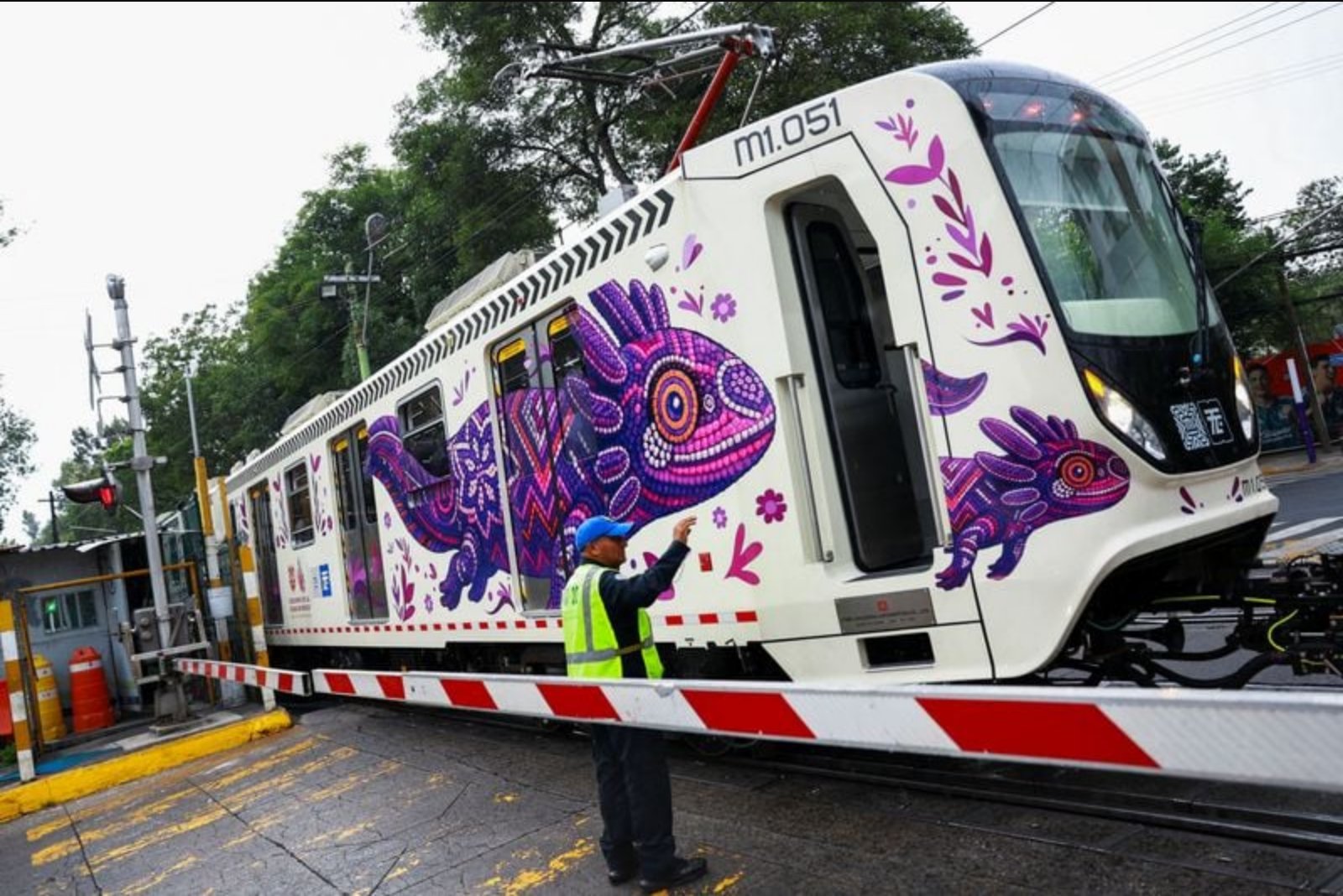
Visitors arriving in Mexico City for the World Cup are immediately greeted by a recurring motif - the smiling face of the axolotl. The amphibian, native to this region and whose Nahuatl name means "water monster," appears in bright purple on large-scale murals, on subway cars and in public sculptures posed with soccer paraphernalia. Pronounced ah-sho-LO-tul, the species has become an unofficial mascot as the capital prepares to stage five matches, including the tournament opener on Thursday.
The wide deployment of the axolotl image has not been universally welcomed. Many residents - Chilangos by local custom - have pushed back, arguing that the playful, pop-infused portrayals distract from deeper problems in the city such as crumbling infrastructure and a lack of meaningful conservation action for the species itself. That backlash has given rise to a wave of internet memes and criticism framed as a campaign against what some call "axolotlization," in which the salamander's public profile is accused of being superficial.
At the same time, the visual ubiquity of the animal has yielded commercial activity. In Chapultepec park, a 19-year-old vendor, Ernesto Velazquez, operates an axolotl-themed stall selling plush toys. Velazquez said he hopes the new artwork around the city can stimulate interest in protecting the animals. "Some foreigners have asked if you can eat them - well no, they’re at risk of extinction," he told Reuters. "I hope the World Cup will help people learn more so we take better care of them."
A fragile habitat
Ambystoma mexicanum, the axolotl, is an amphibian that remains aquatic for its entire life cycle. Historically it thrived among chinampas - the man-made floating agricultural islands that sustained the Aztec capital where modern Mexico City now stands. But the lake system the city was built upon was largely drained during colonial times and its remaining water bodies have been incrementally consumed and contaminated by urban expansion.
One of the last significant enclaves for the species is the Xochimilco district to the south of the city. Xochimilco is known for its network of muddy canals, its folkloric atmosphere and the colorful barges that have become a mainstay for recreational boat parties. Those same canals are central to scientific assessments of the axolotl's remaining wild population.
University of Mexico - UNAM - researchers identified roughly 36 axolotls per square kilometer in Xochimilco in 2014, a stark contrast with a 1998 estimate of 6,000 per square kilometer. The most recent census began in 2024; two years into that effort researchers have not observed a single live axolotl during their visual counts.
Vania Mendoza, who coordinated the census, described the team's methodology: setting out on barges before dawn through the winter to search nets for axolotls. The team did not find any during those netting sessions, but they did analyze water samples for genetic material and confirmed that some axolotl DNA exists in the canals. "We know they’re there," Mendoza said, while UNAM prepares to publish fuller results by late summer.
Stressors: pollution, land use change and tourism
UNAM ecologist Luis Zambrano, who leads the university's ecological restoration laboratory, pointed to several persistent threats beyond long-term habitat loss. Poorly treated wastewater flowing constantly into the canals is a major challenge. Zambrano also noted fresh pressures including the conversion of chinampas into informal soccer pitches and the increasing overcrowding of areas that began as ecological tourism destinations.
Axolotls respire through their skin, which makes them exceptionally vulnerable to contaminants and low-oxygen conditions in water. On the subject of the World Cup and visitor volumes, Zambrano warned that mass tourism has intensified local stress. "Mass tourism has become a terrible problem now with the World Cup," he said. "The government thinks more is better, but that’s not true in these areas of high ecological value."
Despite the collapse of wild numbers, axolotls are commonly bred in captivity. Scientists highlight the species' unique biological traits - including a skin mucus profile and a regenerative ability that extends to limbs and parts of the brain - as promising avenues for biomedical research, particularly in cancer-related studies.
Public reaction, artworks and regulation
The axolotl's sudden cultural visibility has been amplified by large-scale installations and statues. A football-themed sculpture named 'Ajologol' that had been situated near the Azteca stadium - where the opening match will be played - was removed last month after authorities said too many people were stopping to take photographs and obstructing pedestrian flow. Mayor Clara Brugada said the statue would be relocated nearby.
Some tourists have reacted positively to the imagery. Andres Huerta, a 28-year-old pharmacist visiting from Phoenix, Arizona, said he had not known much about axolotls before arriving but was struck by a large mural seen after landing at the airport. "It’s really beautiful," he said.
Yet for scientists such as Zambrano the public burst of interest has not translated into the concrete policy measures or conservation investment needed to secure the species' future. "People prefer to see them in fish tanks," he said, underscoring the gap between symbolic attention and habitat protection.
What the imagery signals
The axolotl's prominence across Mexico City during a major international sporting event highlights competing impulses: a desire to celebrate a local emblem and an expectation that such visibility might spur stewardship, against a critique that the image is being used cosmetically while environmental and infrastructure deficits persist. The scientific record, as reported by UNAM, points to a severe reduction in wild populations and ongoing threats in the remaining habitats.
As the city hosts World Cup visitors, the juxtaposition of festive imagery and ecological fragility raises questions about how urban branding, mass events and conservation priorities intersect. For now, murals and mascots abound, field researchers continue their censuses and local conversations about what the imagery represents are intensifying.