
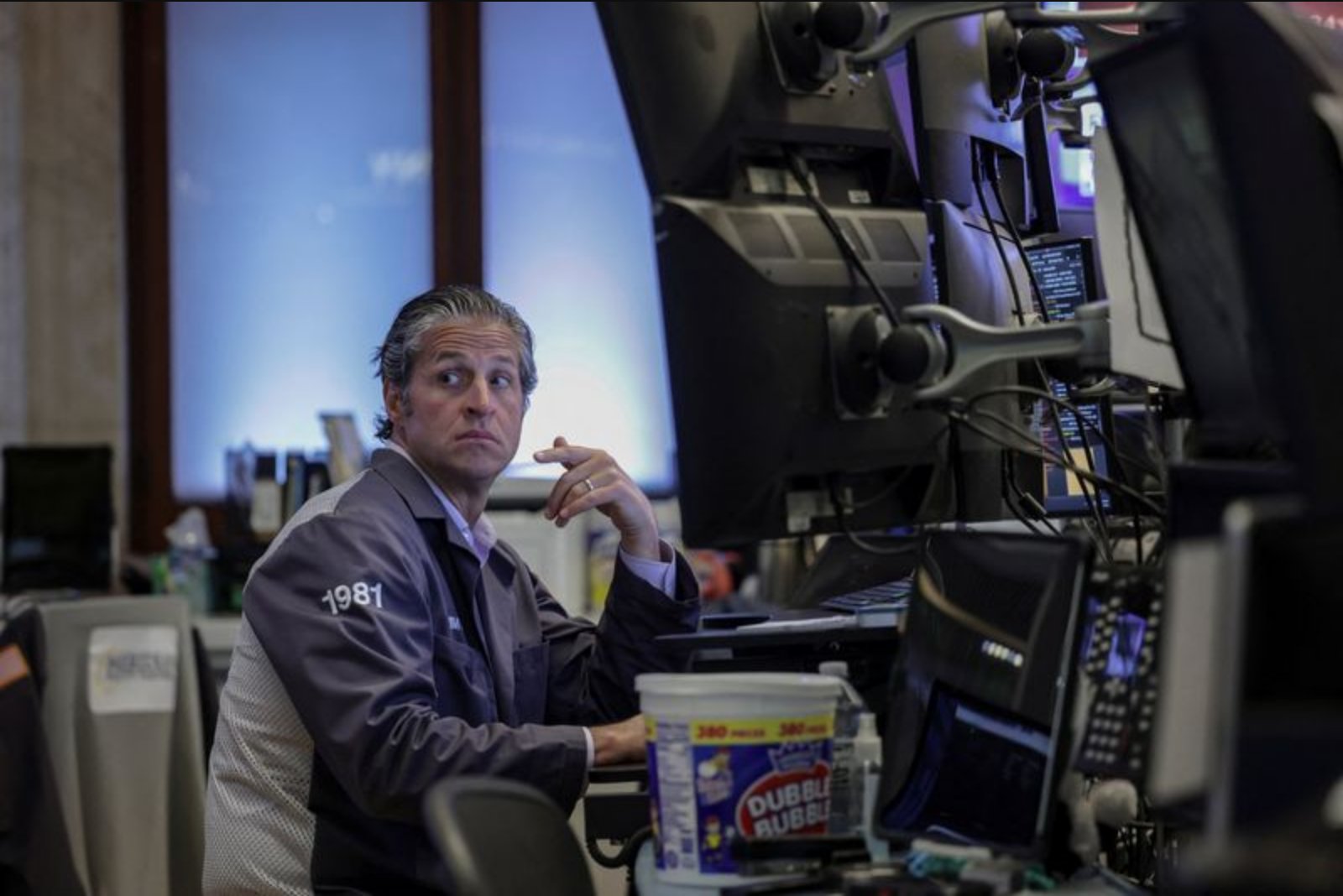
April 27 - Wall Street futures were largely muted early on Monday as peace talks between the United States and Iran failed to produce progress, and market participants looked ahead to a wave of corporate earnings and commentary from the Federal Reserve later in the week.
Investors have taken some comfort from the initial set of earnings releases. Of the 139 companies in the S&P 500 that had reported results as of Friday, 81.3% exceeded earnings expectations, versus a prior four-quarter average of 78.1%, according to data from LSEG. That outperformance has helped underpin risk appetite even as geopolitical tensions persist.
At the same time, analysts and traders have flagged limitations to the current readings. Because these results capture only the first month of disruption associated with the conflict in the Middle East, some observers have questioned how reliable they are as a forward-looking gauge of corporate performance.
Market moves in U.S. equity futures were modest by morning trade. At 5:44 a.m. ET, Dow E-minis were down 65 points, or 0.13%, U.S. S&P 500 E-minis were down 5.75 points, or 0.08%, and Nasdaq 100 E-minis were down 13.75 points, or 0.05%.
"We are suffering from a distinct lack of clarity at the moment. There is also a growing divergence among financial market participants," said Richard de Chazal, macro analyst at William Blair. "Equity market investors seem to have moved on from the war and are back on the AI technology trade. Meanwhile, commentary from participants in the commodity markets continues to signal that the shock is being completely underestimated."
Commodities reflected the heightened uncertainty. Brent crude futures were trading 2.7% higher on Monday and were hovering 49% above pre-war levels, underscoring the energy market's sensitivity to the stalled diplomatic process.
In premarket equity moves, Qualcomm shares were up 10.6%, and Intel rose 2.7% after a 23.6% jump in the prior session. Those swings illustrate the current bifurcation between technology-related momentum and commodity-driven market pressures.
Financial tools and services targeted at individual investors also featured in premarket commentary. The promotional text in the premarket material asked, "Should you invest $2,000 in INTC right now?" and described ProPicks AI's approach: it evaluates INTC alongside thousands of other companies every month using more than 100 financial metrics, applying AI to screen for stocks with favorable risk-reward profiles based on current data. The copy noted the AI has identified notable past winners, citing Super Micro Computer (+185%) and AppLovin (+157%), and invited readers to explore whether INTC appears in any ProPicks AI strategies or if alternatives in the same space may be available.
Key points
- Peace talks between the U.S. and Iran have stalled, creating geopolitical uncertainty that is influencing markets.
- Of 139 S&P 500 companies reporting so far, 81.3% have beaten earnings expectations versus a four-quarter average of 78.1% - a source of reassurance for investors.
- Commodity markets, particularly oil, show stronger reactions to the conflict, with Brent up 2.7% and about 49% above pre-war levels.
Risks and uncertainties
- Geopolitical risk - stalled diplomatic talks could prolong energy market disruption and weigh on energy and commodity-sensitive sectors.
- Earnings carryover risk - early earnings reports cover only the first month of Middle East-related disruption, raising questions about their reliability as predictors of future results.
- Market divergence - a split between equity momentum (notably in AI-related technology) and commodity market signals could produce wider market volatility.