
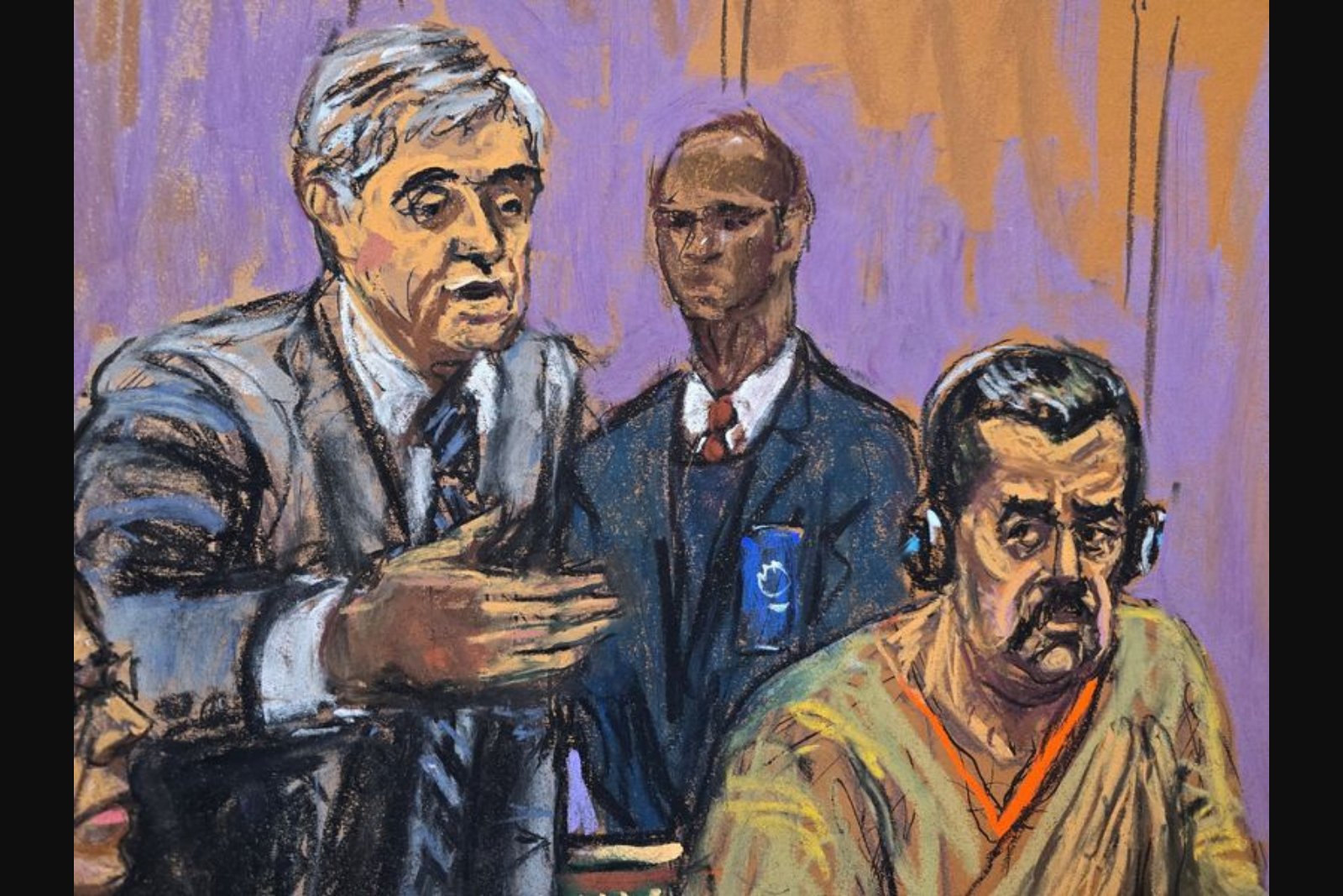
The U.S. government has consented to adjust its sanctions regime to allow the Venezuelan government to fund legal representation for Nicolás Maduro, a court filing revealed on Friday. The adjustment addresses a constraint that threatened to derail the drug trafficking prosecution of the ousted Venezuelan president.
Maduro, 63, and his wife Cilia Flores, 69, were taken from their Caracas residence by U.S. special forces on January 3 and transported to New York to face criminal charges that include narcoterrorism conspiracy. Both defendants have entered not guilty pleas and remain detained in Brooklyn as they await trial.
In February, Maduro’s attorney Barry Pollack petitioned U.S. District Judge Alvin Hellerstein in Manhattan to dismiss the case, arguing that U.S. sanctions were preventing the Venezuelan government from paying the defendants’ legal fees. Pollack contended that the sanctions prohibition amounted to a deprivation of Maduro’s constitutional right to counsel of his choice. Defense teams have maintained that neither Maduro nor Flores can finance counsel independently and that the Venezuelan government is willing to underwrite their fees.
Federal courts recognize that all criminal defendants in the United States retain constitutional protections, irrespective of citizenship. At a March 26 hearing, Judge Hellerstein said he did not plan to dismiss the indictment, but signaled skepticism about the government’s rationale for blocking payments. Hellerstein observed that the right to constitutional counsel is paramount.
"The defendant is here, Flores is here. They present no further national security threat," Hellerstein said, noting the primacy of the right to counsel. Hellerstein is a judicial appointee of President Bill Clinton.
Prosecutor Kyle Wirshba countered in court that the sanctions were grounded in legitimate national security and foreign policy concerns. Wirshba also argued that the judiciary lacks authority to order the Treasury Department to alter sanctions policy, since foreign policy decisions fall under the purview of the executive branch.
Hellerstein further observed that the U.S. had eased certain sanctions on Venezuela since Maduro’s ouster and that relations between Caracas and Washington had improved since Delcy Rodriguez, Maduro’s former vice president, began leading Venezuela on an interim basis.
The case sits against a backdrop of past U.S. measures. During his first term in the White House, President Donald Trump expanded sanctions on Venezuela amid accusations that Maduro’s government was corrupt and was undermining democratic institutions; Washington characterized Maduro’s 2018 reelection as fraudulent. Maduro has rejected those charges and denied allegations of involvement in drug trafficking, describing them as pretexts for what he says is a U.S. effort to seize Venezuela’s large oil reserves as an OPEC member.
This development - the government’s agreement to permit payments - removes a procedural barrier that previously led defense counsel to request dismissal. The court file indicates a shift in the enforcement posture that had blocked funds from flowing to the defendants’ lawyers, although the executive branch’s control over sanctions policy remains a central legal consideration in this litigation.