
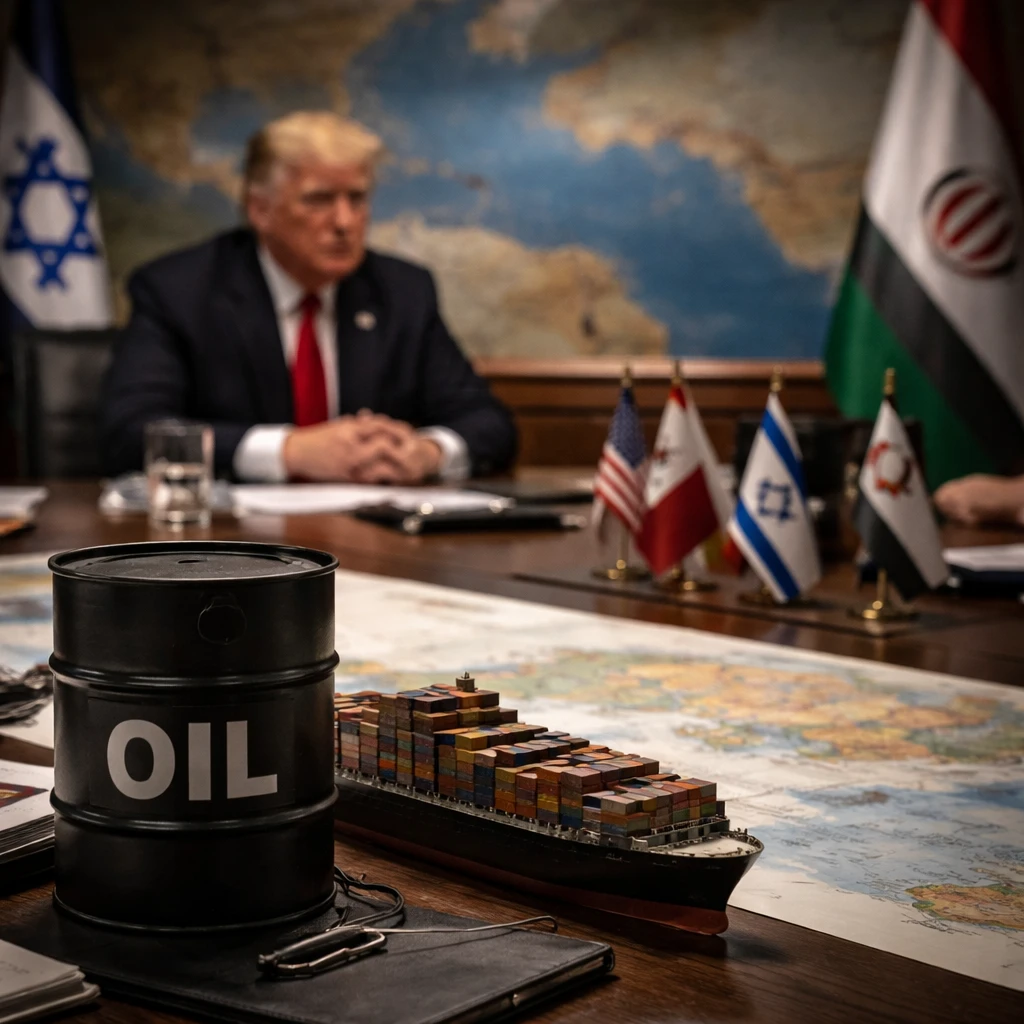
Negotiations poised to resume
U.S. President Donald Trump said talks between Washington and Tehran may pick up again this weekend, describing the two sides as "very close" to reaching an agreement. Trump added that Iran had agreed not to possess a nuclear weapon for more than 20 years, and he suggested he might extend a ceasefire if the United States neared a deal.
Ceasefire between Israel and Lebanon
At the same time, officials in Israel and Lebanon confirmed a 10-day halt to hostilities that began at 5 p.m. ET on Thursday. The pause could remove a major sticking point in U.S.-Iran negotiations: Tehran has demanded that attacks on Iran-aligned Hezbollah militants in Lebanon stop before an accord with Washington can be finalized. Despite the broader U.S.-Iran ceasefire, Israel has continued strikes on Hezbollah positions in neighboring Lebanon.
Hezbollah did not explicitly accept the truce, saying instead that it would condition its response on "how developments unfold." Both sides exchanged strikes in the hours before the temporary halt took effect, according to statements from each military.
Context of the conflict
Trump has framed the effort to curb Iran's nuclear ambitions as a central motive for the war, which began with joint U.S. and Israeli strikes on Iran in late February. Iran, for its part, has called for the removal of international sanctions in return for constraints on its nuclear program.
U.S. and Iranian negotiators have reportedly tempered hopes for a sweeping, comprehensive settlement. Instead, they appear to be pursuing a shorter-term memorandum designed to prevent renewed large-scale fighting, according to reporting that Trump reiterated in describing his belief that the conflict should end soon.
Market reaction and oil
Oil prices were trading below $100 a barrel as markets kept a close watch on the prospects for a more durable peace. After the outbreak of the conflict, crude briefly rose toward $120 a barrel, compared with pre-conflict levels of about $70 a barrel. A major driver of the earlier spike was the effective closure of the Strait of Hormuz, the narrow passage off Iran's southern coast through which an estimated one-fifth of the world's oil transits.
Analysts at ING have estimated that roughly 13 million barrels per day of oil have been disrupted by the shuttering of the strait. That disruption, along with other supply-side constraints, has stoked concerns about higher inflation in economies worldwide and the potential slowdown in global growth. Those dynamics have prompted debates over secondary effects on central bank interest rate policy as well as movements in gold and currency markets.
Both the International Energy Agency and the Organization of the Petroleum Exporting Countries have warned of softer demand in the months ahead. At the same time, a limited resumption of shipping through the Strait of Hormuz and an intensified U.S. blockade of Iranian ports may continue to weigh on supplies.
Flashpoints and diplomatic efforts
Observers and some market analysts have pointed to control of the Strait of Hormuz as the region's main flashpoint. OCBC analysts warned that U.S.-Iran negotiations could extend for as long as six months. France and Britain planned to chair a meeting of roughly 40 countries on Friday intended to demonstrate willingness to assist in efforts to reopen navigation through the chokepoint.
Trump has publicly criticized several nations, including U.S. allies, for not stepping up immediately to help reopen the strait. Meanwhile, U.S. military officials have emphasized that the intensified blockade, which began earlier in the week, targets Iran's ports and coastline rather than the Strait of Hormuz itself.
Outlook
The combination of diplomatic movement and the temporary Israel-Lebanon truce has created conditions that could reduce certain barriers to a U.S.-Iran agreement. However, negotiators appear to have narrowed their ambitions toward a time-limited memorandum rather than a comprehensive settlement. Markets, particularly oil, will likely continue to monitor both on-the-ground developments and diplomatic progress as indicators of near-term price and economic risk.
Note: The article presents reported developments and official statements; it does not introduce new events or claims beyond those reported.