
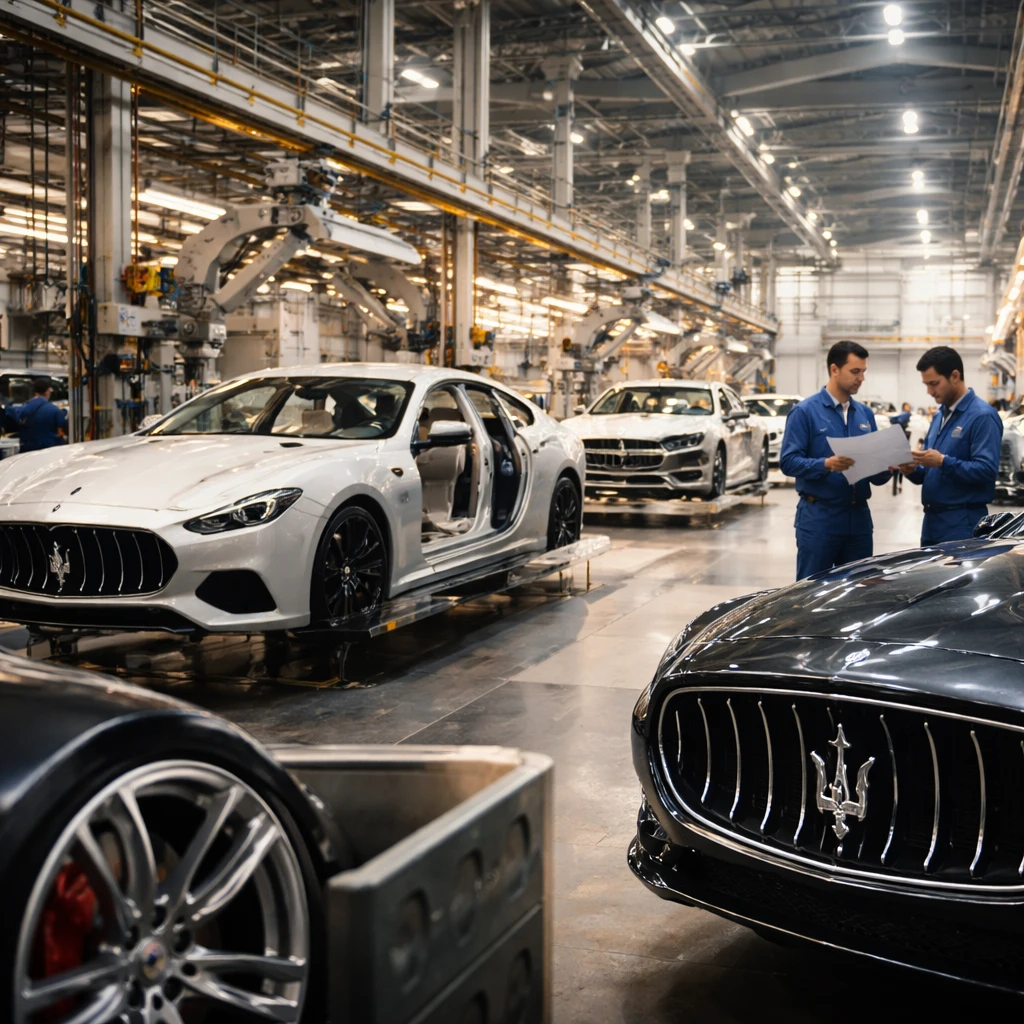
Stellantis NV is negotiating with two prospective partners for its Maserati marque, Chief Executive Officer Antonio Filosa said during a parliamentary hearing in Rome, according to media reports. Filosa did not name the firms under consideration but indicated the outcome will influence the facilities that produce Maserati cars.
"We are in talks with two important partners that can bring technologies and a series of excellent ideas, we’re deciding with which one to work in the future," Filosa said, addressing lawmakers' questions about Maserati's trajectory and the future of the Cassino plant. Cassino currently assembles vehicles for both Maserati and Alfa Romeo.
Filosa emphasized that Stellantis is not intending to sell Maserati or the Cassino factory. "Certainly Maserati isn’t up for sale, certainly Cassino isn’t up for sale," he said, adding that Cassino’s prospects will remain closely linked to Maserati and that the brand will continue to be presented as an icon of Italian style.
The CEO said Stellantis plans to unveil an "ambitious" Maserati strategy in December, one that will include two new core models. He framed the potential partnerships as collaborations to develop and manufacture future models rather than outright divestments. "What can happen in Cassino like elsewhere is collaboration partnerships" for development and manufacturing, he said.
Filosa also noted that the proposed collaboration would affect the Stellantis plant in Modena, where additional Maserati models are assembled. He further mentioned that Pomigliano, near Naples, could be considered for partnership activity; that site is planned by Stellantis to produce high-volume, more affordable electric vehicles.
The comments come amid ongoing decisions about Maserati's product roadmap and manufacturing footprint. Stellantis has framed the talks as a way to introduce new technologies and ideas into Maserati while keeping the brand and key plants under company control.
The timeline to select a partner was not specified beyond the December presentation of the Maserati plan. Filosa's remarks focused on collaboration and preserving Italian production ties without suggesting any sale of the brand or its principal factory near Rome.