
Skild AI Inc. has achieved a recurring revenue run rate of $100 million, coming about 10 months after it began commercial use of its robotics learning software. The company reports that its technology is currently deployed in hundreds of robots across more than 60 different companies, an increase from eight companies earlier this year.
The startup's leadership highlighted a rapid expansion of its customer base spanning a variety of settings - from cafes in Japan to warehouses in the United States. Skild's co-founder and chief executive officer described the breadth of deployments in a recent interview, noting that the mix of clients now includes operations with diverse physical tasks and environments.
In January, Skild closed a $1.4 billion financing round. That funding event more than tripled the company's valuation to $14 billion compared with its valuation seven months earlier. The company previously announced a partnership with Nvidia Corp. (NVDA) and Foxconn focused on robotics automation at a Houston chip factory.
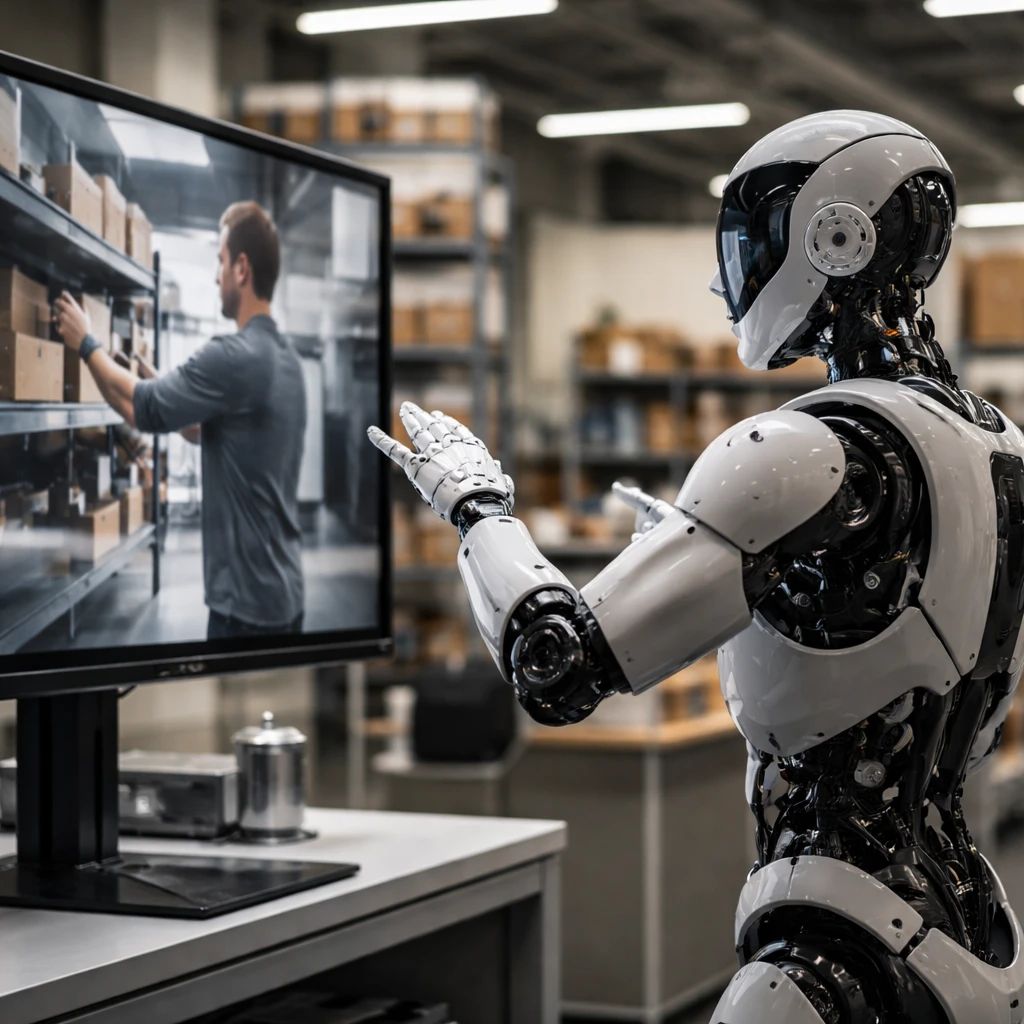
Last month, Skild introduced its "S1" artificial intelligence model. The S1 model enables humanoid robots to acquire a new skill after observing humans perform it. The company says S1 supports "in-context learning," allowing robots to learn and execute multistep tasks - including sequences that run longer than 10 minutes - by watching video demonstrations.
Skild's approach centers on a generalized, AI-driven system for robots rather than narrow, task-specific optimization. The stated objective is to create adaptable systems that permit robots to learn through observation and iterative practice, enabling broader applicability across different tasks and environments.
Summary
Skild AI has reached a $100 million recurring revenue run rate about 10 months into commercial use of its robotics software. Deployments now extend to hundreds of robots at more than 60 companies, up from eight earlier this year. The company completed a $1.4 billion financing that increased its valuation to $14 billion in January and unveiled the S1 model last month to help humanoid robots learn multistep tasks from video.
Key Points
- Revenue milestone: $100 million recurring revenue run rate approximately 10 months after commercial deployment began.
- Customer expansion: Technology used in hundreds of robots at over 60 companies, up from eight companies earlier in the year - impacts robotics, logistics, and foodservice automation sectors.
- Product and funding: Closed a $1.4 billion financing round in January valuing the company at $14 billion; launched the S1 AI model enabling in-context learning for humanoid robots.
Risks and Uncertainties
- Customer concentration and deployment scale - sustaining growth across diverse operational environments could affect adoption in logistics, manufacturing, and retail automation.
- Technological generalization - building a generalized AI-powered system that reliably adapts across tasks presents execution risk for robotics and automation applications.
- Capital and valuation dynamics - the company’s elevated valuation following a large financing round may heighten scrutiny on future performance and commercialization pace.