
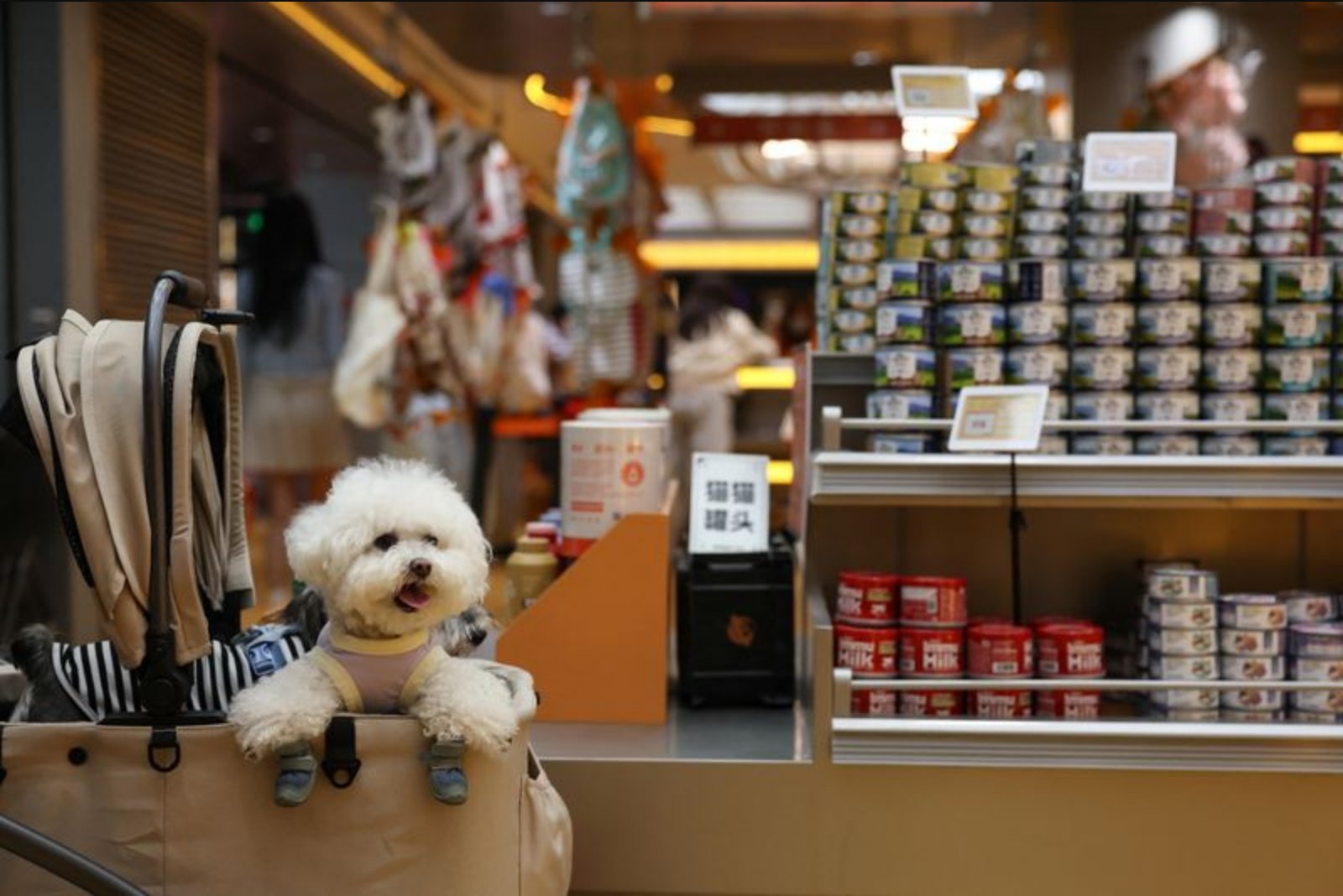
In a specialized pet mall in central Beijing, a growing number of pet owners are choosing Chinese-made ready meals for their animals. One shopper, who spends roughly $250 a month on food for her 2-year-old terrier, said she opts only for domestic dog food because she finds it fresher, more varied and better priced than Western alternatives. Her preference illustrates a wider shift in consumer behaviour that has helped push China’s pet food sector to a valuation exceeding $24 billion.
Retail demand has translated into a striking rise in sales: annual pet food revenues grew sixfold from 2014 to 2024. That rapid expansion has made the segment one of the brighter areas in China’s consumer landscape, even as the wider economy grapples with a property downturn, sluggish wage growth and employment worries.
The surge in pet-related spending has enticed major domestic firms seeking fresh revenue sources. Several household names have either entered the market or invested in pet food companies. China’s national liquor producer Kweichow Moutai said it plans to produce pet food using protein byproducts from its fermentation activities. Pork producer Wens Foodstuff purchased Qingdao Shuang’an Biotechnology Co, a pet food maker. WH Group - which owns packaged pork business Smithfield Foods - invested in Zhongyu Pet Food. Leading dairy companies Mengniu and Yili and pharmaceutical firm Yunnan Baiyao Group have also launched pet food lines in recent years.
As local manufacturers gain momentum, they have narrowed the foothold of international brands that once dominated shelves. Industry moves have included global names scaling back. General Mills announced on April 9 that its Blue Buffalo brand had wound down operations in China. Sales challenges have not been limited to that brand: a sales manager at the German pet food maker Animonda Carny reported a 30% decline last year in sales of its German-made chicken cat food in China, citing a broader trend of consumers favouring local products.
Product strategies and marketing
Domestic producers are competing on multiple fronts to attract pet owners. They are investing in eye-catching packaging, offering a wider array of flavours and kibble shapes, providing in-store and online promotional gifts, and spending heavily on e-commerce channels including Douyin, the Chinese version of TikTok. Some domestic lines have moved up the value chain by increasing meat content and using fresher ingredients.
Sales executives at young producers highlight rising demand for higher-animal-protein formulations. One sales director at a pet food company founded in 2023 said some domestic cat foods can reach more than 90% animal protein, while many foreign brands rely more on plant proteins like soy. He reported that his firm’s sales rose 40% in 2025.
Regulation and safety concerns
Despite the boom, the domestic industry faces scrutiny over product safety and regulatory standards. Industry advocates and inspectors warn that barriers to entry are low, meaning virtually anyone can produce pet food. Without national standards specific to pet products, oversight falls under the Ministry of Agriculture, which treats pet food as a form of livestock feed.
Analysts note a misalignment in that approach: livestock feed regulation is designed for animals raised for fattening, reproduction and slaughter, whereas pet owners are seeking products geared toward health and longevity. The arrangement means pet food is assessed under guidelines meant for a different set of objectives and production practices. The Ministry of Agriculture did not immediately respond to requests for comment on these regulatory issues.
An industry advocate involved in quality inspection work said the sector has not yet matured to the standards seen in parts of Europe, the United States, Japan or South Korea. That assessment reflects both the pace of market growth and the regulatory gaps that some observers argue should be addressed to ensure consistent product quality and consumer trust.
Where foreign brands stand
Not all international companies have lost ground. Mars’ Royal Canin remains the top-selling pet food brand in China and has been credited with gaining share through a deliberate localisation strategy. Observers note that successful foreign players are shifting from export-heavy models toward local production and distribution investments. One industry inspector said Royal Canin has opened factories to cut costs, localised production, invested in pet-store distribution, engaged in veterinary education and worked with breeding centres - steps that contrast with an earlier era when foreign brands might simply ship products or appoint an agent to handle sales.
Other major multinational companies did not provide comment when approached for responses.
Outlook and industry dynamics
The sector’s rapid expansion and the entry of large domestic firms suggest continued competitive pressure on foreign brands that do not adapt their strategies for local preferences and price sensitivities. At the same time, persistent regulatory questions and concerns over minimal production thresholds signal areas of uncertainty that could shape how the industry evolves. Observers and industry participants will be watching whether new standards, producer consolidation or further corporate investment changes the landscape for both domestic and international players.