
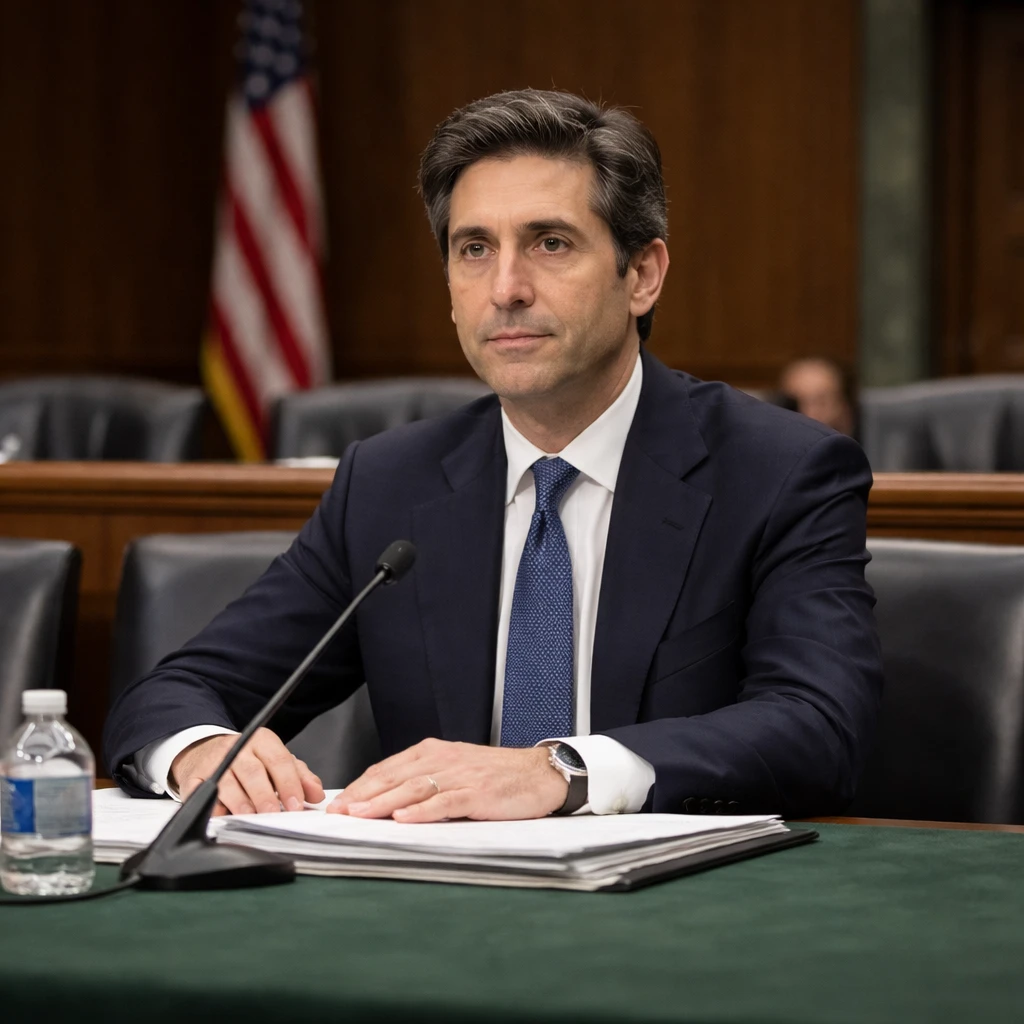
Kevin Warsh, nominated by President Donald Trump to lead the Federal Reserve, told lawmakers at his confirmation hearing Tuesday that he would work to preserve the central bank's independence if confirmed.
In prepared testimony, Warsh framed his approach around a concentrated effort to prevent distractions from shaping monetary policy. "I believe that monetary policy independence is earned - and better policy decisions crafted - by steering clear of distractions," he said. He added, "I am committed to ensuring that the conduct of monetary policy remains strictly independent."
Warsh further underscored the limits he sees for the Fed's role. He warned that the institution's autonomy is compromised when it departs from its statutory remit and engages in matters he described as fiscal or social in nature. "Fed independence is placed at greatest risk when it strays into fiscal and social policies where it has neither authority nor expertise," Warsh said in the prepared remarks.
He made a further distinction about the central bank's appropriate functions, asserting that the Fed should not serve as an all-purpose arm of the federal government or as an arbiter for policy questions he said belong to other branches and public debate. "The Fed should not act as some general-purpose agency of the US government or as an appellate court for matters that are rightly debated and decided elsewhere," he said.
The statements signal Warsh's emphasis on maintaining a strict separation between monetary policymaking and other areas of government policy. His testimony repeatedly returned to the theme of shielding monetary decisions from external influences and keeping the central bank focused on its operational mission.
What this means
- Warsh positions himself as an advocate for a narrowly defined remit for the Fed, emphasizing independence and discipline in policy execution.
- He explicitly cautioned against the Fed taking on responsibilities linked to fiscal or social policy, framing such actions as threats to central bank autonomy.
- The nominee's remarks align with a focus on separating monetary policy from political or broader governmental functions.
Warsh's testimony centers on the principle that the Fed's effectiveness depends on keeping its work free from distraction and outside roles that could blur its mandate. His repeated pledges to protect the Fed's independence form the core message he presented to the committee on Tuesday.