
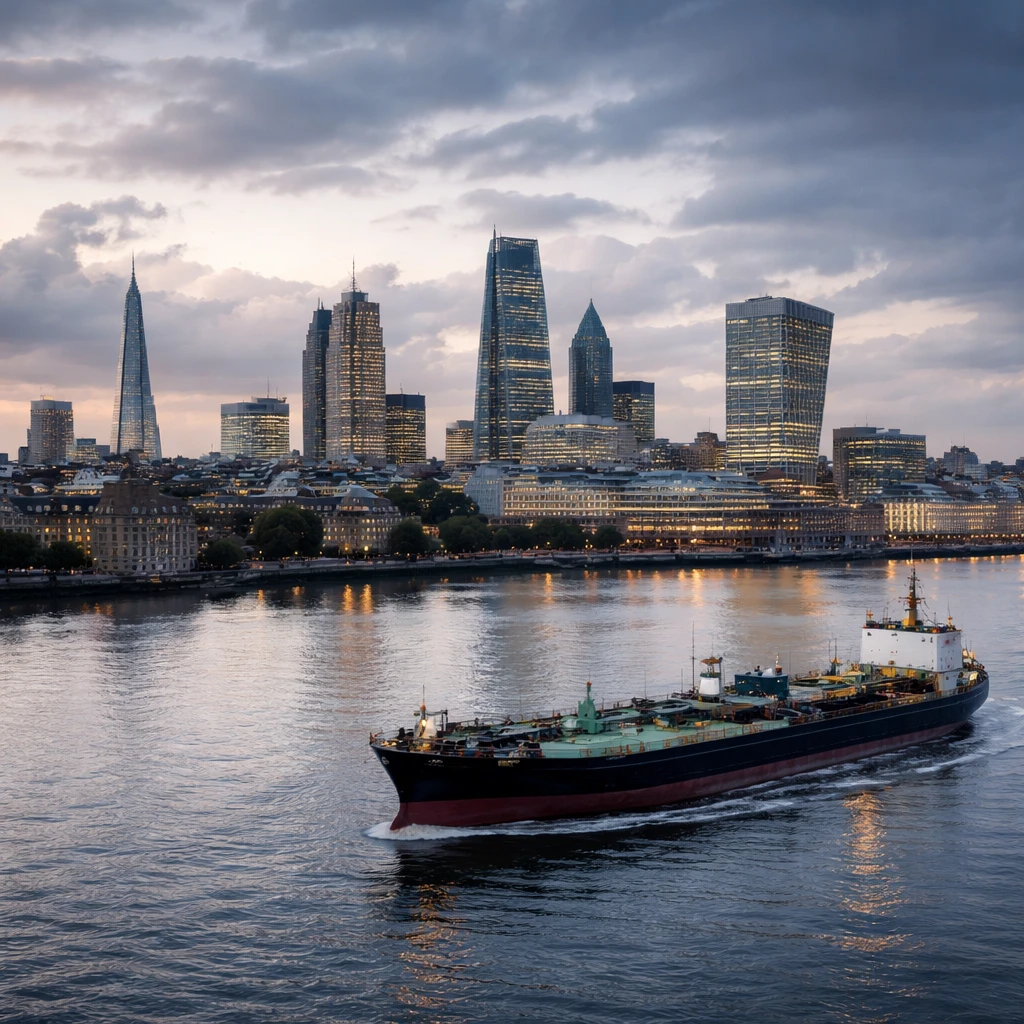
London equities moved erratically on Wednesday as two contrasting forces tugged markets in opposite directions - a broad global sell-off in technology and chip names, and a step back from the heightened risk in the Strait of Hormuz as tanker flows started to ease. The session also reflected attention on domestic politics after the surprise resignation of Labour leader Keir Starmer.
By 03:25 ET (07:25 GMT) the FTSE 100 had oscillated through the session and was last reported up 0.09%. Germany's DAX slipped 0.65% while France's CAC 40 managed a modest gain of 0.20%. Sterling weakened slightly versus the dollar, trading down 0.05% at $1.3188.
Domestic political developments
In the UK, attention remained on the party leadership transition. Starmer met face-to-face with likely successor Andy Burnham and said he would facilitate a smooth handover. Starmer is also scheduled for discussions with European leaders in Berlin on issues including Ukraine, NATO burden-sharing and the Iran conflict ahead of next month's NATO summit.
Geopolitics and the Strait of Hormuz
Geopolitical risk, while diminished compared with recent days, remained a theme. The flow of tanker traffic through the Strait of Hormuz has started to normalize as Iran-Israel hostilities moderated, and vessels that had been stranded are preparing to transit the waterway.
Those developments followed a tense exchange on Tuesday. Senator Marco Rubio rejected suggestions that Iran could charge transit tolls on traffic through the strait, after Iran and Oman indicated they would jointly examine options for the waterway's future administration. The U.S. Senate also passed a non-binding resolution directing the U.S. President to withdraw forces from the Iran conflict - a move that adds another element of uncertainty to policymaking around the region.
President Donald Trump criticized the Senate resolution on social media, calling it "poorly timed and meaningless," and asserting he would accomplish the desired outcome "one way or the other." In a prior post, he said Iran had agreed to stringent nuclear inspections and that the Hormuz Strait would remain open, though he noted ships would remain available to re-impose a naval blockade if necessary. Iran's messaging was less conciliatory - President Pezeshkian said Iran's missiles are not part of any U.S. agreement and asserted they never would be.
Senator Rubio is touring Gulf states to promote the deal to governments including the UAE, Kuwait and Bahrain, while seeking to separate it from other discussions between Israel and Lebanon. Those latter talks drew a grim assessment from Israel's U.S. ambassador, who said they were "heading toward a train wreck," and Hezbollah accused Israel of breaching a ceasefire after strikes in Lebanon killed two people on Tuesday.
Commodities and shipping
On the commodities front, Brent crude fell 1.22% to $75.86 per barrel, while WTI dropped 1.35% to $72.22. Gold futures and spot gold moved lower as well - futures slid 1.14% to $4,102, and spot gold was down 0.61% at $4,084.
Qatar's prime minister told the Financial Times that QatarEnergy expects to return to normal LNG output within "a few weeks," and that force majeure on shipments will be lifted once safe. Qatar supplies roughly 20% of global LNG. Separately, the United Nations is planning to evacuate more than 11,000 seafarers who were stranded in the Gulf.
Corporate updates in the UK
On the company front, Berkeley Group reported annual pretax profit that fell short of analyst expectations, with the developer citing higher costs, slower construction activity and caution among buyers as headwinds to margins.
Segro rejected an all-share takeover proposal from Prologis that placed a value on the company of about A312.6 billion. B&M announced the appointment of Atheeq Akbar, formerly of Asda, as CFO-designate; he is due to join in February 2027.
Market implications and closing observations
Wednesday's session illustrated the tug-of-war between risk-off moves in technology and chips and more benign signals from global geopolitics around Hormuz. The outlook for energy and shipping remained a consequential variable, with crude prices sliding alongside prospects of resumed tanker traffic and expected LNG production normalization. Meanwhile, domestic political shifts in the UK added a separate layer of investor focus.
Investors continued to balance these cross-currents as markets searched for direction amid a complex mix of macro, geopolitical and corporate developments.