
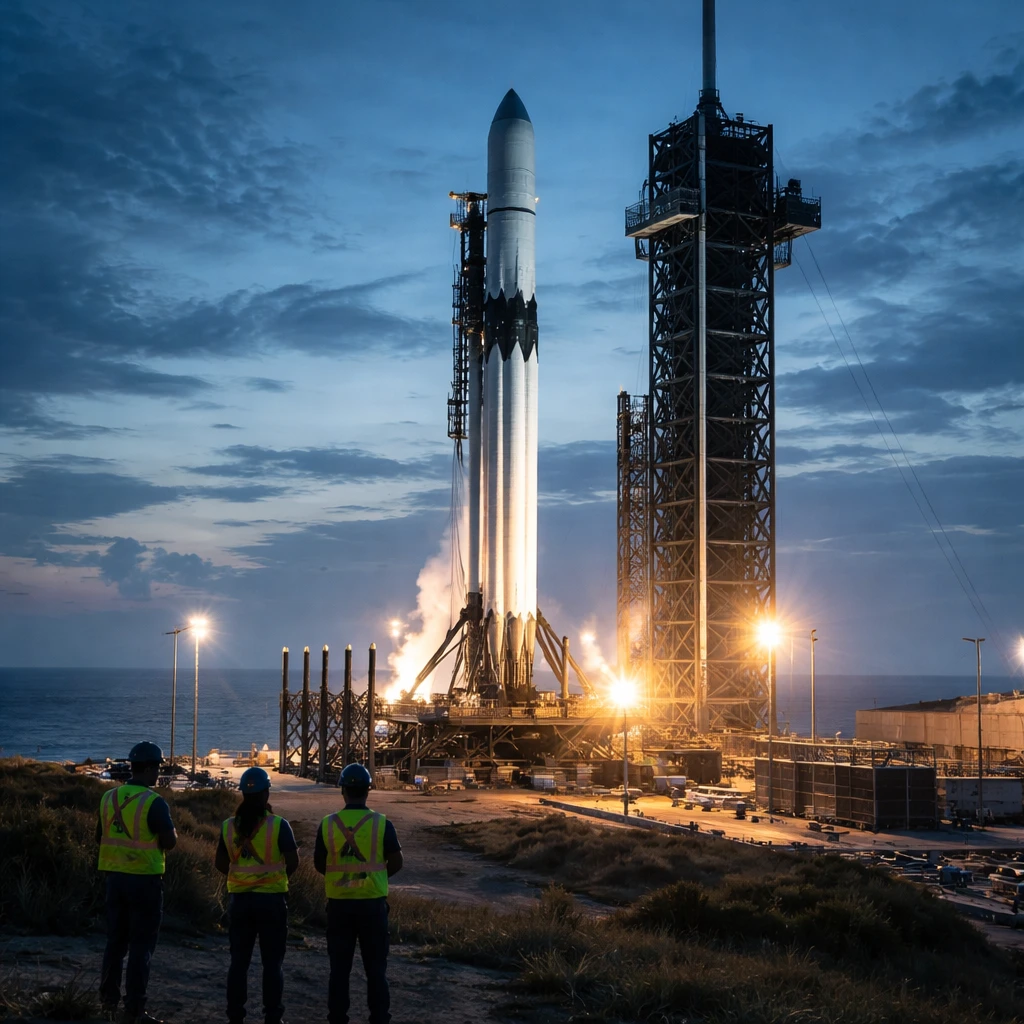
Fitch Ratings has given a BBB+ credit rating to the senior unsecured notes that Space Exploration Technologies Corp. intends to issue. The rating means the new notes would rank pari passu with SpaceX's existing and future senior unsecured liabilities, including its senior unsecured revolving credit facility.
The company plans to apply net proceeds from the notes toward the full repayment of a $20 billion bridge loan and to cover related fees and expenses, with any leftover proceeds allocated to general corporate purposes.
Fitch's BBB+ issuer default rating reflects what the agency describes as SpaceX's commanding role in commercial launch markets, where entry barriers are effectively insurmountable over the rating horizon. The rating also incorporates the firm's rapidly scaling recurring-revenue streams tied to its connectivity operations and an expanding AI compute business.
In assigning a stable outlook, Fitch cited expectations that SpaceX's EBITDA will grow at a pace sufficient to maintain leverage within or below management's stated target range of 2x-3x. The rating agency also highlighted the company's pro forma liquidity position of over $90 billion as a key support, noting that such liquidity should sustain the company through a period in which it may elect deeply negative free cash flow.
Fitch's analysis reiterates that SpaceX has delivered more than 80% of global mass to orbit since 2023. The agency attributes a material reduction in launch costs to SpaceX's proprietary rocket reusability, saying those costs are now a fraction of historical averages.
Starlink is a central element of Fitch's view of SpaceX's revenue profile. As of June 4, the satellite broadband business had more than 12 million active subscribers, and it also generates income from enterprise, government, and mobile network operator contracts. Fitch further notes that SpaceX's terrestrial AI compute business is scaling rapidly and contributes to the recurring-revenue base.
Fitch referenced SpaceX's $85.7 billion capital raise, calling it the largest public offering on record, and said the company would likely defer discretionary capital deployment if access to capital markets were restricted.
Governance is a material constraint in Fitch's rating assessment. Elon Musk holds multiple leadership roles and controls nearly all super-voting shares via a 10-to-1 voting ratio with no sunset provision. Fitch estimates this governance structure reduces the rating by two notches compared with the level that SpaceX's operating and financial profile would otherwise support.
Fitch's rating case assumes that the Starship system reaches operational capability in the second half of this year. The agency expects Starship to be used to deploy next-generation Starlink satellites that Fitch views as necessary for connectivity growth beginning in 2027 and beyond.