
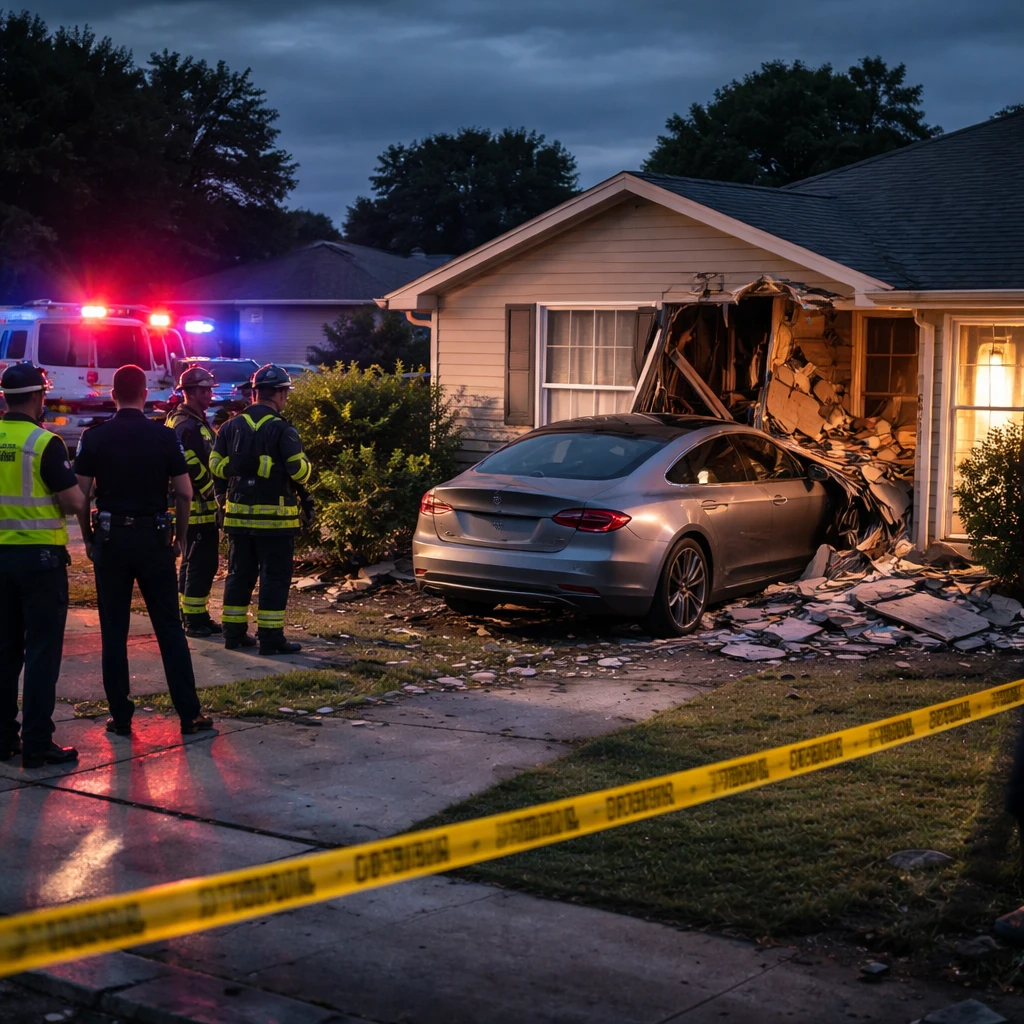
The National Highway Traffic Safety Administration (NHTSA) opened a formal investigation Monday into a deadly incident involving a Tesla vehicle that occurred on June 19 in Texas.
Local police reports indicate a Tesla left the roadway and collided with a residential structure. A woman who had been inside the home suffered severe injuries in the impact and subsequently died from those injuries, according to the reports.
Investigators say the driver informed them the vehicle was operating with an automated driving assistance system at the time of the crash. Local media accounts reported that authorities did not find signs the driver was intoxicated.
Elon Musk, Tesla's Chief Executive, responded on the social platform X on Monday, calling the crash puzzling and saying it "makes no sense." He contrasted the company's Full Self-Driving feature - which he said usually moves slowly through neighborhood streets - with the high speed of the crash, as described in his post.
Despite its name, Tesla's Full Self-Driving system is not described as autonomous in the company's own documentation. The Model 3 owners' manual explicitly states that Full Self-Driving requires drivers to remain attentive to the road and prepared to take control of the vehicle at any time.
Summary
A Tesla vehicle left the road on June 19 in Texas and struck a home, fatally injuring a resident. The driver told investigators an automated driving assistance system was engaged. The incident prompted a formal NHTSA investigation announced Monday. Tesla's CEO publicly questioned the circumstances, and the automaker's manual notes that Full Self-Driving requires continuous driver attention.
Key points
- NHTSA launched a formal probe Monday into the June 19 crash in Texas involving a Tesla vehicle.
- The collision occurred when a Tesla left the road and hit a house; a woman inside was severely injured and later died.
- The driver reported the vehicle was using an automated driving assistance system at the time; Tesla's manual states Full Self-Driving requires driver attention.
Sector and market impact
- Automotive safety and autonomous driving technology are directly implicated by the investigation.
- Regulatory scrutiny led by a federal agency may have implications for manufacturers and suppliers in the broader mobility and software sectors.
Risks and uncertainties
- The outcome and scope of the NHTSA investigation are not yet known - this creates regulatory uncertainty for manufacturers and the autonomous systems supply chain.
- There is limited public information about the precise sequence of events leading to the crash beyond the driver's statement that an automated assistance system was engaged.
- Local reports indicating the driver was not intoxicated do not eliminate other unknown factors that may have contributed to the collision.
The investigation by NHTSA represents a formal regulatory review of the circumstances surrounding the collision. At this stage, agencies have announced the probe and facts reported by local authorities and the driver; they have not released additional findings. The company's public commentary and the owners' manual language were also described in available accounts.