
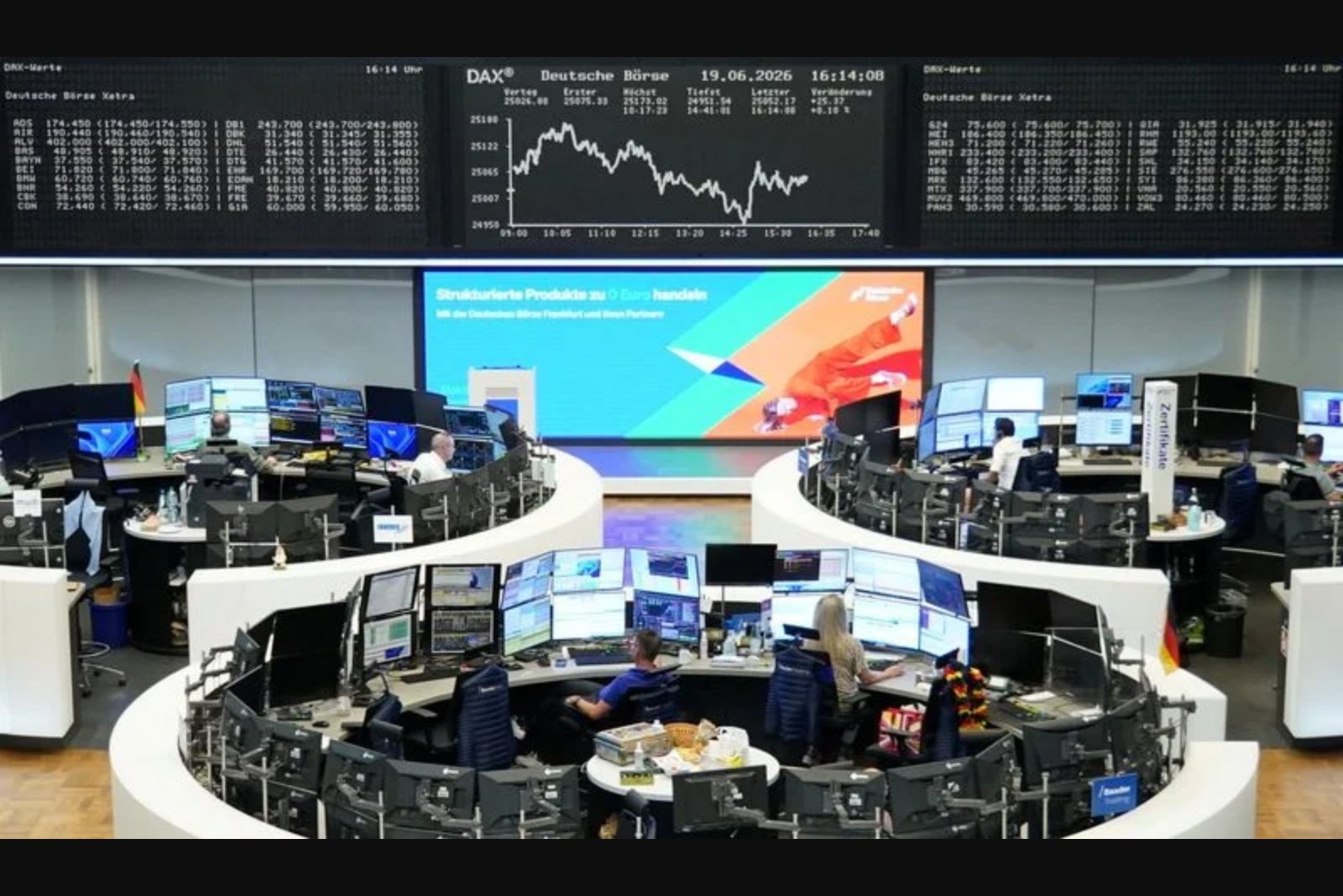
European equity markets showed little net movement on Wednesday as traders balanced geopolitical uncertainty tied to U.S.-Iran negotiations against shifting procurement decisions in Germany.
The STOXX 600 closed 0.1% higher, while Germany’s DAX ended the session down 0.6%.
Defence and industrial names drew particular attention after a contentious procurement reversal in Berlin. Rheinmetall plunged 18.7%, marking the largest one-day decline in the firm’s record, after Germany cancelled plans for six F126 frigates amid delays and anticipated cost overruns. The frigate contract, which Rheinmetall had been seen as likely to win, will instead be filled by smaller Meko A-200 frigates from Thyssenkrupp’s marine unit TKMS, which jumped 16% on the news.
The broader aerospace & defence grouping on the STOXX 600 fell 0.8% and the industrials sector slid 0.2%.
"You’ve got a very unstable environment and ongoing wars. That should feed into positive sentiment towards the defence sector, but it’s not happening," said Michael Field, chief equity market strategist at Morningstar.
Commodity-linked subsectors were among the weakest performers on the STOXX 600, with miners down 2.5% and energy stocks falling 2.3%, tracking softer metals and oil prices. Brent crude fell to its lowest levels since the U.S.-Israeli war on Iran started as supply disruption worries eased somewhat following a peace agreement; nevertheless, market participants remained cautious amid disagreement on key terms.
In contrast, the real estate sector climbed 3%, led by Segro, which surged 17.4% after U.S.-based Prologis made public a $16.6 billion bid for the warehouse landlord following Segro’s rejection of the offer. The move produced Segro’s largest intraday percentage gain since March 2009.
Technology stocks pared earlier gains to close 0.3% lower after the sector had recorded its largest one-day drop in nearly five months in the prior session. Chipmaker Infineon fell 1.2%, while chip-equipment suppliers BE Semiconductor and ASML retreated 1.3% and 0.5%, respectively.
Memory shares in Asia staged a rebound, while U.S. memory names were mixed ahead of chipmaker Micron’s quarterly results.
Jennifer Bender, global chief investment strategist at State Street Investment Management, described the recent weakness in tech as resembling prior short-term selloffs this year, typically affecting markets with a large retail presence and involving short-term traders taking profits.
On the economic front, German business morale improved in June, with firms reporting their most positive view of the current situation in nearly two years. Traders were also looking for direction on monetary policy from major central banks, pricing in another 25-basis-point rate hike by the European Central Bank by year-end, according to LSEG-compiled data.
Overall, the market mood was one of cautious assessment as investors parsed geopolitical negotiations, a material defence procurement reversal in Germany, commodity price moves and evolving expectations for central bank policy.