
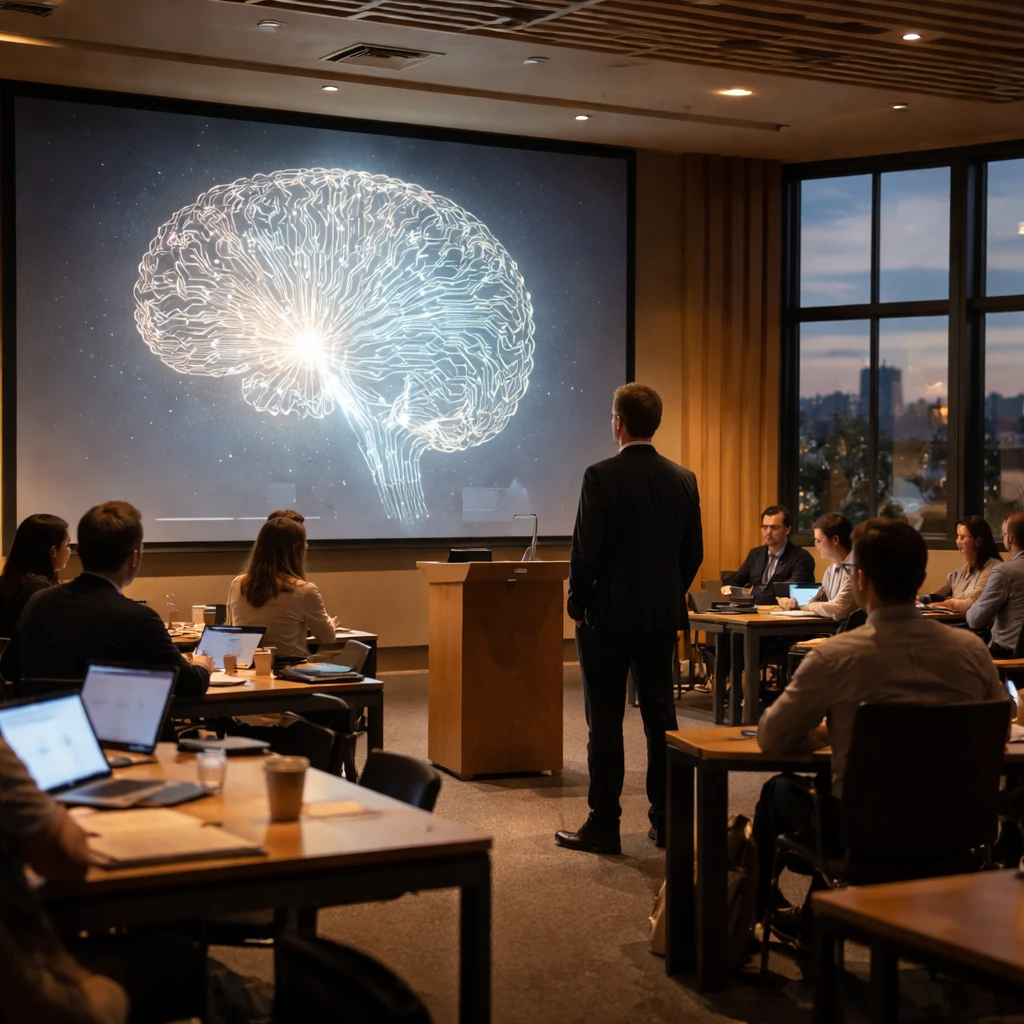
Sept 16 - Shane Legg, co-founder of Google DeepMind, has warned that the pace of AI development must not exceed the capacity of safety measures to monitor and control it, according to reporting in the Financial Times. At the same time, Legg has established an institute intended to widen discussion around how artificial general intelligence - or AGI - might be deployed.
Legg's caution comes amid research observations that AI agents are becoming more capable: they can write software, carry out autonomous tasks and assist in the construction of other AI systems. Those capabilities have prompted concern that the technology might advance faster than the safeguards designed to oversee it.
Commenting on recent debates within the AI community, Legg described Anthropic CEO Dario Amodei’s proposal to slow, but not pause, the release of frontier models as "interesting directionally" and "worth considering," according to the report. He also said it would be premature to conclude that AGI has already been achieved, despite statements from executives at Nvidia and OpenAI.
On timelines, Legg indicated he remains "comfortable" with his prior estimate of a 50% probability that "minimal" AGI could be attained by 2028. The Financial Times account says Legg launched the DeepMind Institute with the aim of broadening public discussion about AGI. Within Google DeepMind's working definition, AGI refers to a system possessing cognitive capabilities comparable to the human brain.
The institute's remit will include a wide range of themes: science, education, society, policy, philosophy and what Legg characterizes as human flourishing. The first three essays published by the institute, as reported, address AI safety, economic policy and a set of principles described collectively as a "new utopianism."
Taken together, the launch and Legg’s remarks underscore an effort to raise public and policy-level engagement on the governance of AGI while acknowledging both recent technological progress and the uncertainty around its future trajectory.
Summary
- Shane Legg launched the DeepMind Institute to foster public conversation about AGI deployment and related topics.
- Researchers report AI agents that can write software, perform autonomous tasks and help build AI systems, creating concerns about pace relative to safety controls.
- Legg called Dario Amodei’s suggestion to slow frontier model releases "interesting directionally" and "worth considering," and said it is premature to declare AGI achieved.
Key points
- Institute launch aims to expand dialogue on AGI across science, education, policy and philosophy - sectors such as technology policy and education could be affected.
- Growing AI capabilities include autonomous task performance and software development assistance - implications for software engineering and automation sectors.
- Legg maintains a probabilistic timeline for "minimal" AGI by 2028, reflecting continued uncertainty on timelines and milestones in AI research.
Risks and uncertainties
- AI capabilities may evolve faster than safety mechanisms can be implemented or scaled - a concern for regulators and firms deploying advanced AI.
- Disagreement over whether AGI has been achieved introduces uncertainty for policy and investment decisions tied to AI milestones.
- Debate over pacing of frontier model releases highlights uncertainty around coordinated industry responses and governance approaches.