
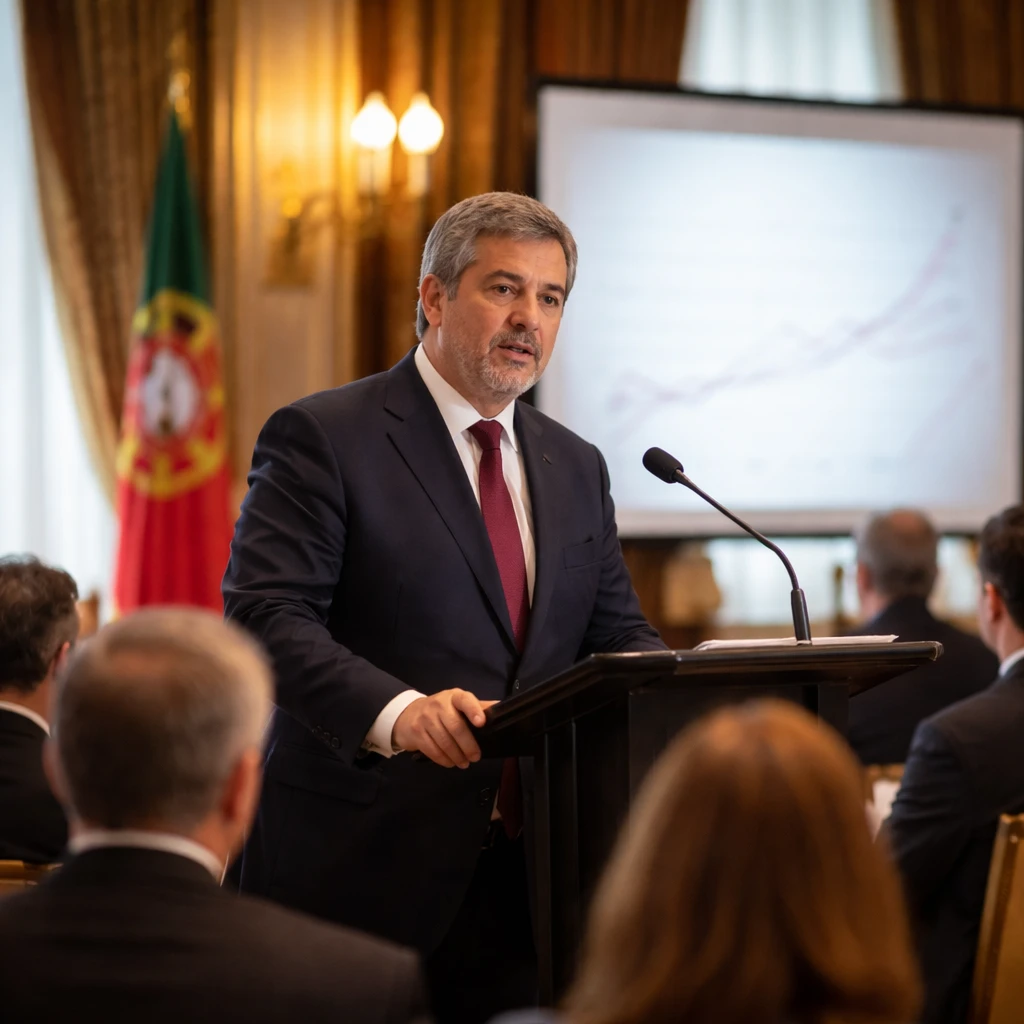
Euro area inflation is not at present expanding across the economy as rapidly as it did during the 2022 episode, but policymakers remain alert to potential changes, Portuguese central bank chief Álvaro Santos Pereira said at an event in London.
Speaking at a European Economics and Financial Centre gathering hosted at the Portuguese embassy, Pereira - who sits on the European Central Bank's Governing Council - stressed that the current pattern does not rule out a broader spread of price pressures in the months ahead.
"Inflation is not spreading or is not broadening as fast as it happened in 2022," Pereira said. "It doesn’t mean that it could not happen... It’s important for us to notice, and we monitor very closely exactly this in the next few months to see whether this is broadening."
The comments come after the ECB raised euro zone interest rates last week - its second increase so far this year. Financial markets are currently pricing in at least three additional hikes over the coming 12 months, a signal of investor expectations for a continued tightening cycle.
Pereira identified the recent surge in natural gas prices as a prime source of near-term concern and singled out the rapid expansion of artificial intelligence activity as another shock that central bankers are weighing for its potential to influence global growth and inflation dynamics.
"There’s a lot of risks that certainly have risen in the last few months," he said, highlighting the twin areas of energy costs and AI-related effects as particular items under scrutiny.
His remarks underlined the vigilance of ECB policymakers as they assess whether current inflationary impulses will remain contained or become more widespread. With the central bank advancing its policy rate earlier this month and markets anticipating further tightening, officials are focused on short-term indicators that could shift the inflation profile across sectors.
For now, Pereira conveyed that while broadening is not occurring at the pace seen in 2022, the situation remains fluid and warrants close observation over the near term.
Summary
- ECB Governing Council member Álvaro Santos Pereira said inflation is not broadening as quickly as in 2022 but cautioned that this could change.
- Policymakers are closely watching a recent rise in natural gas prices and the potential inflationary effects of the AI boom.
- The ECB raised rates last week for the second time this year, and markets expect at least three more hikes over the next 12 months.
Key points
- Inflation trajectory: Current price pressures are not spreading as rapidly as in 2022; monitoring is ongoing.
- Drivers under watch: Natural gas price surge and AI-driven shocks are cited as principal risks for inflation and growth.
- Market expectations: Financial markets are pricing further ECB rate rises, affecting interest-rate sensitive sectors such as banking and broader financial markets.
Risks and uncertainties
- Broadening inflation - If inflation begins to spread more widely, consumer prices and input costs across sectors could be affected, with implications for economic stability.
- Energy price volatility - The recent increase in natural gas prices represents a direct risk to the energy sector and to industries reliant on energy inputs.
- AI-related shock - The AI boom's influence on global growth and inflation is an acknowledged uncertainty that could alter demand and price dynamics in technology and adjacent sectors.