
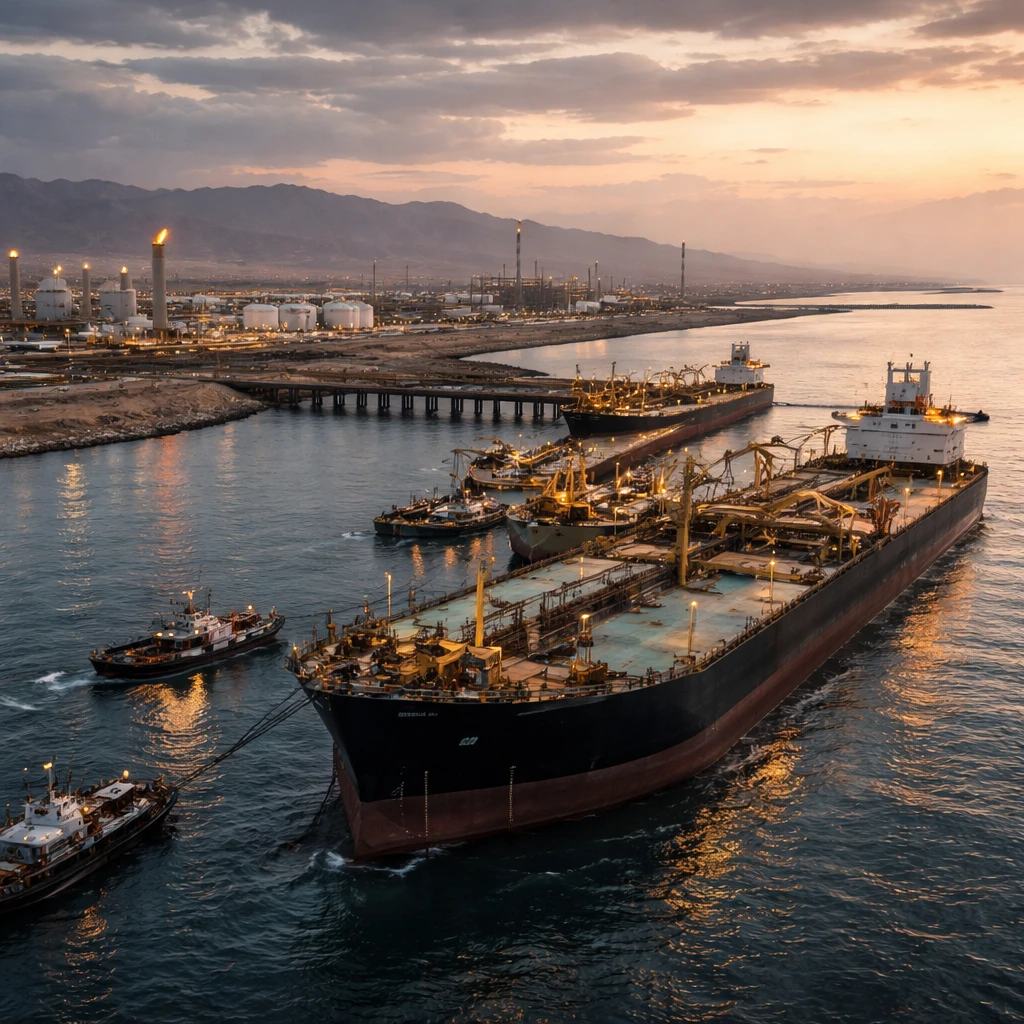
Oil prices recovered and moved above $108 per barrel on Tuesday after Saudi Arabia confirmed an attack on its East-West pipeline and temporarily shut the line, according to analysis cited by Citi. Earlier in the session Brent had slipped toward $104 amid reports that Gulf Cooperation Council nations might hold talks with Iran and in the wake of a softer demand outlook from the International Energy Agency, but the canceled meeting and the pipeline outage reversed that decline.
Brent futures rose past $108 per barrel following the shutdown. At one point, Dated Brent traded above $130 per barrel, reflecting a spike in regional premiuming for certain grades.
Saudi authorities on Thursday acknowledged the pipeline had been attacked and taken offline. The infrastructure has a nameplate capacity of 7 million barrels per day and was reportedly transporting roughly 5 million barrels per day prior to the shutdown. Under those flows, about 4 million barrels per day of Saudi exports normally transit routes through the Red Sea.
Cargo-tracking information from OilX indicates Saudi crude loadings from Yanbu averaged about 1.8 million barrels per day in September month-to-date, with 13 vessels loaded. That compares with the prior month, August, when Yanbu loadings amounted to roughly 1.6 million barrels per day across 35 vessels.
Citi analysts noted that Saudi Arabia maintains inventories of approximately 14 million barrels at west coast export terminals, plus around 12 million barrels stored at Sidi Kerir and Ain Sukhna. The bank said those stocks provide a buffer that could be drawn down to meet near-term export obligations even if the outage continues beyond a matter of days.
On the demand side, Citi highlighted that Chinese crude imports have risen and refinery purchasing remains robust. The upcoming maintenance season is expected to be relatively light, a factor that should sustain refinery throughput. Additionally, multiple new pipeline projects have been proposed by the United Arab Emirates and Iraq, which the bank referenced in its view of supply options over time.
Overall, Citi expects these near-term developments - the pipeline disruption combined with continued physical demand - to support prices for oil and petroleum products. The bank qualified that this support is expected to persist ahead of a potential reopening of the Strait of Hormuz during the fourth quarter of 2026.
Context and implications
The interaction of an unexpected supply interruption, export logistics and inventory buffers has been central to the recent price movement. Market attention remains on how long the outage will last and whether stock draws and alternative routing can fully offset disrupted flows.