
The 2026 FIFA World Cup, set to run from June 11 to July 19 across the United States, Canada and Mexico, is being modelled by analysts as a significant, concentrated stimulus to consumer activity across multiple sectors. FIFA’s socioeconomic impact analysis with the World Trade Organization estimates the tournament could add about $41 billion to global GDP, while brokerages are identifying the specific industries and stocks they expect to benefit from heightened travel, merchandise sales, viewing activity and wagering.
Below is a sector-by-sector look at where brokerages see the bulk of the World Cup’s economic lift and which companies they have flagged as likely beneficiaries.
Hotels and travel platforms
Hospitality firms and online travel agencies are being singled out for direct upside from inbound visitors. B. Riley projects a total audience of 13.1 million visitors to the tournament - counting both ticketed attendees and non-ticketed spectators - which it expects to generate roughly 21.3 million hotel room nights booked via online travel platforms. Analysts highlight U.S. hotel operators Marriott, Hilton and Hyatt as well as travel marketplaces Airbnb, Booking Holdings and Expedia as positioned to capture much of that demand.
Marriott has indicated the momentum tied to the World Cup could carry into the third quarter. Airbnb says hosts in high-profile markets - notably the New York-New Jersey metropolitan area, Boston and Los Angeles - are likely to see the highest earnings during the event.
Airlines
Goldman Sachs has described the tournament’s impact on U.S. carriers as a potential net positive. The bank also notes a seasonal consideration - June typically sees lower inbound leisure and corporate travel, with a large portion of peak outbound travel happening in July and August after the World Cup concludes. Separately, a sharp rise in jet fuel prices linked to the war with Iran has pushed carriers to raise fares, a dynamic that could lead budget-conscious travelers to postpone or cancel summer trips despite the tournament-driven demand.
Beer and beverage companies
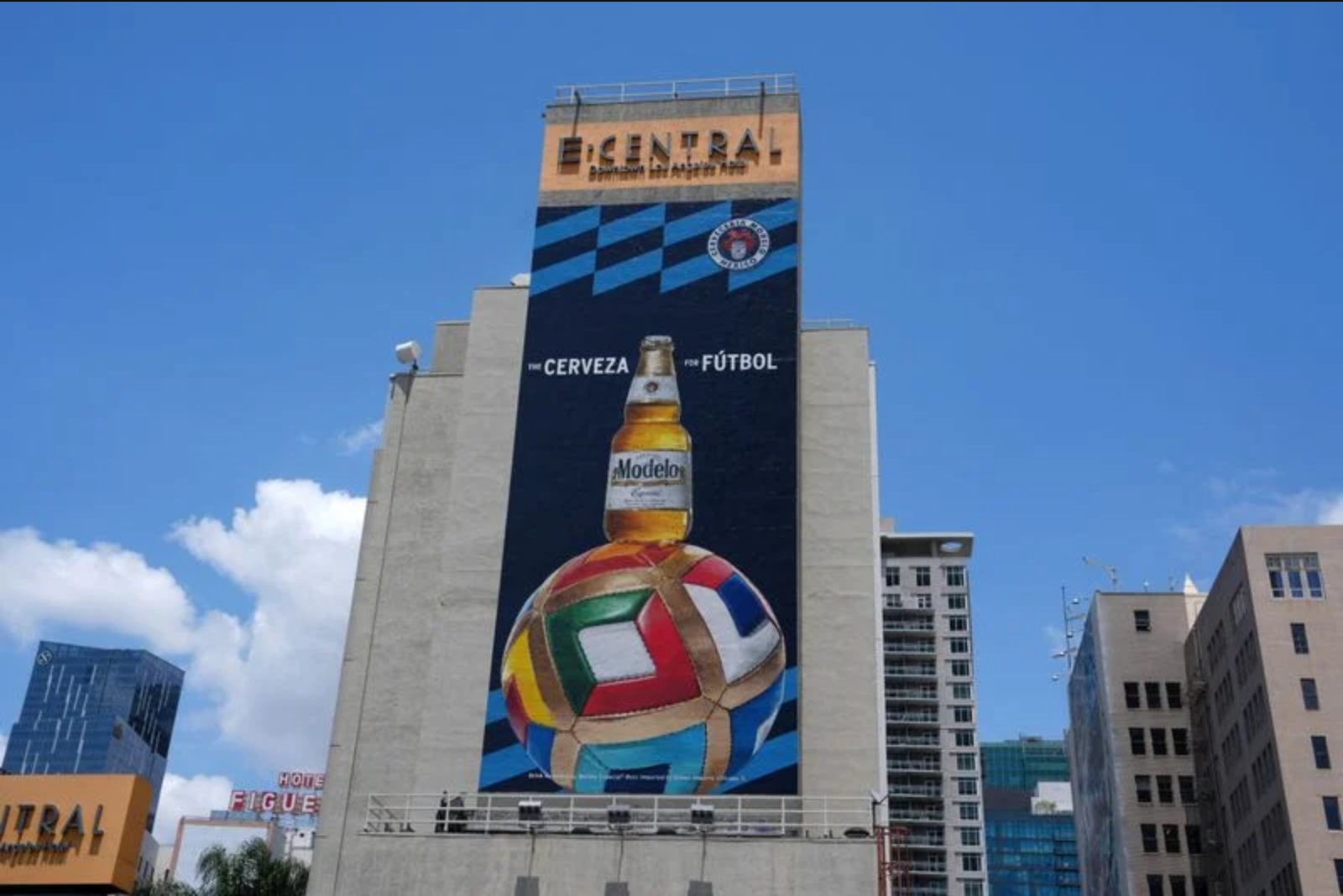
Jefferies projects global beer consumption during the tournament will exceed 1 billion pints, translating to an industry volume lift of about 0.3%. The brokerage expects improvements in markets including the United States, Mexico, Brazil and China. Analysts point to favorable timing and geography - with roughly 75% of matches played in the U.S. and 84% of matches involving participating countries falling into time zones conducive to beer consumption - as supportive factors for the sector.
Brokerages including Bernstein, Goldman and Jefferies identify Anheuser-Busch InBev, the tournament’s official beer sponsor, as a primary beneficiary. Heineken, as the world’s second-largest brewer with strong exposure to Latin America and Europe, is also seen as likely to receive a tailwind.
Retail, sportswear and merchandise
Analysts expect a spike in merchandise demand from fans that should lift sales at sporting goods retailers and increase visibility - and ultimately sales - for sportswear brands. Goldman Sachs forecasts higher merchandise volumes that could benefit retailers such as Dick’s Sporting Goods and Academy Sports. Sports brands named as likely to gain from the tournament’s global exposure include Adidas, Puma and Nike.
Goldman also highlights Adidas’s sponsorship of the official match ball and its kit agreements with multiple national teams as positioning the company to capture additional brand exposure and sales over the event period.
Food retailers, restaurants and distributors
Citi projects that traditional grocers and larger retail chains will gain from increased household spending tied to the World Cup. It identifies Albertsons and Kroger as beneficiaries among grocers, with Walmart and Target named among larger retailers expected to see incremental demand.
Group-viewing occasions and tourism are anticipated to lift restaurant and delivery demand. McDonald’s, Domino’s Pizza, Wingstop and Chipotle are cited among restaurant chains likely to benefit, while foodservice distributors such as Performance Food Group, US Foods and Sysco are expected to see higher volumes as restaurant activity rises.
Media, digital platforms and advertising
Deutsche Bank expects the 2026 men’s World Cup to generate the highest U.S. advertising revenue for the event to date. Morgan Stanley estimates the English-language broadcast partner could capture roughly $300-400 million in advertising revenue. Deutsche Bank also points to the Spanish-language rights holder - a Comcast-owned network - as another media beneficiary.
Citi expects internet platforms such as Alphabet’s YouTube and Meta Platforms’ Instagram to register increased user activity around matches and related content, providing additional upside for digital engagement metrics.
Sports betting
Deutsche Bank forecasts that online sports-betting operators will outperform peers as World Cup-driven wagering lifts overall volumes, with Flutter Entertainment and DraftKings named as firms likely to see relative outperformance. Macquarie projects global wagers could exceed $50 billion across the tournament - an average approaching $0.5 billion per match - compared with over $35 billion in total wagers in the previous edition in 2022.
The consensus among brokerages is that the World Cup will be a concentrated, short-term stimulus to a variety of consumer-facing industries. While sectors from hospitality and airlines to beer makers, retailers, restaurants, media platforms and betting operators are expected to benefit, the scale and persistence of the uplift will depend on the interaction of seasonal travel patterns, costs such as jet fuel and how households respond to fare and price increases.
Key points and risks are summarized below.