
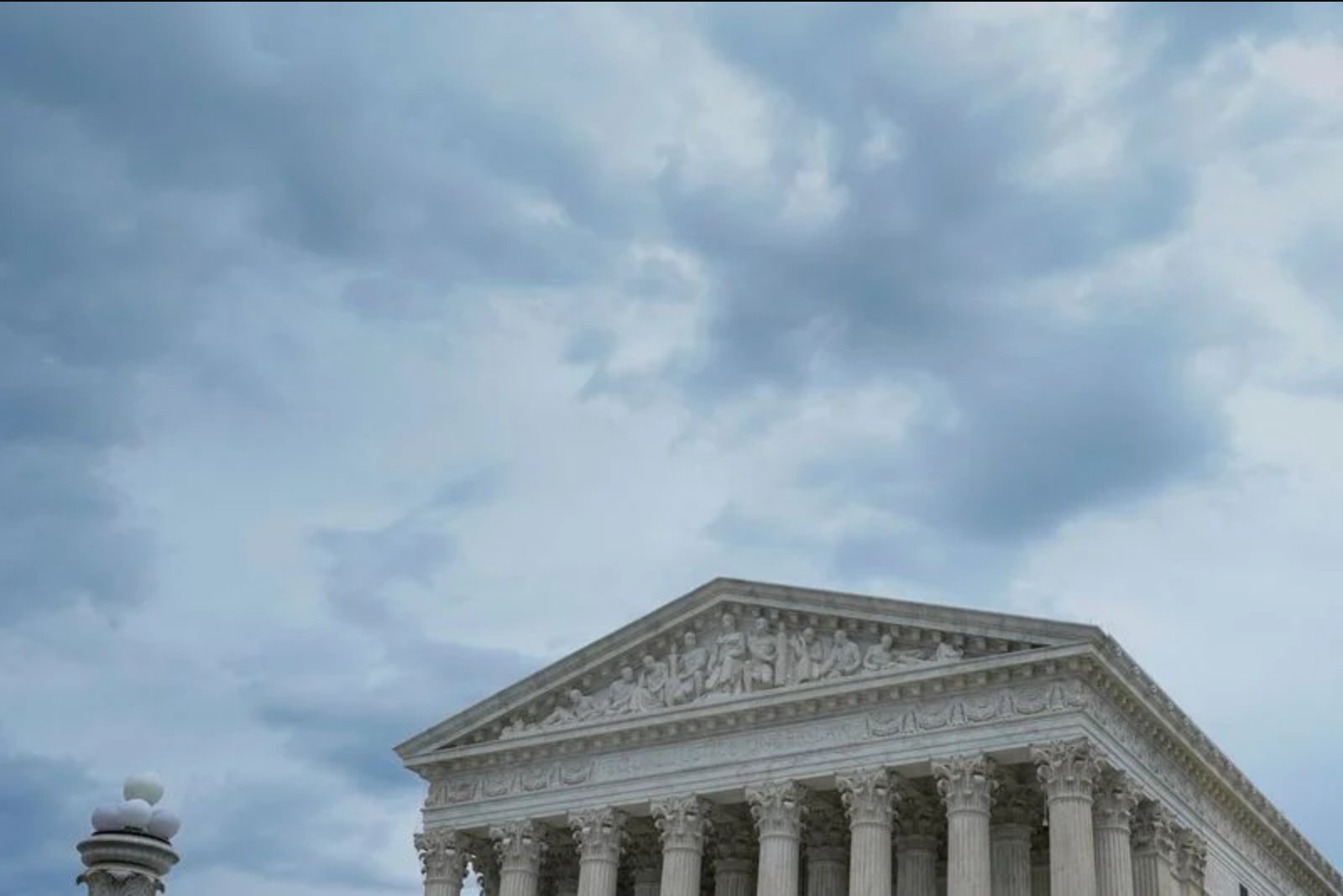
The Supreme Court’s current term is converging on what many expect to be a decisive conclusion, with an unusual accumulation of high-profile cases that probe the boundaries of presidential authority. The justices issued five opinions on Tuesday and are widely expected to hand down additional decisions on Thursday as the court approaches its traditional summer break.
Federal court terms typically run from early October to roughly the end of June, sometimes extending into July. The justices have not set a formal date to end the term and begin their recess. Historically, the court has reserved some of its most weighty rulings for the final days of the term, and this year’s calendar is notable for how many of those late rulings directly involve assertions of executive power tied to President Donald Trump.
Central to the cluster of remaining cases are several matters that arise from actions taken by Trump in his second term, many aimed at enlarging the president’s control over domestic policy and aspects of foreign policy. The docket includes litigation over his attempt to limit birthright citizenship by executive order, his reported effort to remove Federal Reserve Governor Lisa Cook, efforts to dismiss Democratic members of independent federal agencies, and the termination of a humanitarian legal status that shielded hundreds of thousands of Syrian and Haitian immigrants from removal.
Legal scholars and court watchers note that the number and novelty of these disputes have made this term unusually active. "It’s totally normal for the most important cases of the term to come out in the last few days. What is unusual is that there are so many blockbuster cases," said University of Michigan constitutional law professor Sam Erman, an expert on the Supreme Court. He added that novel assertions of presidential authority since Trump took office have produced major legal questions about the allocation of power in government and the scope of presidential control.
The court’s conservative 6-3 majority, which includes three justices appointed by Trump during his first term, has shown receptiveness to emergency requests from the administration that sought to allow contested policies to take effect while challenges continued in lower courts. Over recent years, that conservative bloc has increasingly accepted a theory sometimes described as the "unitary executive," which concentrates executive-branch control in the presidency.
At the same time, observers caution that the conservative majority’s view of executive power is not unlimited. Erman noted that the justices appear inclined toward a strong presidency, but not an unchecked one. As a result, the court may be more inclined to uphold some of the president’s actions when they align with a broader conservative legal agenda, while resisting executive actions that push beyond accepted legal boundaries.
Analysts following the oral arguments in the major Trump-related cases generally assess that the president has stronger prospects of prevailing where he seeks to remove members of independent federal commissions than on efforts to curtail birthright citizenship or to force out a Federal Reserve governor by executive action. The court is widely viewed as unlikely to accept the contention that a presidential order can unilaterally narrow the longstanding interpretation of the 14th Amendment that grants citizenship to people born on U.S. soil.
The court has already rebuked one of Trump’s ambitious uses of power this term. In February, the justices struck down sweeping global tariffs the administration imposed under a law intended for national emergencies. That decision prompted a sharp reaction from the president, who criticized the court and several justices who ruled against the tariffs.
Beyond the cases directly tied to the president, several other high-stakes matters that will shape elections, civil rights and other policy domains remain unresolved. The justices are considering a challenge mounted by Mississippi Republicans to a state rule that allows a five-day grace period for mail-in ballots received after Election Day to be counted. A ruling for the challengers could lead to narrower voting rules in other states.
In a separate matter involving a figure identified in filings as Vice President JD Vance, the court is positioned to address a Republican-sponsored challenge that seeks to invalidate federal limits on coordinated spending by political parties and candidates on free speech grounds. The outcome could affect campaign finance rules governing party expenditures in coordination with candidates.
The conservative majority earlier this spring significantly curtailed a core provision of the Voting Rights Act, prompting a rapid round of redistricting across parts of the South. That redistricting effort sought to eliminate U.S. House districts where Black voters constituted a majority or near-majority, a move state officials advanced following the court’s decision. Those changes are tied to broader Republican efforts to maintain control of Congress in November, given that Black voters have tended to support Democratic candidates.
Other pending cases test disputes over state-level limits on transgender athletes in girls and women’s sports, with the court considering laws from West Virginia and Idaho that would bar transgender competitors from female sports teams. The outcomes will influence policy debates around rights for transgender people and the legality of state bans.
On gun rights, the justices are set to rule on a challenge supported by the Trump administration to a Hawaii law that restricts carrying handguns on private property that is open to the public without the owner’s permission - locations such as many businesses. Separately, the court unanimously rejected a recent administrative position that had raised concerns about the rights of millions of Americans who use marijuana and also own firearms, a development that had been backed by the administration before being rejected by the justices.
As the court approaches the close of this term, the convergence of major cases probing executive authority and consequential rulings on voting, civil rights, gender identity and gun regulations means the remaining decisions will reverberate beyond legal doctrine. The rulings could alter the balance of power among branches of government, shape enforcement of federal programs, and influence the political landscape as lawmakers and stakeholders react to the court’s judgments.