
WASHINGTON - Officials overseeing the John F. Kennedy Center for the Performing Arts opened the doors this week for the first public look at an ambitious renovation program that has become politically charged since President Donald Trump added his name to the building and named himself chairman of its board.
The center is set to close for about two years starting in July under a plan approved by the board that the president hand-picked. That timetable and the broader remodeling initiative have drawn criticism from some Democratic lawmakers, donors and artists, and have prompted preservation groups to sue, arguing that congressional approval is required.
Commitment to more transparency
During the tour, one senior center official - granted anonymity to speak candidly about sensitive internal deliberations - acknowledged public concern and said leadership would be more open going forward. "I know there's been a lot of turmoil and worry about what we're doing to the building," the official said, pledging to be "more transparent" and "communicative" about both structural and cosmetic changes.
Despite that pledge, many cosmetic details remain unsettled. Standing in the famed Opera House, the official confirmed the seats and carpet will be replaced but said the deep red color scheme will remain. "Overall plans for the cosmetic changes have not been finalized," the official added.
Asked whether demolition would leave the building visibly altered from across the river, the official responded: "You're not going to be able to stand in Georgetown and look over the river and see through the building. That's not what's going to happen."
Presidential involvement and suggestions
Officials said Trump is engaged in discussions about the project and that he "is in the details." The administration did not elaborate on the extent of his involvement, but the center's representatives said the president has been "quite frequently" engaged in renovation conversations.
During a tour of the center in March 2025, Trump described the facility as in "tremendous disrepair," framing the center's condition in political terms and presenting his involvement as corrective. At a December White House meeting, the president suggested adding white marble armrests to the center's seating.
Historic tributes will remain
Congress dedicated the Kennedy Center to President John F. Kennedy after his assassination in 1963. Photographs of the former president and Jacqueline Kennedy decorate areas of the building. Center officials said no changes are planned to those tributes, including the institution's prominent 3,000-pound Kennedy statue in the main hall.
Public funding and budget details
Unlike privately financed renovation projects, the center's overhaul will be paid with taxpayer dollars. Republicans secured roughly $257 million for the work in the 2025 tax and spending law associated with the president's agenda.
Draft budget documents, filed as part of a lawsuit brought by Democratic Representative Joyce Beatty - who serves as an ex-officio board member - allocate specific sums to elements of the program. The drafts show $78 million earmarked for "safety and building systems" and $48.5 million for performance venue "revitalization," with the largest identified share directed to "front of house" upgrades. Center officials said they are also pursuing additional corporate and private donations targeted at renovating the facility's lounges.
Operational impacts and staff reductions
Officials warned that the center will operate with a sharply reduced workforce - described as "pretty bare bones" - while the renovation is underway. They were less forthcoming on how the leadership transition and the renovation plans have influenced ticket sales, noting that sales figures have not historically been publicly disclosed by the institution.
A second anonymous official described a change in local attendance patterns since the governance changes: "There was a shift in attendance by D.C. locals upon our arrival here."
What the tour revealed
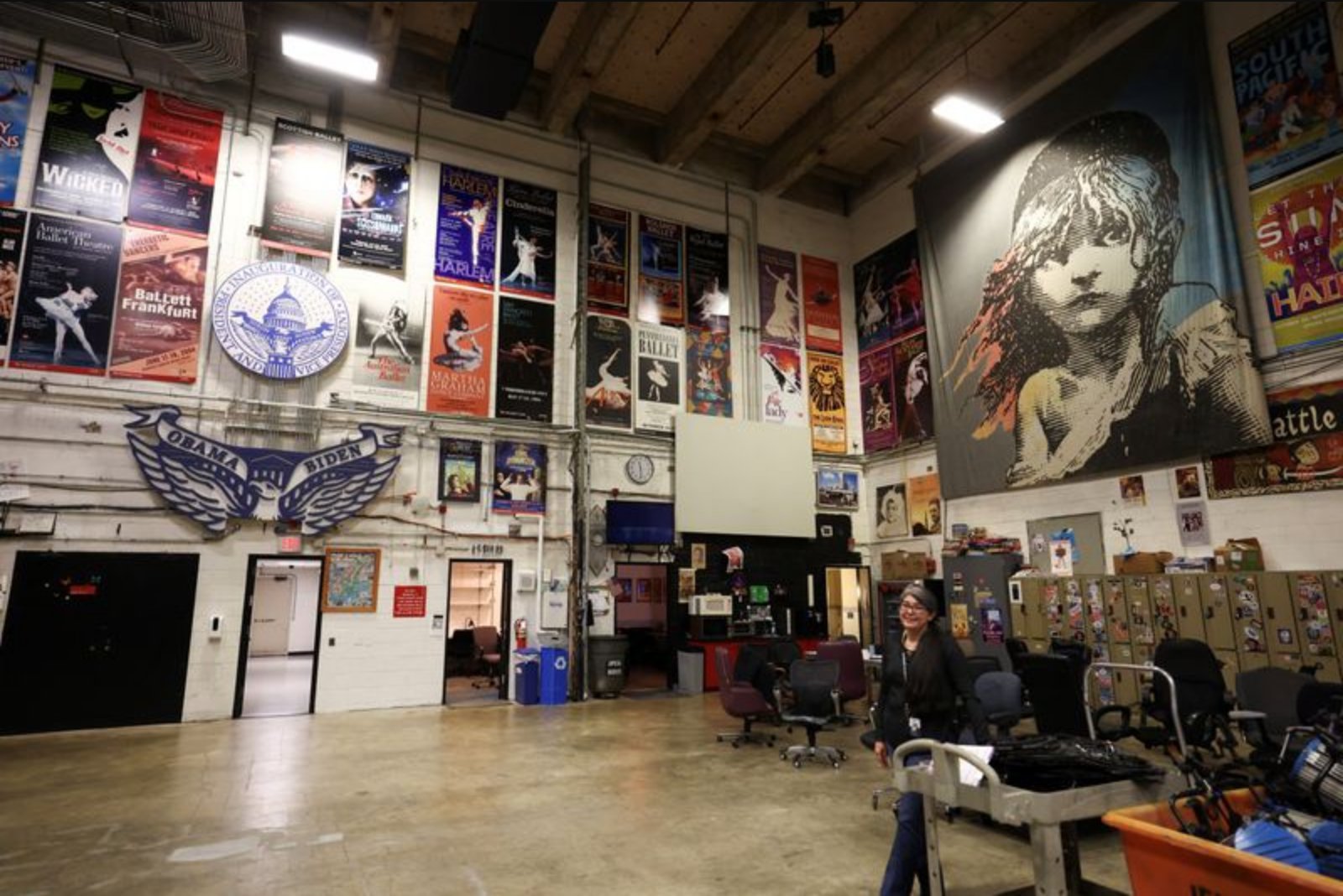
The media walkthrough ranged from the building's marble exterior to its celebrated stages and into the less visible maintenance areas where officials say much of the work will be concentrated. Inspectors highlighted eroding support beams, corroded electrical vaults and other aging infrastructure as drivers of the project.
Behind the scenes, reporters saw a filtration system meant to draw Potomac River water for cooling that was cobwebbed and nonfunctional, a problem center officials said is compounded by rising river temperatures. A large black pipe was observed leaking near a poster for the musical Wicked bearing the slogan "So much happened before."
Legal and political uncertainty
The renovations face legal challenges from preservation organizations that contend the scope of work requires congressional sign-off. At the same time, the plan has become a focal point for political debate over the use of taxpayer dollars, the preservation of a memorial dedicated to a Democratic president and how leadership changes may influence a cultural institution's mission and appearance.
Officials emphasized their intent to address pressing structural needs while promising to increase communication about the project's details as the center moves toward the scheduled closure and work.
Reporting and tour observations reflect comments and material provided by center officials and were limited to the information presented during the public tour and related documents disclosed in the litigation described above.