
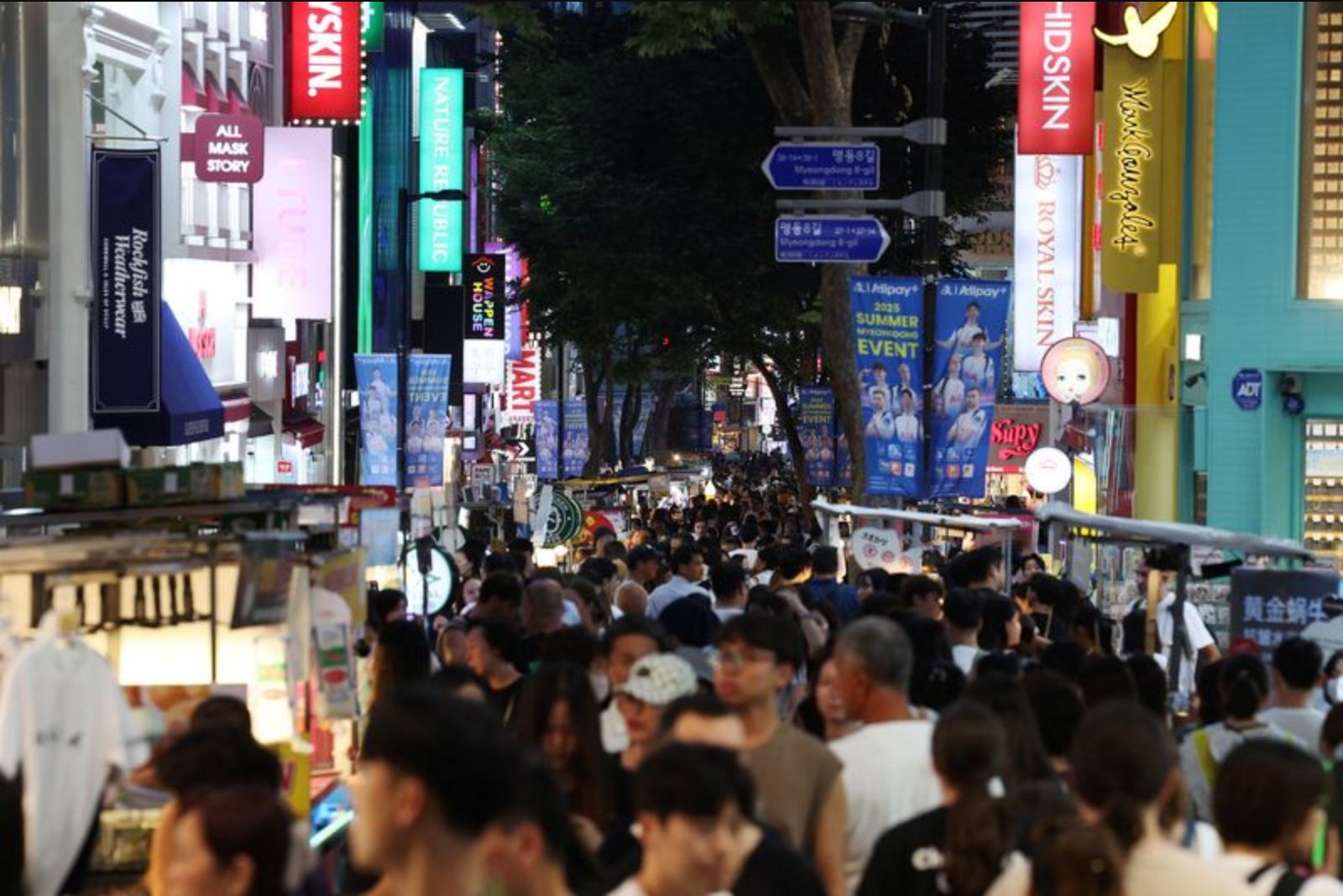
South Korea's economy recorded a markedly stronger-than-expected expansion in the January-March quarter of 2026, with central bank figures showing gross domestic product rose 1.7% from the prior quarter. The Bank of Korea's data indicate this is the fastest quarterly increase since the third quarter of 2020, and well above the median market expectation of 1.0%.
The acceleration was led by an export rebound. Exports climbed 5.1% in the quarter, the central bank said, with shipments of "IT components including semiconductors" cited specifically as a major contributor. The Bank of Korea noted that these components are used in artificial intelligence infrastructure, and that booming semiconductor demand helped offset weakness elsewhere in the economy.
Domestic demand showed mixed signals. Private consumption rose 0.5% during the quarter after tentative improvements earlier in the year as household confidence eased from prior lows. By contrast, government expenditure made only a marginal contribution, increasing 0.1% and acting as a drag relative to other demand components.
Investment dynamics also improved. Facility investment rebounded with a 4.8% increase in the quarter, after a 1.7% contraction in the final quarter of 2025. Taken together, the stronger export performance and recovery in facility investment underpinned the overall GDP result.
On a year-on-year basis, South Korea's economy expanded 3.6% in the first quarter, compared with a 1.6% year-on-year expansion in the fourth quarter of 2025. The annual growth rate exceeded a median estimate of 2.7% reported in market surveys.
Contextual analysis
The Bank of Korea's release frames the first-quarter outcome as a clear example of external demand - specifically for IT components and semiconductors - offsetting weaker public spending. The data show that export-oriented sectors and capital expenditure on facilities were the main drivers, while government outlays contributed little to near-term momentum. Private consumption made a modest positive contribution, consistent with tentative improvements in household sentiment indicated for January and February.
For policymakers and market participants, the report highlights the sensitivity of quarterly growth to swings in exports and investment, and the uneven composition of demand in the current cycle.