
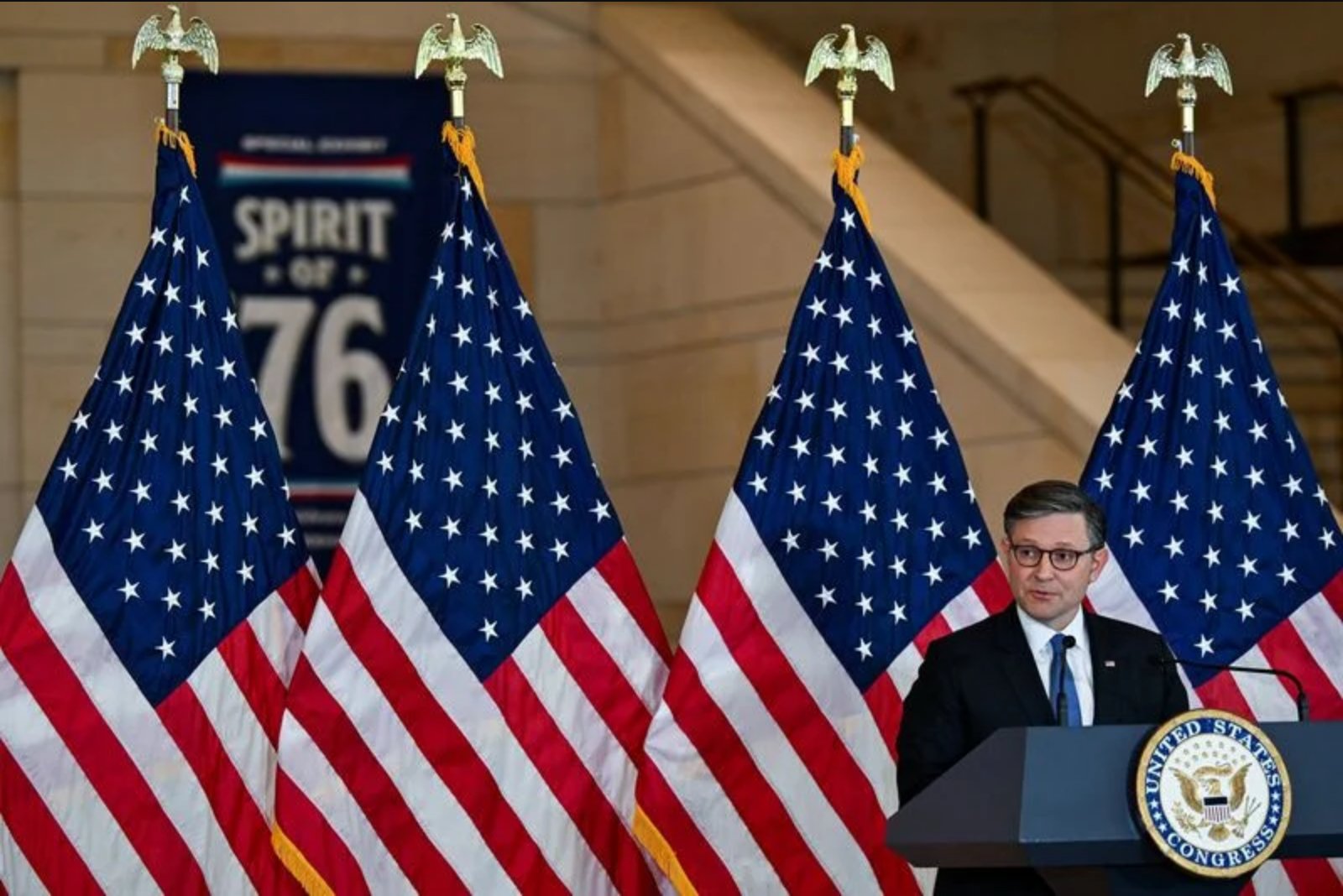
House Speaker Mike Johnson is scheduled to meet with former President Donald Trump on Thursday in an effort to ease a partisan standoff that has frozen activity on the House floor. The impasse centers on a package of national voting restrictions, known as the SAVE America Act, which Trump has identified as his top legislative priority.
The confrontation escalated after a tense private session between Trump and Senate Republicans. In the House, a bloc of hardline allies led by Representative Anna Paulina Luna effectively halted floor proceedings by declining to back a procedural measure that would have let unrelated bills move forward. The holdout lawmakers demanded the Senate take action on the SAVE America Act first. The Senate has tried and failed to approve the bill five times since mid-March.
Trump employed a similar lever of pressure on Wednesday with Senate Republicans by withdrawing from a signing ceremony for a bipartisan housing bill. House and Senate Republican leaders had hoped to use the event to showcase a legislative response to high living costs, an issue identified in the debate as voters' top concern ahead of the November midterm elections that will determine whether Republicans keep their congressional majorities.
Despite pressure from hardliners on Capitol Hill, the Senate adjourned early for a two-week July 4 recess with no movement on the SAVE America Act. Senate Majority Leader John Thune and other Senate Republicans faced mounting demands from conservative members to advance the measure, but the chamber left Washington without taking the bill up.
Following the Senate's departure, Representative Luna posted on social media that she would not support reopening the House floor until senators return. "I will not be voting to re-open the floor until the Senate gets back to Washington," she wrote, adding that "John Thune is running and hiding because he doesn’t want to get voter ID across the finish line."
The arithmetic in the House complicates Speaker Johnson's task. Republicans hold a narrow majority of 218-212, which means Johnson can lose no more than two Republican votes on any measure that faces unified Democratic opposition. In the Senate, the situation differs: Senate rules often require bipartisan backing to advance most legislation, creating an additional procedural hurdle that Johnson does not face in the House.
At a Thursday news conference, eight House hardliners reinforced their stance against moving forward with unrelated legislation while the Senate remains out of session. Representative Ralph Norman, a prominent member of the ultraconservative House Freedom Caucus, said he personally opposes additional legislative action until the Senate returns.
Provisions in the SAVE America Act include a federal requirement for photo identification to vote in federal elections, proof of U.S. citizenship to register, and mandatory transfer of state voter registration rolls to federal authorities. The bill, which passed the House in February, also seeks to significantly limit mail-in voting, a change that Republican supporters say would address concerns about voting processes and that critics contend could reduce access to ballots.
Democrats have strongly opposed the measure. They argue the legislation targets a largely non-existent problem of non-citizen voting, an issue Trump has linked to his 2020 defeat. Opponents also warn the bill could disenfranchise citizens who lack ready access to passports or birth certificates, making it more difficult for some Americans to exercise their right to vote.
Some Republicans have cautioned that Trump’s intense focus on the SAVE America Act may help Democrats politically. Democrats have already used the dispute as a campaign issue in their bid to regain control of the House and potentially the Senate in November.
House Democratic leader Hakeem Jeffries criticized Trump for withdrawing from the housing bill signing, saying the move undermined an effort to address affordability. Speaking to CNBC, Jeffries said that people are clearly struggling and that Trump had "failed to solve that challenge," adding that the former president had effectively scuttled a bipartisan housing bill that Democratic leaders said would help build affordable housing for Americans affected by rising costs.
Outlook and next steps
Speaker Johnson’s meeting with Trump is intended to defuse the internal Republican confrontation and restore legislative business to the House floor. Whether the meeting will change the hardliners’ posture or prompt new momentum in the Senate remains uncertain. The Senate’s early recess and its repeated inability to pass the SAVE America Act leave the bill stalled even as House conservatives maintain their blockade of unrelated measures.
The coming days will determine if the Republican leadership can reconcile divergent priorities within the party or if the standoff will continue to disrupt the congressional agenda in the run-up to the November midterms.