
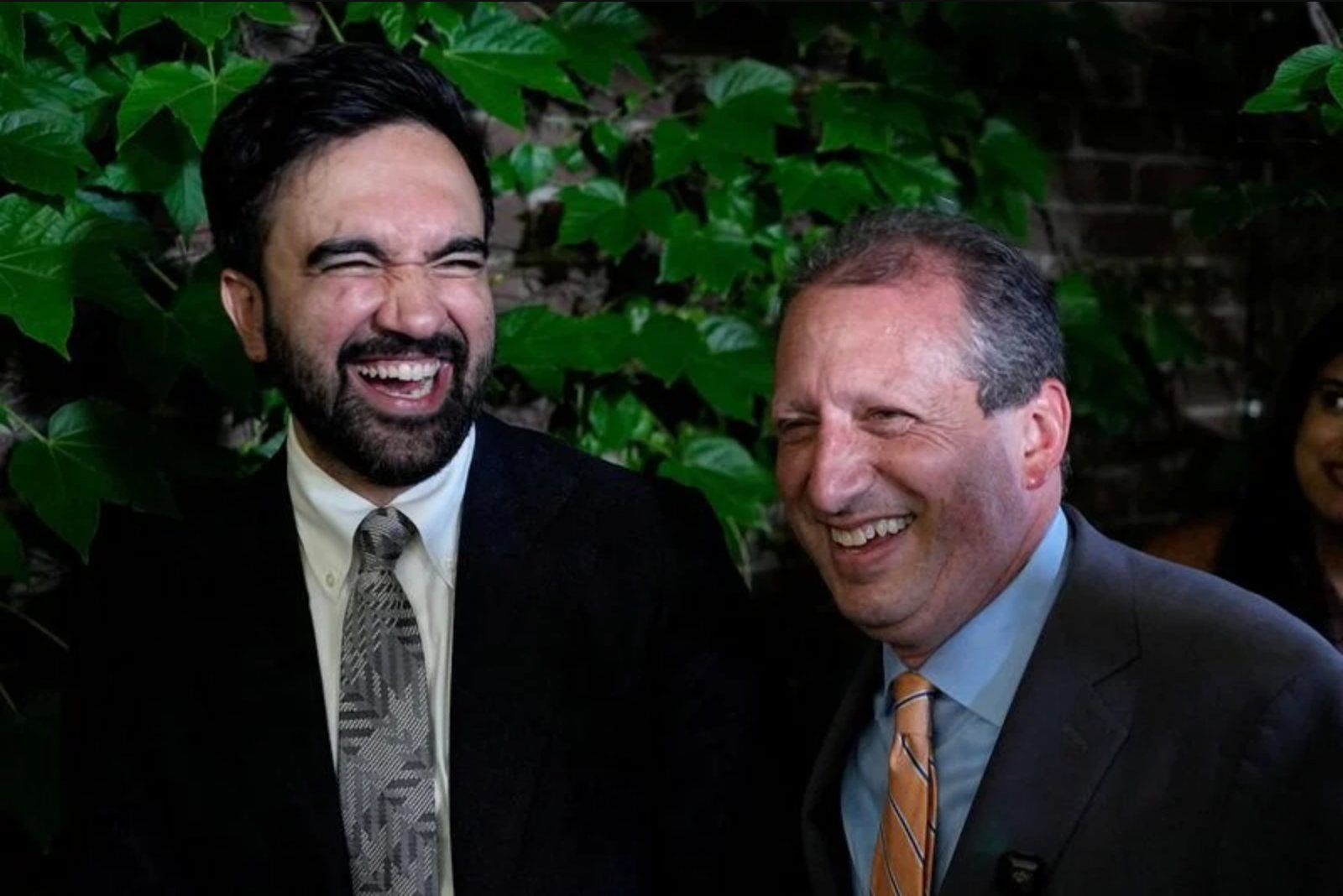
New York City Mayor Zohran Mamdani scored three high-profile primary victories on Tuesday in his bid to expand the democratic socialist wing of the Democratic Party, delivering a stinging message to parts of the political establishment.
Mamdani-supported candidates prevailed in a set of contests that included the defeat of a two-term U.S. representative and the election of a former city official over an incumbent congressman. The slate of victories comprises:
- Former New York City Comptroller Brad Lander, backed by Mamdani, defeating Representative Dan Goldman, a two-term incumbent;
- Assemblymember Claire Valdez defeating Brooklyn Borough President Antonio Reynoso for an open congressional seat;
- Activist Darializa Avila Chevalier narrowly overcoming five-term Representative Adriano Espaillat, who chairs the Congressional Hispanic Caucus.
Taken together, those outcomes represent a major set of wins for the 34-year-old mayor, whose 2025 victory initially surprised many observers and who has since moved to consolidate influence within the party. The New York results follow recent primary successes for democratic socialist mayoral candidates in Washington, D.C., and a strong showing that produced a runoff in Los Angeles, reinforcing a pattern of electoral gains for the movement.
Party activists and analysts trace the rise of this cohort to a longer-term trend that accelerated after Senator Bernie Sanders’ 2016 presidential campaign, which helped spur a decade-long effort to cultivate a new generation of democratic socialist leaders. At the same time, several observers cited a reactive element to the movement’s renewed energy: heightened activism among progressives in response to the political positions and governing style of President Donald Trump and the Biden administration’s support for Israel in its military campaign in Gaza following a Hamas-led attack. The conflict has resulted in more than 73,000 Palestinian deaths, a figure that has stirred discontent among some progressive Democratic voters.
"Energy on the far right ignites energy on the far left. Politics is reactive," said Steve Israel, a former U.S. House member from New York who later ran an operation to help elect Democrats. His comment framed current partisan dynamics as reciprocally energizing.
The recent primary sweep also highlighted tensions within Democratic ranks over how best to present the party to voters beyond its deep-blue strongholds. Following Mamdani’s 2025 primary victory, House Democratic Leader Hakeem Jeffries faced repeated questions about whether he would publicly back his fellow New Yorker. Jeffries ultimately endorsed Mamdani, but did not do so until 11 days before the general election. Senate Democratic Leader Chuck Schumer remained publicly silent about Mamdani throughout the campaign.
Those internal dynamics carry strategic weight because Jeffries is positioned to become U.S. House speaker and thus, if Democrats were to win control of the House in November’s midterm elections, could be second in line to the presidency. For the party to reclaim a House majority, analysts note that success is likely to hinge on performance in competitive, or "purple," districts rather than in the solidly Democratic "blue" districts where democratic socialists have most of their base.
Still, the upset of Representative Espaillat by Mamdani-backed Avila Chevalier carries national implications. Matt Bennett, co-founder of Third Way, a centrist Democratic consultancy, suggested the result could complicate Jeffries’ path by creating vulnerabilities for Democrats in competitive races. "If a DSA member could knock off the chair of the Congressional Hispanic Caucus, that could matter," Bennett said.
Bennett also pointed to past social media posts by Avila Chevalier that have included calls for abolishing police and border controls and statements raising questions about Israel’s right to exist, remarks that he warned Republicans could use against Democrats in tight general election contests. "This is precisely the kind of person that they (Republicans) love to use to weaponize against other Democrats" running in competitive districts, Bennett said.
Avila Chevalier has removed some of her social media content and apologized for language she used online. In a recent interview with a group of editors, she stated: "I think that we just should not have a system that allows (migrant) deportation to happen at all," adding that she believes deportation "is rooted in deeply racist ideology." Espaillat publicly criticized Avila Chevalier’s statements, posting on X on June 16 that she "can’t just sweep things under the rug" and asserting that her social media record showed "very extreme positions." He concluded that she was "unfit for office" and expressed confidence that voters would see that.
Progressive strategists see the election results as evidence of wide dissatisfaction among many Democratic voters with the party’s current leadership and priorities. Alex Jacquez, a senior adviser to Bernie Sanders’ 2020 presidential campaign, said that focus groups and polling indicate deep frustration within the Democratic base. "That is really where you are seeing the fault lines. Are you willing to take on the wealthy and take on corporations and take on the status quo to deliver results. Or are you not," Jacquez said, describing the populist framing that democratic socialists are promoting heading into the fall and toward the 2028 cycle.
At the same time, party operatives outside of the most reliably Democratic districts are fielding candidates with profiles tailored to competitive constituencies. The party has, for example, nominated women with military backgrounds in states such as Florida and Colorado, reflecting an effort to appeal in red and pink districts where more moderate positions may resonate against incumbent Republicans.
"Most of the competitive districts for Democrats are red and pink districts that you can only win as a Democrat in ... where more moderate stances resonate in races against incumbent Republicans," Steve Israel observed. He cautioned against interpreting democratic socialist success in places like New York and California as indicative of the national center of gravity for the party. "I do worry that the strength of democratic socialists in places like New York and California will be misread as the center of gravity for Democrats across the country" this November or in the 2028 presidential election, he said.
The New York primaries underscore both the growing organizational reach of democratic socialist candidates and the strategic dilemmas facing Democratic leaders as they prepare for a series of consequential general elections. For now, the immediate effect is a reshaping of local and congressional contests in New York and a fresh test of how the national party manages internal ideological competition while seeking to defend or expand its House majority.